Well Water Treatment Addressing Private Source Contamination
Private well systems require comprehensive water treatment approaches tailored to the unique geological characteristics & contamination risks of your aquifer source.
Unlike municipal supplies with consistent treatment & regular monitoring, well water quality fluctuates based on seasonal water table changes, nearby agricultural runoff, geological formations, & proximity to potential contamination sources.
Iron in well water exists in two primary forms requiring different treatment strategies.
Ferrous iron (dissolved clear water iron) remains invisible when first drawn but oxidizes to ferric iron upon exposure to air, creating the characteristic reddish-brown staining on fixtures, laundry, & plumbing components.
Iron bacteria represents a third challenge, appearing as slimy reddish-brown deposits that thrive in iron-rich environments & prove difficult to eliminate once established in plumbing systems.
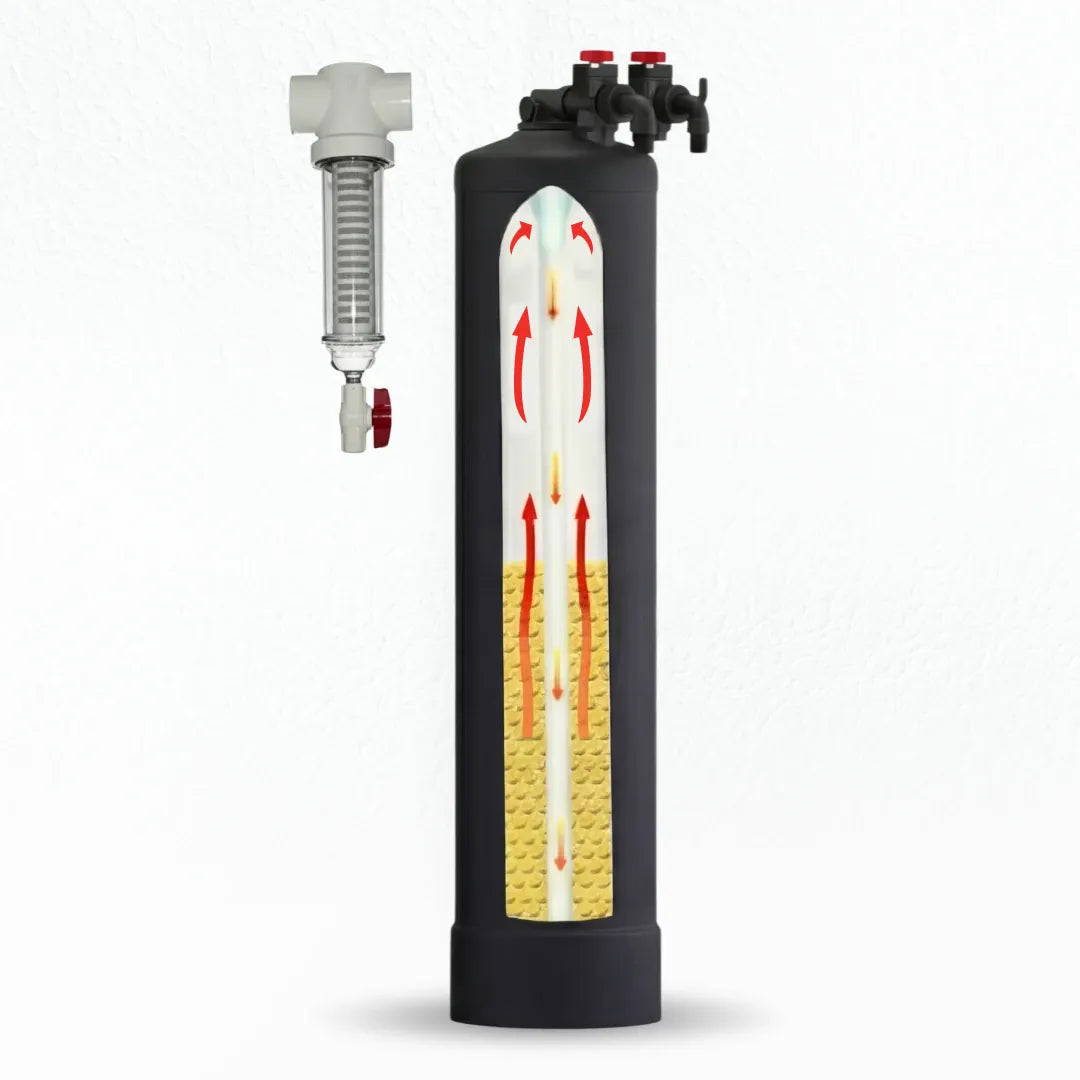
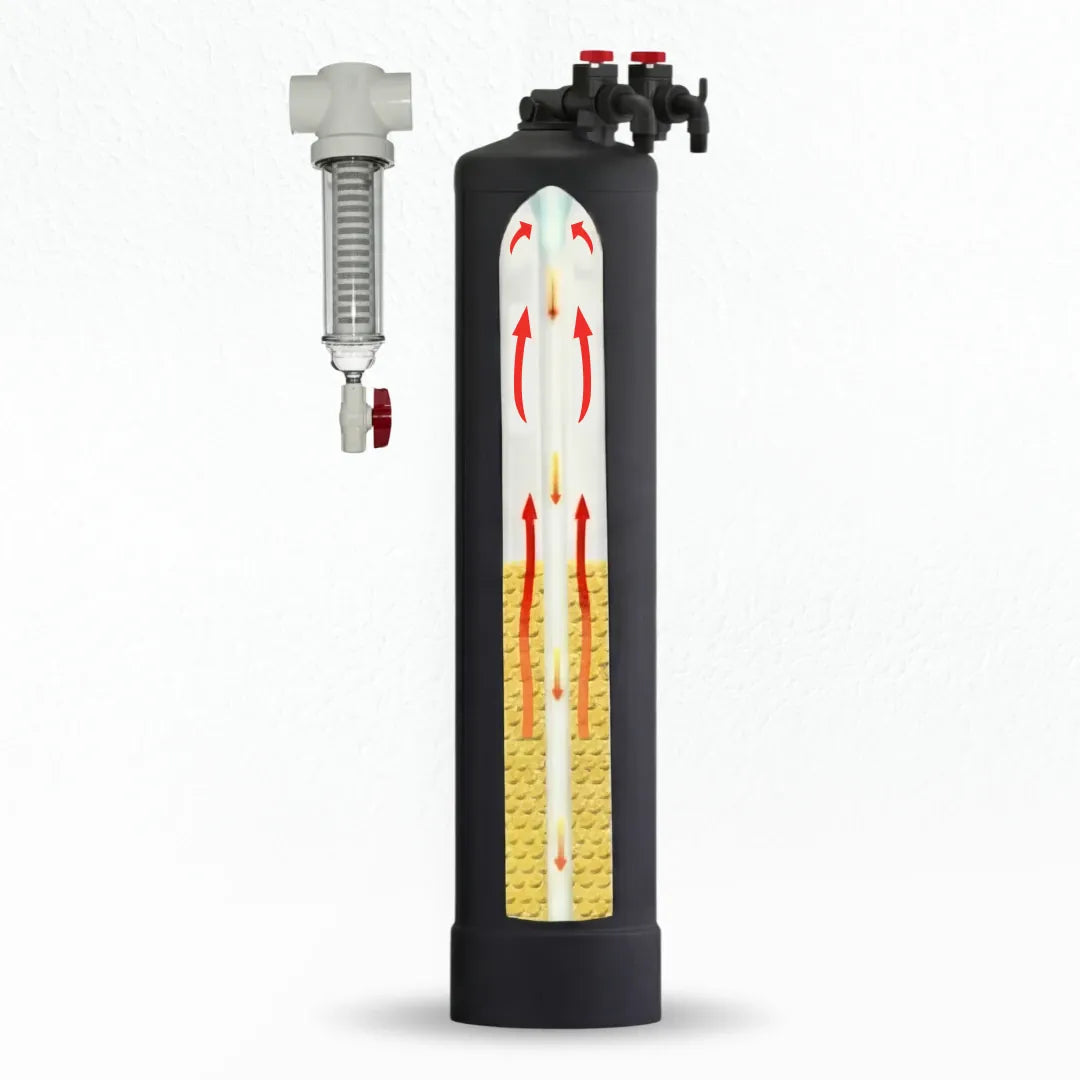
SoftPro's Iron Master AIO (air injection oxidation) system tackles iron contamination through a sophisticated multi-stage process starting with air injection technology that rapidly oxidizes dissolved ferrous iron into ferric particulates.
An oxidation reaction chamber provides sufficient contact time for complete conversion before water enters the Katalox Light filtration media, an advanced catalytic mineral that captures oxidized iron particles down to sub-micron sizes while simultaneously removing manganese, hydrogen sulfide, & other metallic contaminants.
The automatic backwash cycle operates based on actual water consumption & iron loading rather than arbitrary time intervals, ensuring optimal filtration performance while minimizing water waste.
During backwash, concentrated iron particles flush to drain while the Katalox media self-regenerates through exposure to the oxygen-rich air pocket maintained within the mineral tank. This regenerative capability eliminates the ongoing media replacement costs associated with traditional greensand filters or manganese dioxide systems.
Hydrogen sulfide producing the notorious rotten egg smell in well water results from sulfur-reducing bacteria activity in anaerobic aquifer environments.
Beyond the offensive odor, hydrogen sulfide accelerates corrosion of copper & brass plumbing, tarnishes silverware, & interferes with effective water softening.
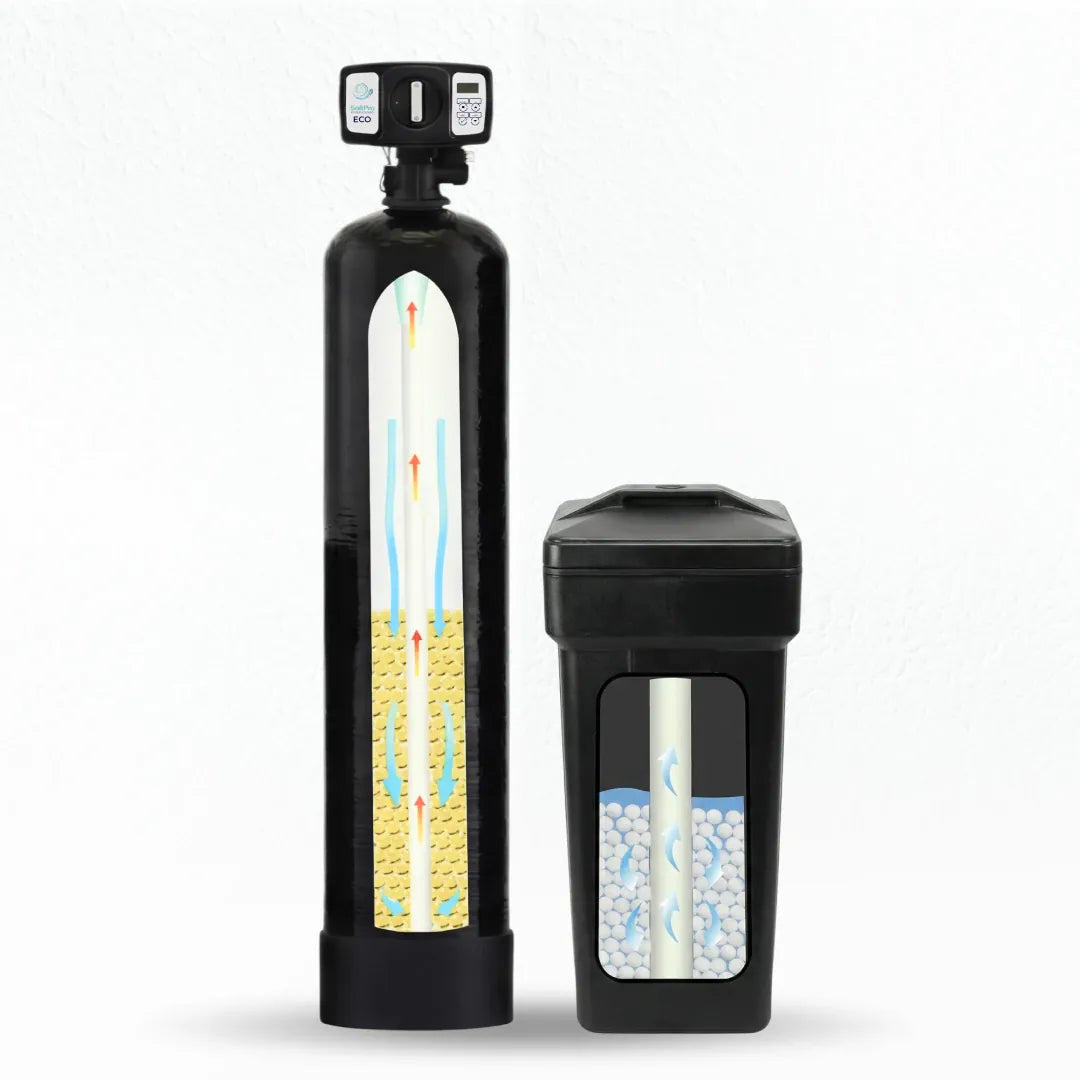
Aeration treatment combined with specialized filtration media oxidizes & removes hydrogen sulfide while improving overall water quality & taste.
Tannins from decomposing organic matter leach into groundwater in areas with significant vegetation, creating yellow-brown water coloration similar to weak tea.
While not harmful to health, tannins interfere with ion exchange softening, stain laundry & fixtures, & create aesthetic concerns. Specialized tannin removal resins or chlorine injection followed by activated carbon filtration effectively addresses this organic contamination.



![SoftPro™ Chlorine+ Carbon Whole House Water Filter to Remove PFAS, Chlorine, Chloramine & Pesticides [City Water Filters Series]](http://www.softprowatersystems.com/cdn/shop/files/SoftPro_Whole_House_Carbon_Filter_with_Spin_Down_Water_Filter.webp?v=1783547361&width=140)


 855-683-8488