What Are Whole House Water Filtration Systems — And Why Should You Care?
A whole house water filtration system treats every single drop of water the moment it enters your home. Before it hits your faucet. Before it blasts out of your shower head. Before it fills your coffee maker or your kid's glass. Every drop. Protected.
This isn't like those little under-sink filters or countertop gadgets that only guard one spot. A whole house system locks down your entire plumbing network at once. That's real protection.
Here's what most people miss: chlorine and chloramine don't just cause problems when you drink them. They vaporize in your hot shower and get absorbed right through your skin. So filtering just your kitchen tap? That's not the complete solution. The best water filtration system for your home is one built around YOUR water — whether you're on chlorine-heavy city supply or iron-rich well water. That's exactly what SoftPro's lineup is designed to do.
Know Your Enemy: What's Actually In Your Water
Before you pick a system, you need to know what you're up against. City water and well water come with very different problems. Here's what matters most.
Chlorine and Chloramine Your city water supplier uses these chemicals to disinfect your water supply. That's fine out at the treatment plant — but by the time that water reaches your pipes, those chemicals are still reacting with organic matter and forming disinfection byproducts. Chloramine is especially stubborn. Standard carbon filters can't touch it. That's why SoftPro uses catalytic carbon, a media specifically engineered to break chloramine down at the molecular level.
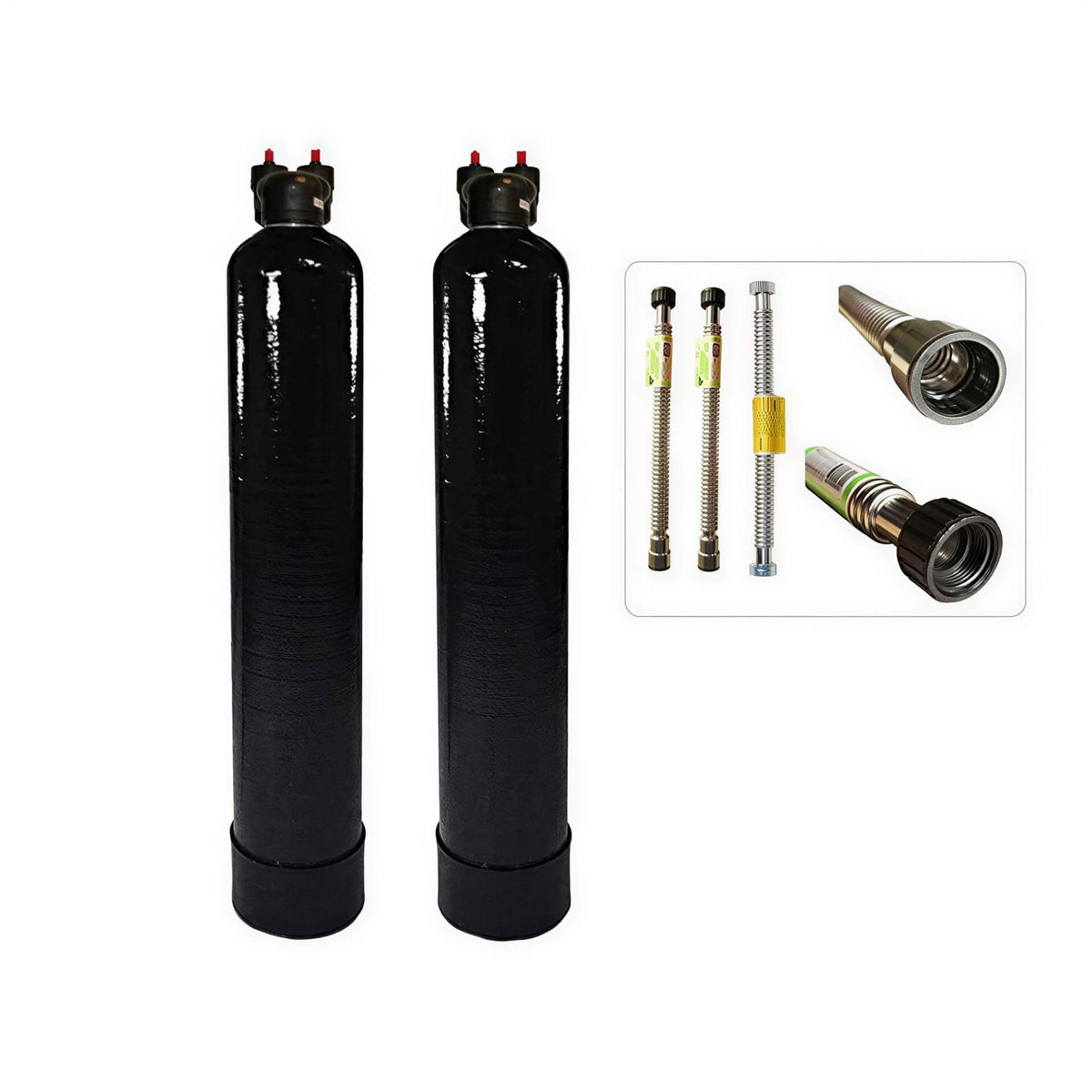
PFOA, PFOS, and "Forever Chemicals" PFAS compounds don't break down. They build up in your body and in the environment over time, and they've been detected in water supplies all across the country. The SoftPro Fluoride and Chlorine+ SUPER Filter combines catalytic carbon with bone char carbon media to take on PFAS alongside chlorine, chloramines, fluoride, and pesticides.
Heavy Metals Lead, arsenic, and other heavy metals can sneak into your water through aging pipes, natural geological deposits, or industrial runoff. Lead is a serious one — it can leach from fixtures inside your own home even when the city's source water tests clean. A properly configured whole house system addresses this at the exact point where water enters your home.
Sediment Sand, silt, rust particles — this stuff shows up in both well water and city water, especially after pipe repairs or seasonal source water changes. Sediment wears down your appliances, your water heater, and your filter media over time. A sediment pre-filter catches it early, before it does any damage.
Volatile Organic Chemicals (VOCs) VOCs come from industrial discharge, agricultural runoff, fuel leaks, and other environmental sources. Many are colorless and odorless, which makes them easy to miss. Catalytic activated carbon adsorbs them and removes them from your water before they reach any faucet in the house.
How Carbon Filtration Actually Works
Activated carbon is the backbone of most home water filtration systems. But not all carbon is the same — and that difference matters.
Standard granular activated carbon (GAC) works through adsorption. Contaminant molecules bond to the porous carbon surface as water passes through and get pulled out of the water stream. It handles chlorine, some pesticides, and basic taste and odor issues just fine.
A carbon block filter takes things further. Carbon is compressed into a dense, uniform block that slows the water down and increases contact time with the media. That means better removal of finer contaminants like lead and certain VOCs that loose granular carbon can miss.
Catalytic carbon is the top of the chain. It goes through an additional activation process that creates a catalytic surface capable of triggering chemical reactions — not just trapping contaminants, but actively breaking down chloramine molecules that standard carbon filters can't handle. If your city uses chloraminated water (which most U.S. cities now do), catalytic carbon isn't optional — it's essential.
SoftPro's catalytic carbon media is built to last 7 to 10 years under normal conditions. Traditional carbon media typically gives you 3 to 5 years. That's a significant difference in long-term cost and hassle.
Essential Protection vs. Ultimate Protection: Which One Do You Need?
Not every home needs the same firepower. SoftPro's lineup covers the full spectrum.
Essential Protection is built for the most common city water problems — chlorine, chloramine, sediment, taste and odor issues, and standard chemical reduction. The SoftPro Catalytic Carbon Filter for city water and the Catalytic Carbon Filter for well water cover this tier. Single-tank systems. Low maintenance. No unnecessary complexity. Perfect for most households.
Ultimate Protection is built for homes dealing with layered contamination. PFOA, PFOS, fluoride, heavy metals, VOCs, pesticides, herbicides, pharmaceuticals — if you're facing a combination of these, one standard filter stage isn't enough. The SoftPro Fluoride and Chlorine+ SUPER Filter pairs catalytic carbon with bone char carbon media in a dual-media design that tackles a much broader contaminant profile in a single system.
For well water homes dealing with iron, manganese, and hydrogen sulfide on top of organic contaminants, the SoftPro Iron Master AIO delivers ultimate protection built specifically for the well water context — handling multiple problem contaminants through one self-regenerating system.
The Accessories That Keep Your System Running Strong
Your filtration system is only as good as the environment it operates in. These two accessories make a real difference.
Low Maintenance Pre-Filter / Sediment Filter A sediment filter installed upstream of your main system is one of the smartest moves you can make. Coarse particles — sand, rust, silt, debris — physically wear down catalytic carbon media and reduce its surface area over time. A pre-filter stops that damage before it starts, preserving media life and keeping flow rates consistent throughout your home. This matters especially for well water users or homes in areas with older municipal infrastructure.
Pro-Grade Bypass Kit A bypass kit lets you isolate your filtration system from the main water line during maintenance or media replacement without shutting off water to the whole house. For households where keeping the water running is non-negotiable, this is a straightforward upgrade that makes every service visit faster and less disruptive.
Multi-Stage Systems: When One Stage Isn't Enough
Well water homes with complex water quality problems often need a sequenced approach — where each stage handles the specific contaminants the previous stage isn't built for.
In a well-designed multi-stage system, a sediment pre-filter takes out the coarse stuff first. Then an iron or manganese removal stage — like the Iron Master AIO's air injection oxidation process — handles the metals. Then a carbon filtration stage takes care of organic compounds and chemical reduction. Each stage does its job at peak efficiency because it's not trying to do everyone else's job at the same time.
SoftPro systems can also be paired with water softeners to build a complete well water solution that manages hardness minerals AND filtration needs together covering the full range of challenges well water homes face, from a single trusted source.


![SoftPro™ Chlorine+ Carbon Whole House Water Filter to Remove PFAS, Chlorine, Chloramine & Pesticides [City Water Filters Series]](http://softprowatersystems.com/cdn/shop/files/SoftPro_Whole_House_Carbon_Filter_with_Spin_Down_Water_Filter.webp?v=1783547361&width=140)


 855-683-8488