What Is Hard Water — And Why Does It Hit Well Water Homes Hardest?
Hard water is water loaded with dissolved minerals. Mainly calcium and magnesium. As groundwater pushes through layers of rock and soil on its way to your well, it picks up those minerals along the ride. The result? Water that looks crystal clear but is silently wrecking your pipes, appliances, and daily life every single day.
Water hardness is measured in grains per gallon (GPG) or parts per million (PPM). Above 7 GPG? Hard. Above 15 GPG? Very hard. A lot of well owners are dealing with 20, 25, even 30 GPG or higher. City water systems are built to buffer that stuff before it ever hits your tap. But when you're on a private well, there's no buffer. That's your problem to solve.
The signs of hard water are impossible to miss once you know what to look for: chalky white crust around your faucets and showerheads, soap that refuses to lather, cloudy dishes coming out of the dishwasher, laundry that feels stiff and faded, and a water heater that's working overtime and dying early.
Scale building up inside your pipes gradually chokes flow and kills pressure throughout the house. The Department of Energy has found that just 3/16 of an inch of scale buildup in water heating systems can slash efficiency by 24 percent. For well water homeowners, that's not a hypothetical. That's money leaving your wallet every single month.
About Well Water Softeners — What Makes Them Different
A well water softener is NOT just a regular water softener plopped in front of your well. That distinction matters more than most buyers realize.
City water, imperfect as it is, goes through municipal treatment before it reaches your home. That treatment knocks out a lot of the stuff that makes softener design complicated: free iron, manganese, sediment, hydrogen sulfide. Well water skips all of that. Whatever's in your local aquifer shows up at your tap untreated. Every mineral, every metal, every contaminant. All yours to deal with.
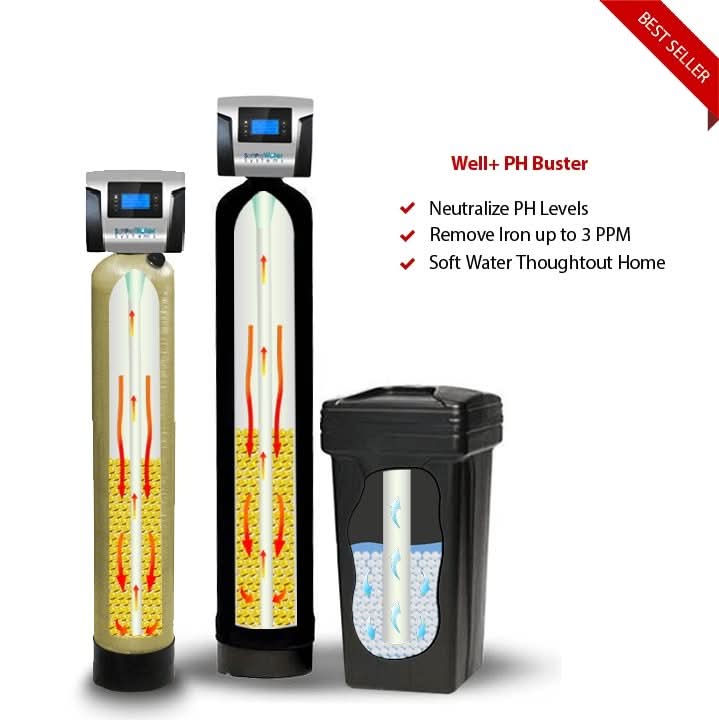
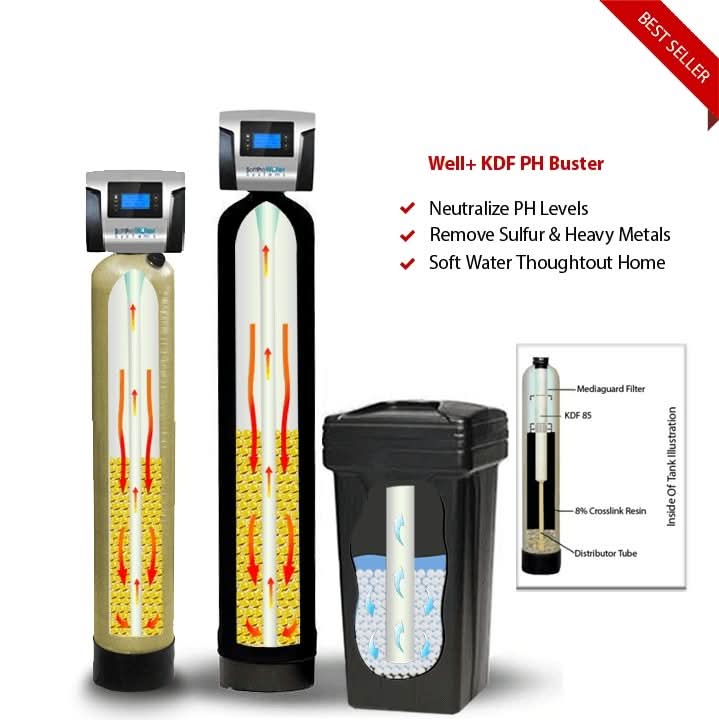
That's why the SoftPro Elite Water Softener for Well Water is built to a completely different standard. It uses a specially engineered control valve, a premium high-capacity resin bed, and a programming system built around the irregular and often aggressive mineral profiles private wells produce. A city water softener handles calcium and magnesium. A real well water softener has to deal with iron, manganese, sediment, and swinging hardness levels, often all at once.
Know the difference before you buy. Your future self will thank you.
How a Water Softener Works
The SoftPro Elite runs on ion exchange, a salt-based process that has been the gold standard in residential water treatment for decades. Proven. Reliable. No gimmicks.
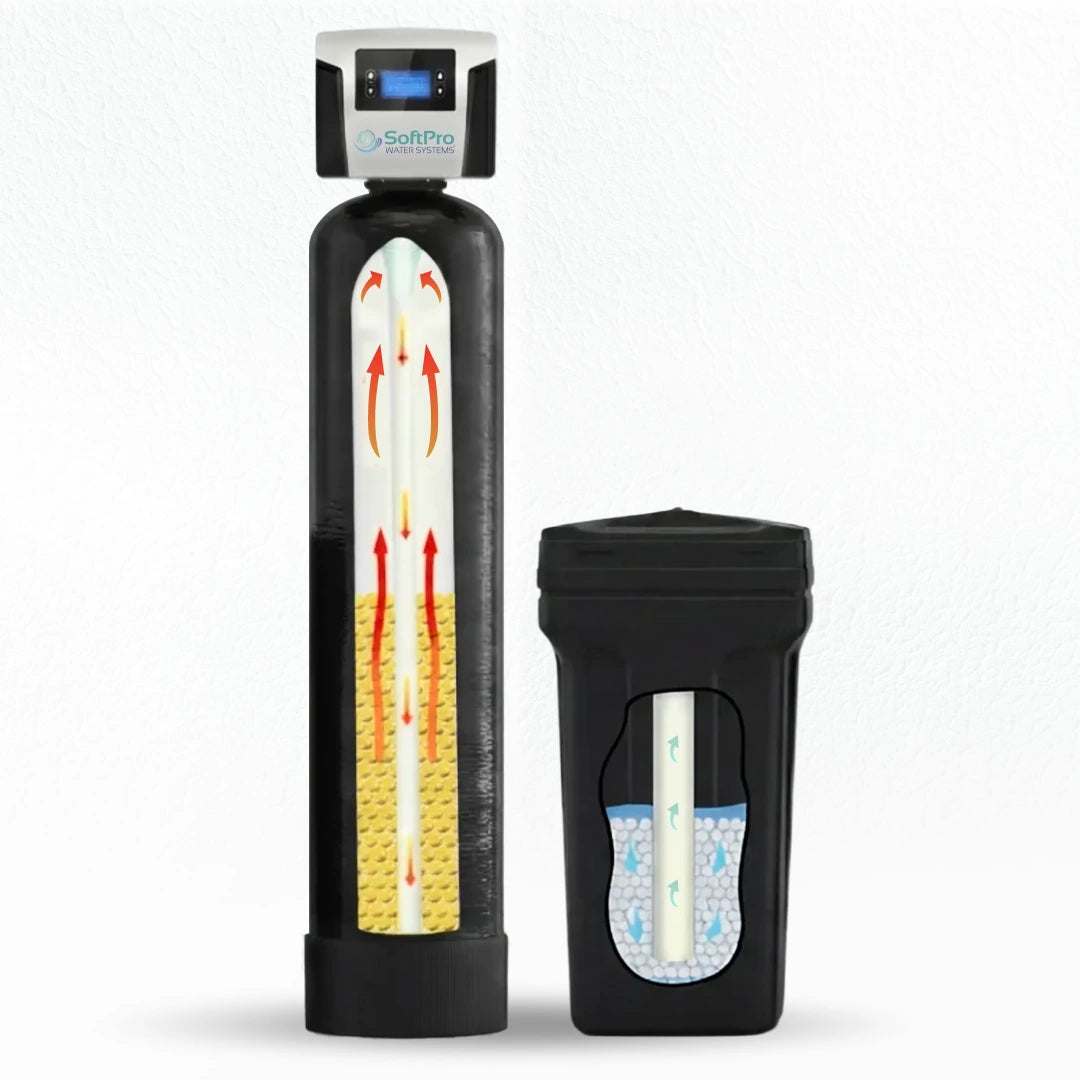
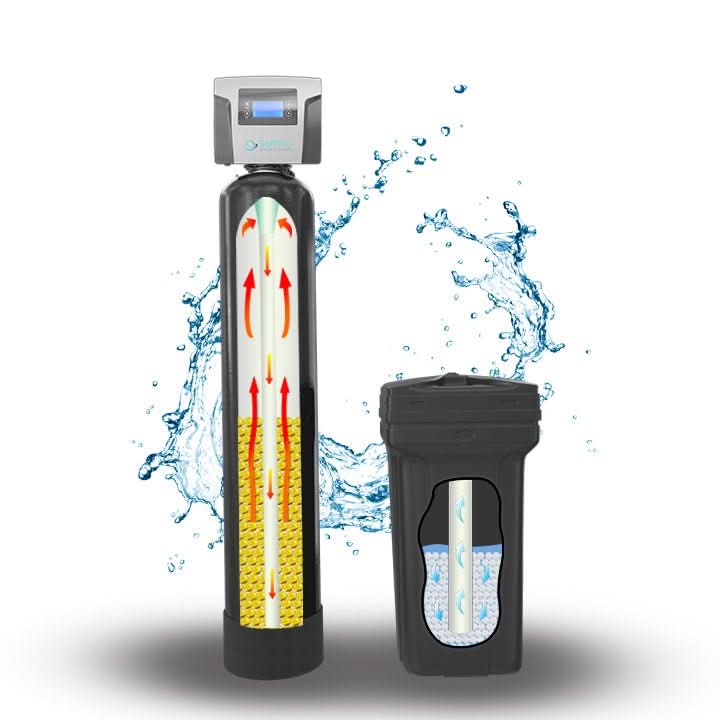
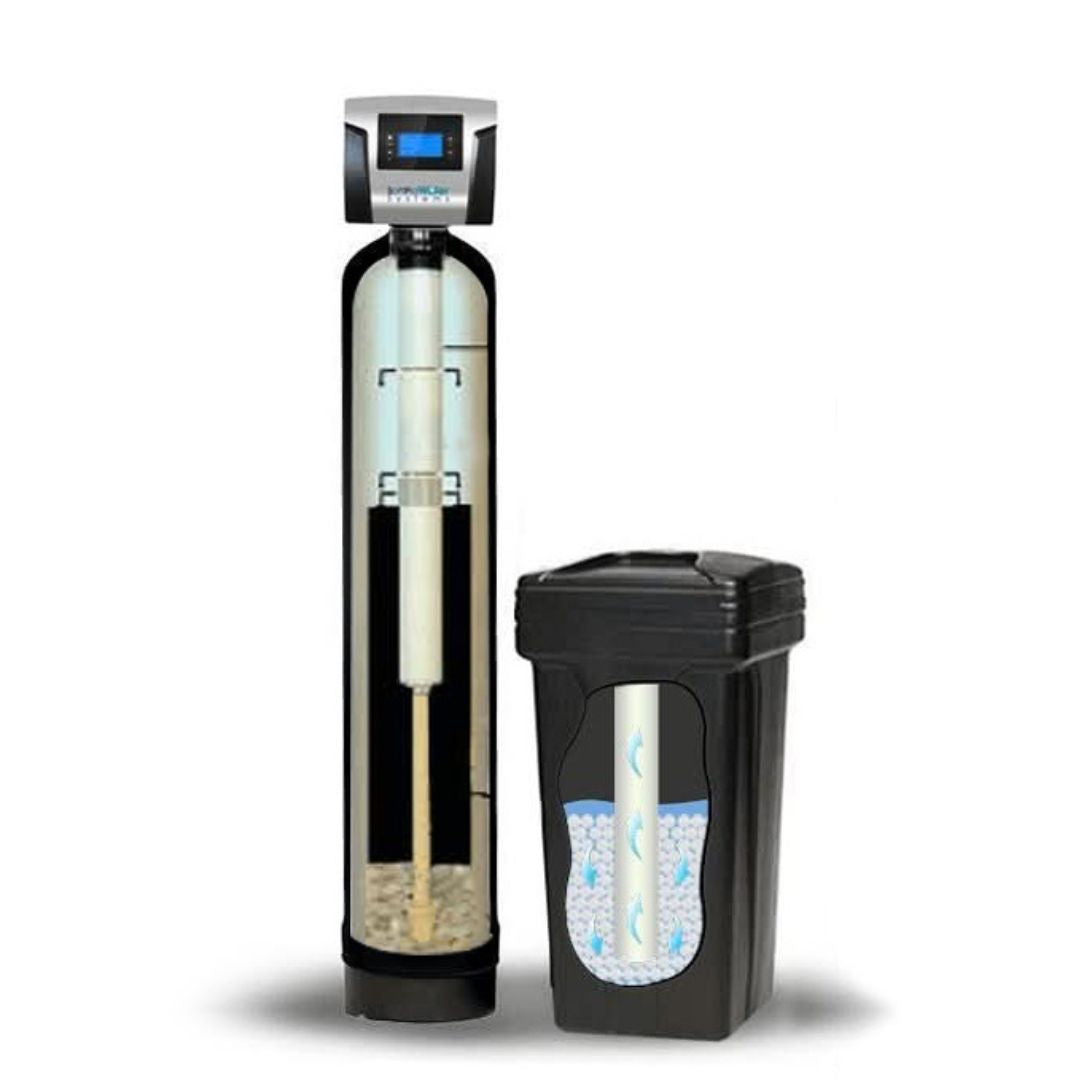
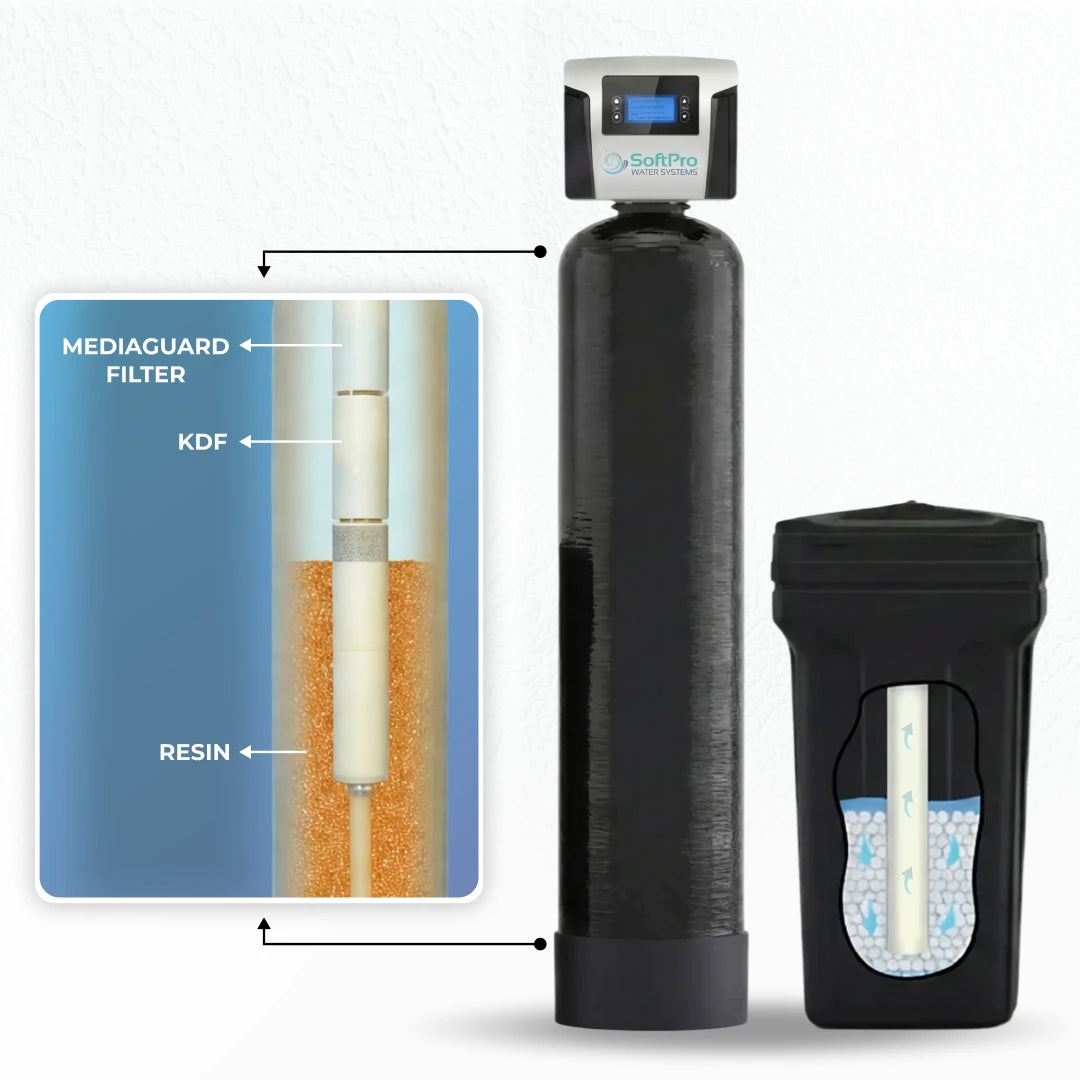
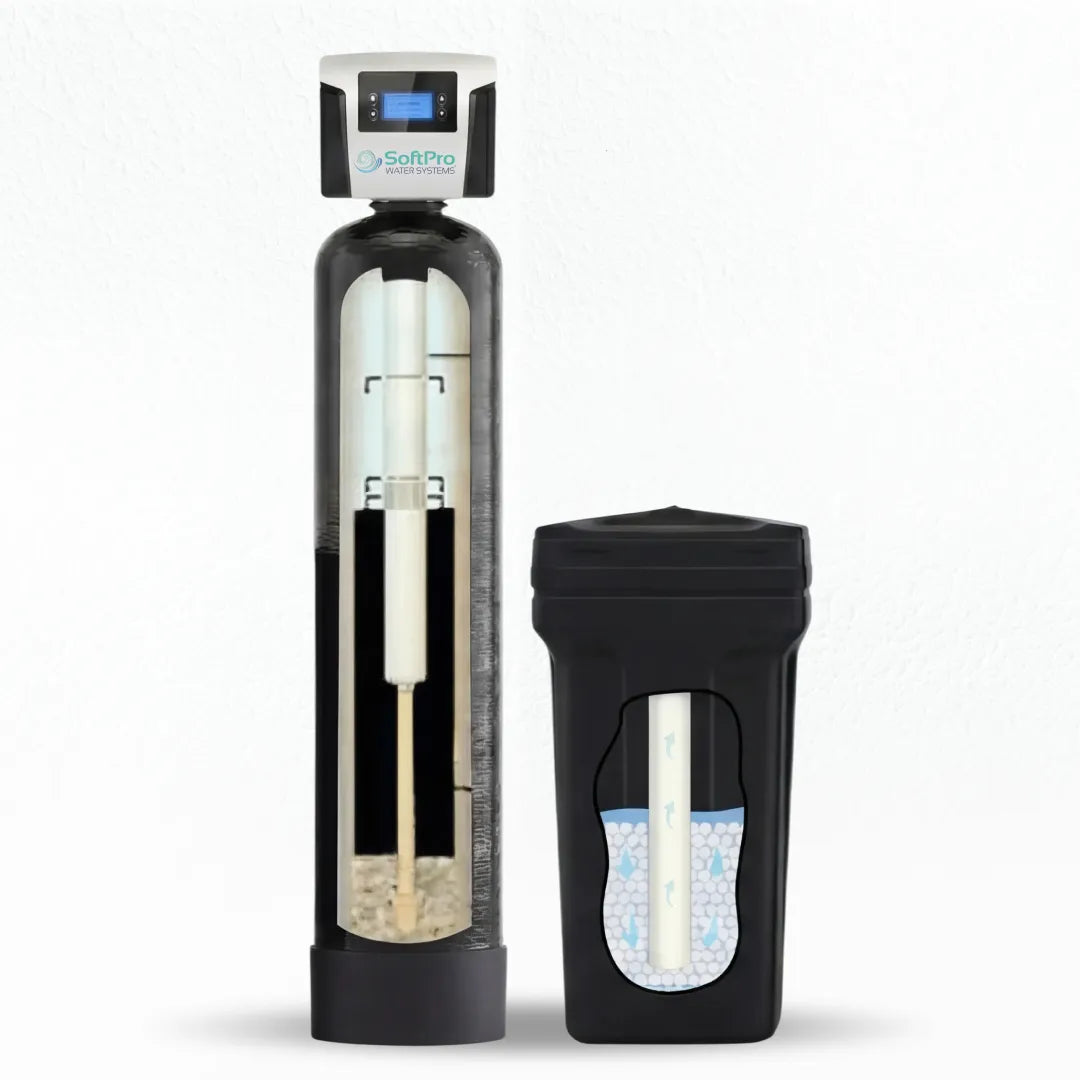
Inside the main tank sits a bed of small, negatively charged resin beads made from sulfonated polystyrene. Those beads start out loaded with sodium ions. Hard water flows in, and the calcium and magnesium ions, carrying a stronger positive charge, kick the sodium ions off the resin and lock on tight. What comes out the other side is soft water, with just a small amount of sodium swapped in. No scale. No buildup.
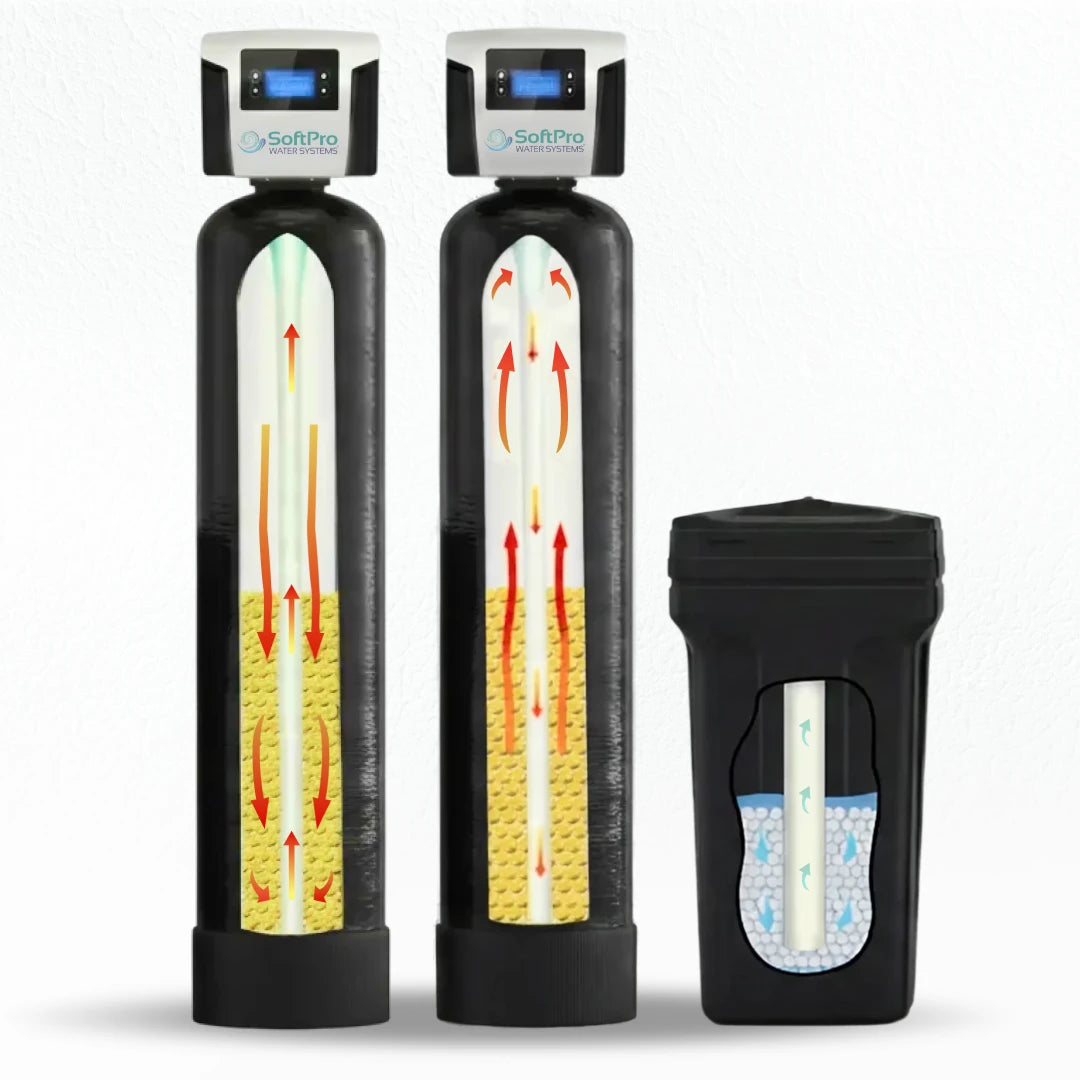
Over time, the resin gets saturated and can't exchange anymore. That's when regeneration kicks in. A brine solution made from dissolved salt gets drawn through the resin bed, forcing the calcium and magnesium off, flushing them down the drain, and recharging the beads for round two.
The SoftPro Elite uses metered regeneration. Instead of running on a fixed clock schedule, the control valve tracks actual water usage and only regenerates when the system genuinely needs it. This demand-initiated approach slashes salt use and water waste compared to old-school timer systems. Smart. Efficient. No waste.
What Does a Water Softener Actually Do for Your Home?
The benefits go way beyond your shower feeling better, though that improvement is real and you'll notice it immediately.
Scale prevention. The second soft water starts flowing, mineral buildup stops. Existing light scale may even dissolve over time. New deposits can't form in your pipes, water heater, dishwasher, washing machine, or ice maker.
Appliance protection. Hard water makes your appliances work harder, run hotter, and fail faster. Soft water takes the load off heating elements, keeps internal parts clean, and extends the life of seals and gaskets. Your appliances last longer. Period.
Soap and detergent efficiency. Hard water minerals react with soap and create scum. You end up using more product just to get the same result. Soft water lathers with far less soap, shampoo, and detergent. It's a quiet, steady saving that adds up over time.
Skin and hair quality. Homeowners who switch to soft water notice their skin feels softer, less dry, and less irritated right away. Hair becomes easier to manage with better texture and less dullness. Your bathroom will feel like a different place.
Cleaning time reduction. An Ohio State University study found that households with soft water cut their weekly cleaning time from about four hours down to around two hours and twenty minutes. That's roughly 87 hours a year back in your pocket.
Iron in Well Water — The Problem Soft Water Alone Cannot Solve
For a lot of well water homeowners, hardness is only part of the battle. Iron in well water is one of the most common and most destructive water quality problems facing private well users across the country, and it needs its own dedicated attention.
Iron shows up in two main forms. Ferrous iron, also called clear-water iron, is dissolved and invisible at the tap but turns orange-red the moment it contacts air or a surface. Ferric iron is already oxidized and shows up as visible reddish-brown particles or sediment. A third form, bacterial iron, involves iron-consuming bacteria that create slimy deposits and coat the insides of pipes and softener components.
The damage from untreated iron is serious. Iron staining on sinks, toilets, showers, and laundry is permanent if you let it accumulate. Fixtures develop deep rust-colored stains that standard cleaning products can't touch. Clothes washed in iron-heavy water pick up an orange tint that doesn't wash out.
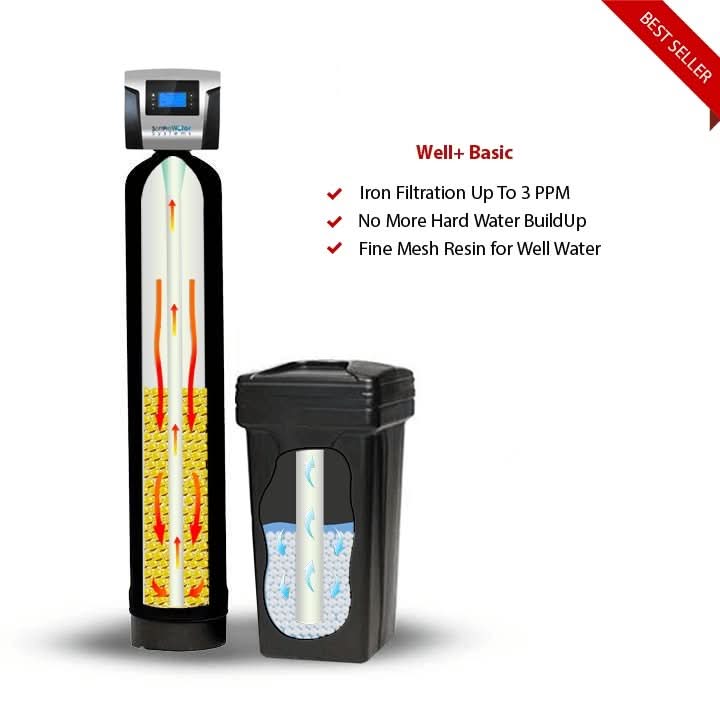
Beyond aesthetics, iron is brutal on water softener resin. Iron molecules coat the resin beads over time and kill their exchange capacity, a process called resin fouling that progressively degrades your softener until the media has to be replaced or chemically cleaned. A well water softener built for iron exposure uses resin and valve components engineered to handle that contact. Pairing it with a dedicated iron filter upstream is the smartest long-term play.
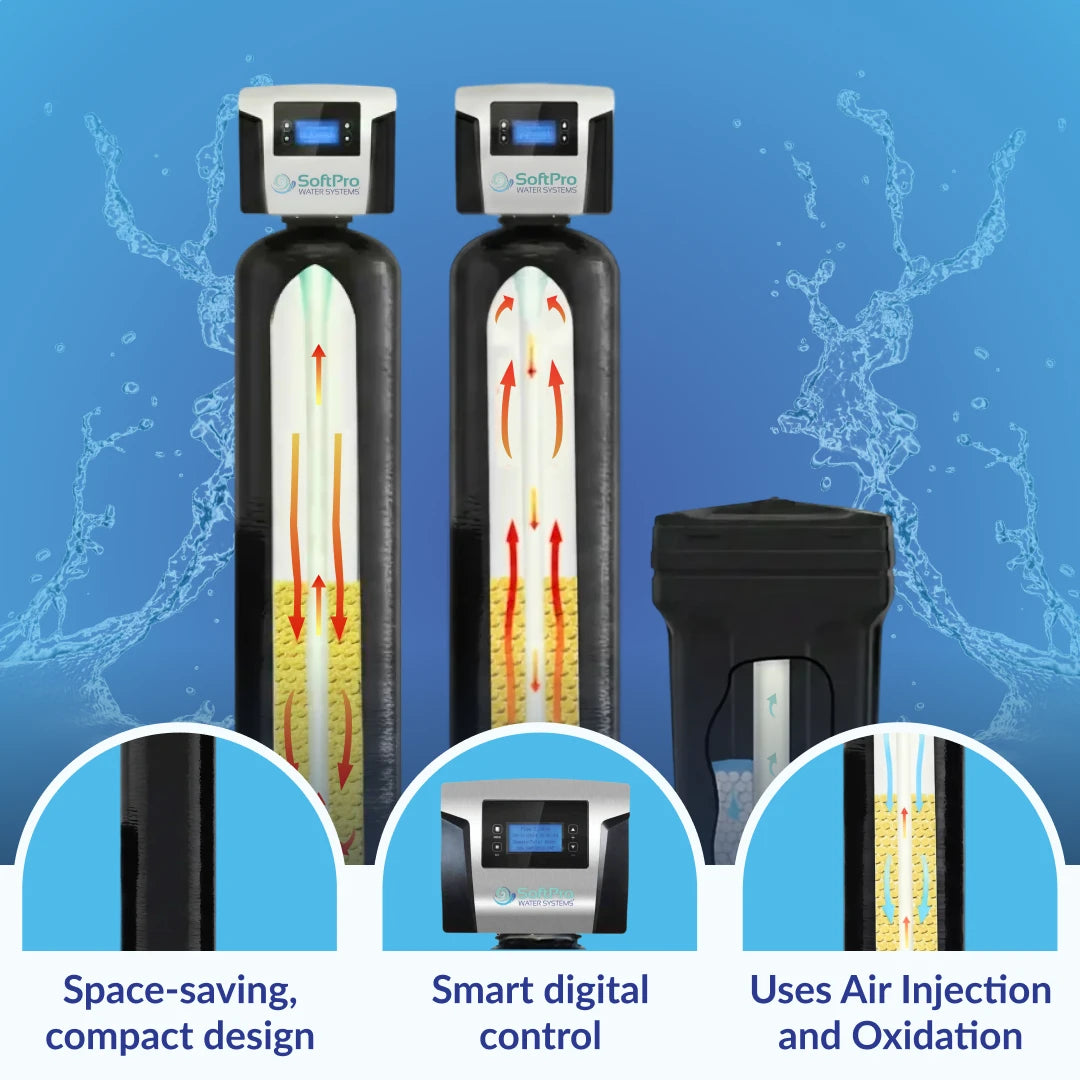
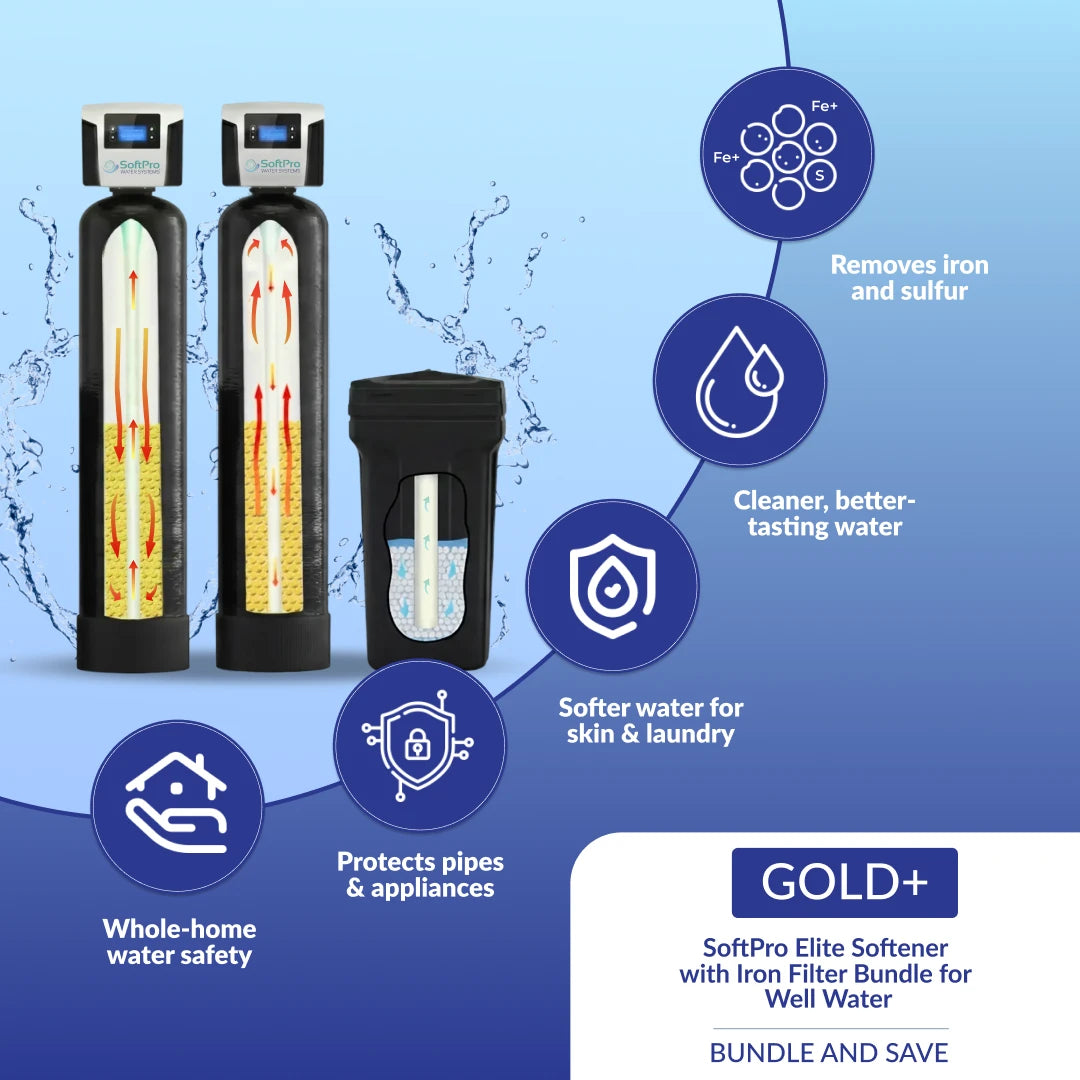
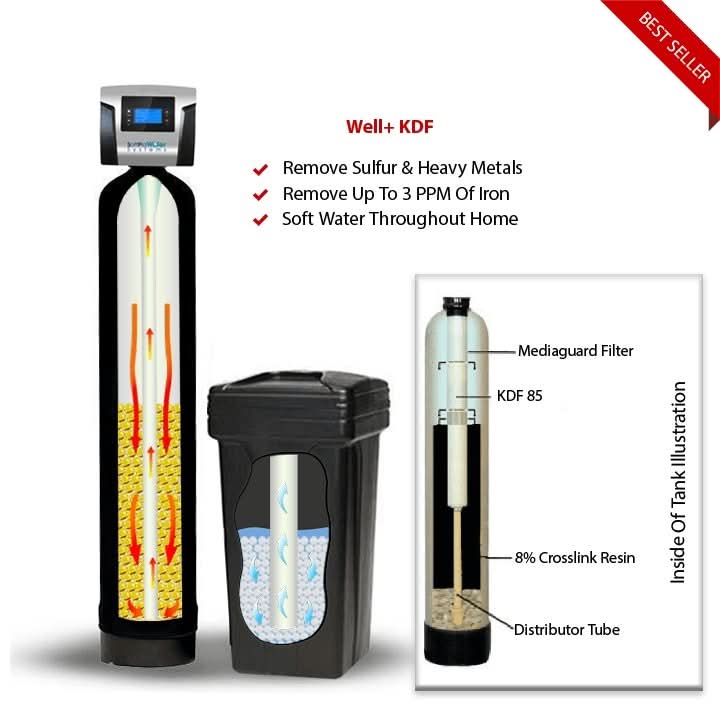
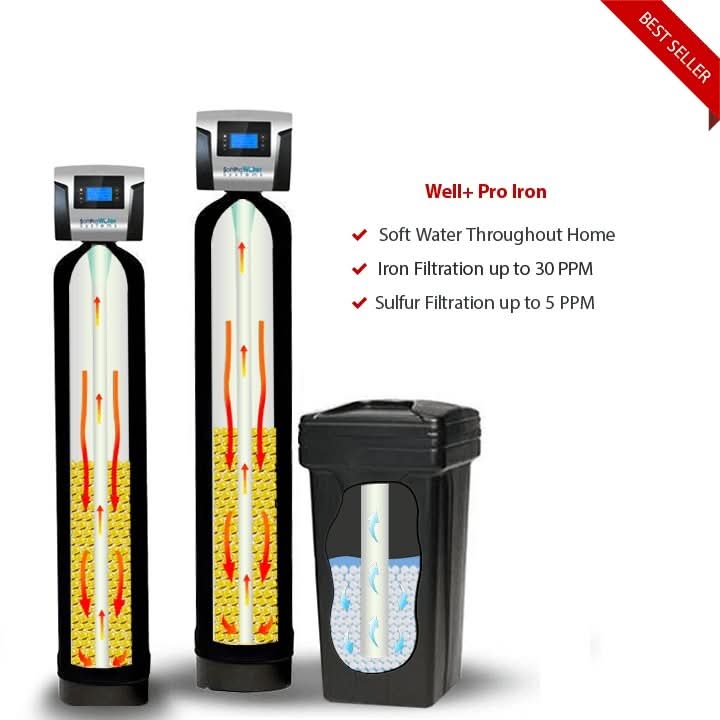
Manganese dioxide is a media used in iron and manganese filtration systems that catalyzes the oxidation of dissolved iron and manganese, converting them into filterable particles before they reach your softener. The SoftPro Elite Gold and Gold+ packages incorporate this strategy, handling iron and sulfur at the filter stage so the softener can do what it does best.
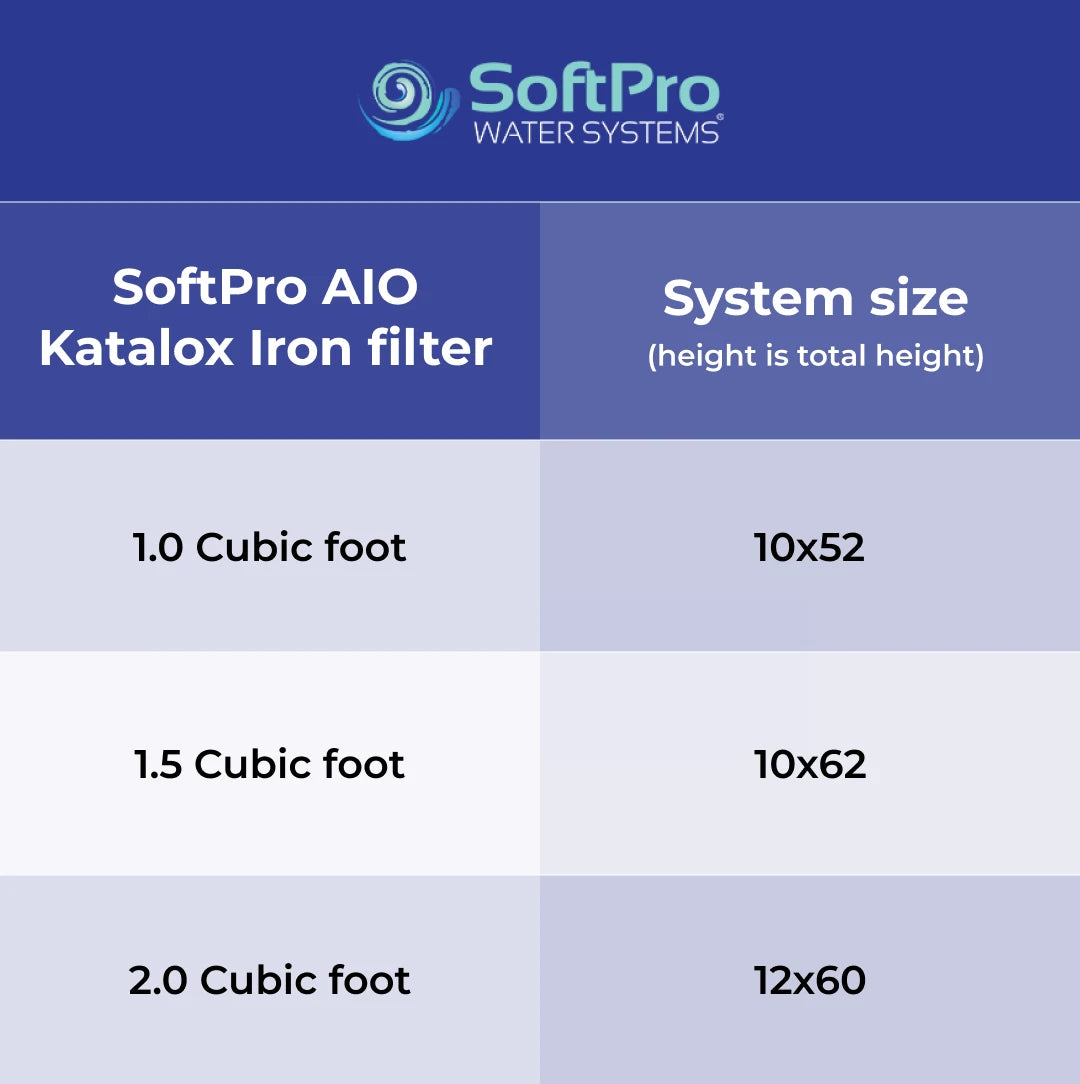
For well owners dealing with high iron concentrations, dissolved hydrogen sulfide (that rotten egg smell), or manganese staining, the Gold+ package with the Iron Master AIO system is the most complete treatment available in the SoftPro lineup.
Choosing the Right Water Softener — A Practical Buyer's Guide
Getting the right system starts with knowing two things: your water hardness level and your household's water demand. Nail those numbers before you buy and your system will perform exactly as expected from day one.
Understanding Grain Capacity
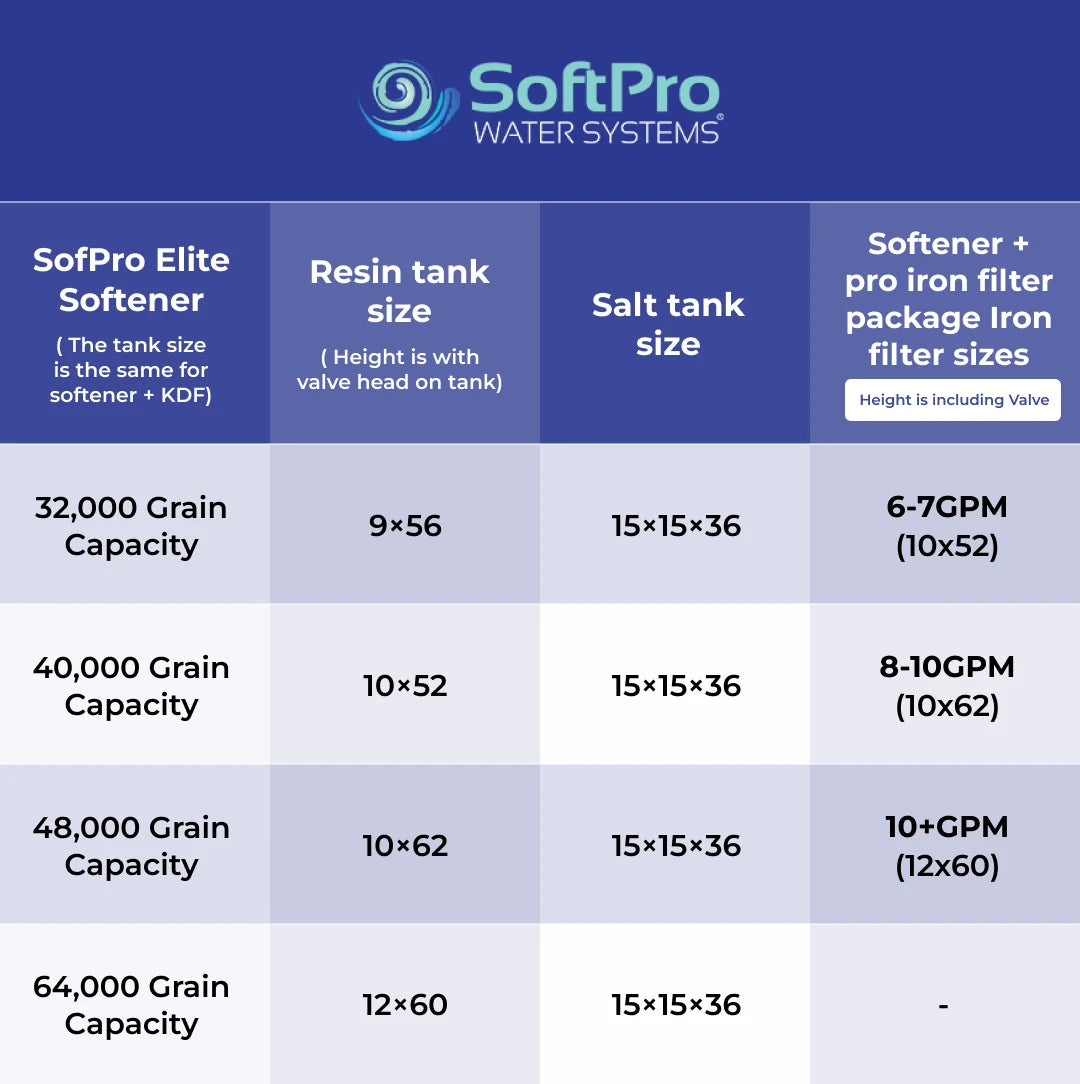
Grain capacity is the total amount of hardness minerals a softener can pull out of your water before it needs to regenerate. It's measured in grains. Residential systems typically range from 24,000 to 96,000 grains. The SoftPro Elite comes in 32,000, 40,000, 48,000, and 64,000 grain configurations.
Here's how to figure out what you need:
People in household x gallons per person per day (typically 75) x water hardness in GPG = daily grain removal requirement
Multiply that by seven and you get your weekly demand. The goal is regeneration roughly every four to seven days under normal use. Frequent enough to keep the resin performing, but not so frequent you're burning through salt and water.
A 48,000-grain system works great for most families of four with moderately hard well water. But homes with higher iron content effectively lose some grain capacity to iron absorption, so well water sizing typically means going one tier up from what the hardness math alone suggests.
Understanding Flow Rate
Flow rate (measured in gallons per minute, or GPM) is the second critical sizing factor, and one that first-time buyers constantly overlook.
Your well pump has a rated output that determines how many gallons per minute it can deliver under normal conditions. Any filtration or treatment system installed in your supply line creates resistance. Too much resistance relative to your pump's output and you'll feel it as pressure drop throughout the house, especially during high-demand moments when multiple fixtures are running at once.
The SoftPro Elite is built with large 1-inch internal plumbing to maintain strong flow rates even during peak demand. It comes in configurations matched to 6-7 GPM, 8-10 GPM, and 11+ GPM well pump outputs. Match your configuration to your pump and you get full softening performance without sacrificing household water pressure.
To measure your well pump's flow rate: Shut off all water in the home. Fully open a hose bib near your pressure tank. Fill a five-gallon bucket and time how long it takes. Divide 300 (5 gallons x 60 seconds) by the number of seconds it took. That's your GPM.
Water Softener Comparison — Salt-Based vs. Salt-Free vs. Magnetic
You're going to run into a lot of competing claims when researching well water softeners. Here's what each technology actually does, and what it can't.
Salt-Based Ion Exchange Systems
Salt-based systems like the SoftPro Well Water Softener are the only technology that genuinely removes hardness minerals from water. Calcium and magnesium are physically pulled out through ion exchange and replaced with sodium. The result is chemically soft water that can't form scale, is free of hardness minerals, and delivers every downstream benefit you're after.
Salt-based systems are the standard recommended by water treatment professionals. Proven by decades of real-world use. The only approach that demonstrably protects plumbing, extends appliance life, and delivers measurable savings year over year.
Salt-Free Systems
A salt-free system, sometimes sold as a water conditioner or descaler, does not remove hardness minerals from your water. Instead, it uses a process called template-assisted crystallization (TAC) to change the physical structure of the minerals so they're less likely to stick to surfaces.
Here's the truth: the minerals are still in your water. Salt-free systems can reduce new scale formation in pipes under certain conditions, but they don't deliver the skin, hair, laundry, or soap-lathering benefits that come from actually removing hardness minerals. They're also far less effective in the presence of iron, which makes them a poor fit for most well water situations.
If your well water hardness is above 10 GPG, or if you've got iron or manganese, a salt-free conditioner won't cut it. Ion exchange is the right call.
Magnetic Water Softeners
Magnetic water softeners use magnetic fields applied to the outside of pipes and claim to change mineral behavior through magnetism. There's no peer-reviewed science establishing that these devices meaningfully reduce scale or hardness effects under real-world conditions. Independent testing has consistently found them ineffective.
They're not a legitimate option for well water treatment, especially when hardness, iron, or manganese are in the picture. Don't waste your money.
What We Tested — Key Performance Metrics for the SoftPro Elite Well Water Softener
Here's why the SoftPro Elite consistently earns top marks in real-world well water applications.
Salt efficiency. The SoftPro Well Water Softener's precision brining system pre-makes only 70% of the brine needed for regeneration, then calculates the exact top-up needed just before each cycle. That cuts salt consumption by up to 30% compared to conventional systems, which works out to roughly one 40-lb bag of salt every two to four months for a typical household.
Regeneration intelligence. Metered demand-initiated regeneration means the system only cycles when actual usage data says the resin is approaching capacity. No wasted cycles. No unnecessary salt or water use. No soft water shortages because the system regenerated on the wrong schedule.
High-capacity resin quality. The SoftPro Elite uses 10% crosslink, high-capacity resin, a premium-grade media with superior resistance to chlorine degradation and iron fouling compared to the standard 8% crosslink resin in many competing systems. For well water with regular iron exposure, this difference in durability is a big deal.
Fine mesh resin availability. For homes with elevated ferrous iron levels, fine mesh resin offers a higher surface-area-to-volume ratio that improves iron capture during the softening cycle. An important option for well water setups where iron removal performance needs to be maximized at the softener stage.
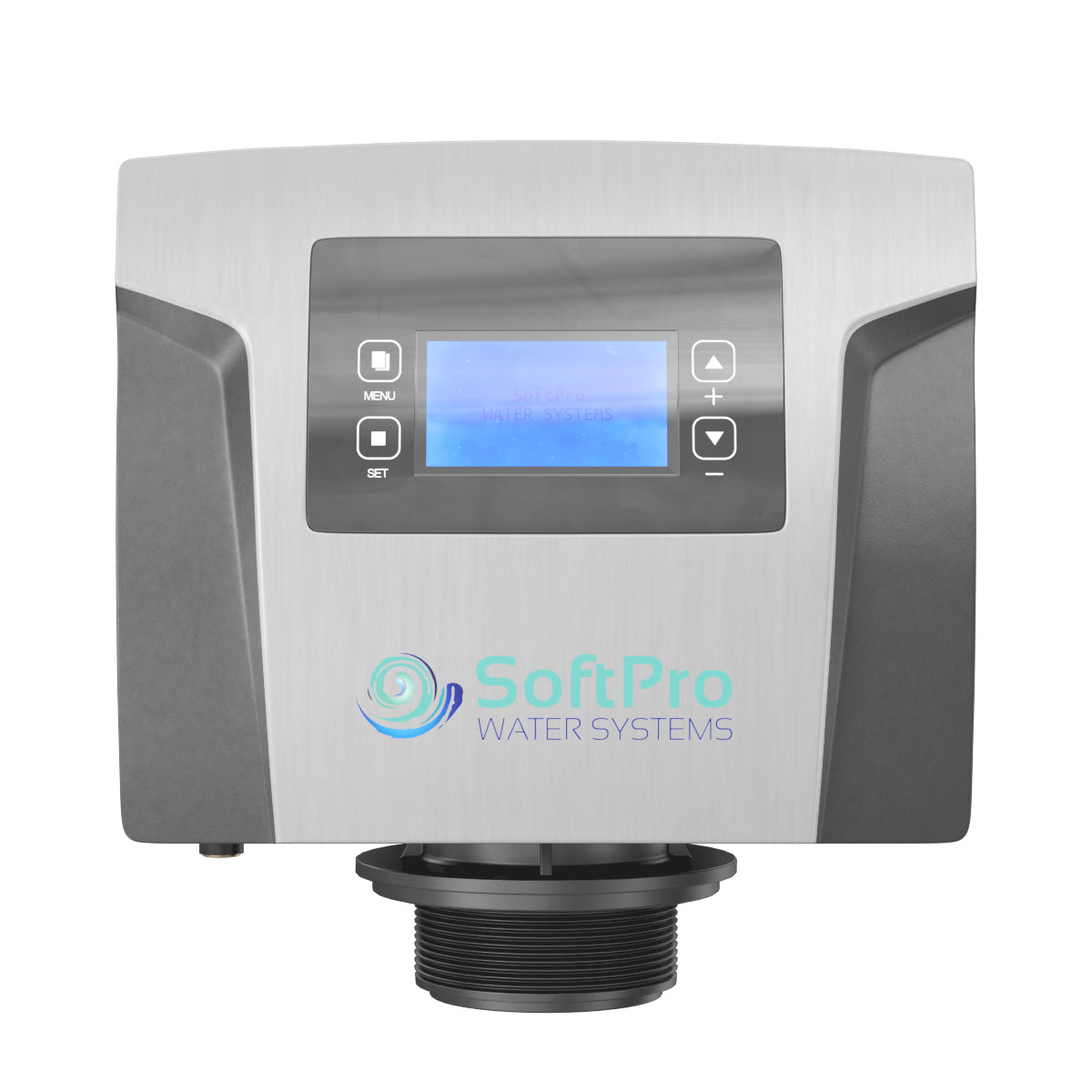
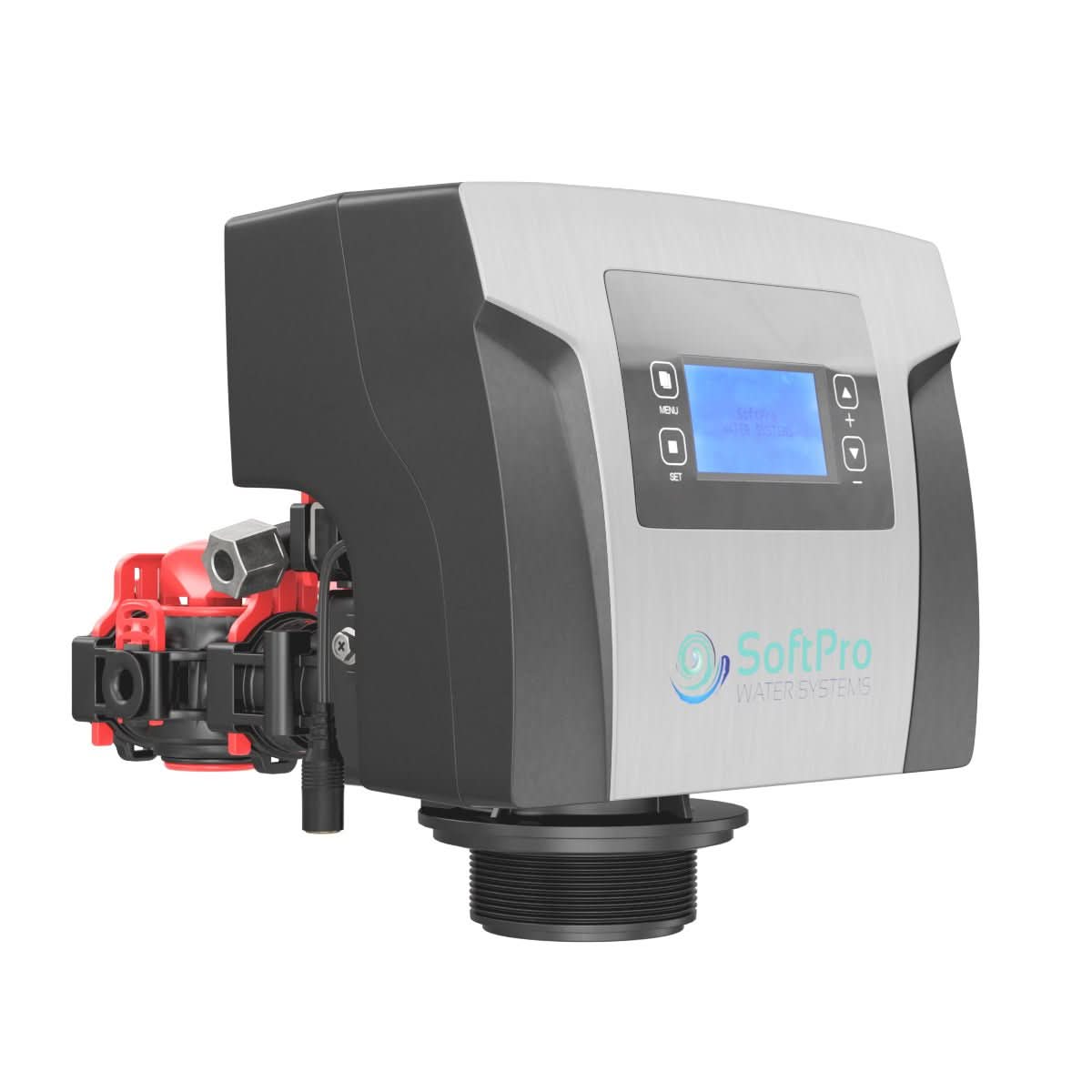
Smart controls and automation. The SoftPro Elite's control valve comes loaded with vacation mode (pauses regeneration during extended absence, with an automatic 7-day bacterial refresh), auto reserve (keeps one full day of capacity in reserve), auto system refresh (performs a 15-minute recharge if capacity drops below 3%), and battery backup through a self-charging capacitor that preserves programming through at least 48 hours of power loss.
Water Softener Installation — What to Expect
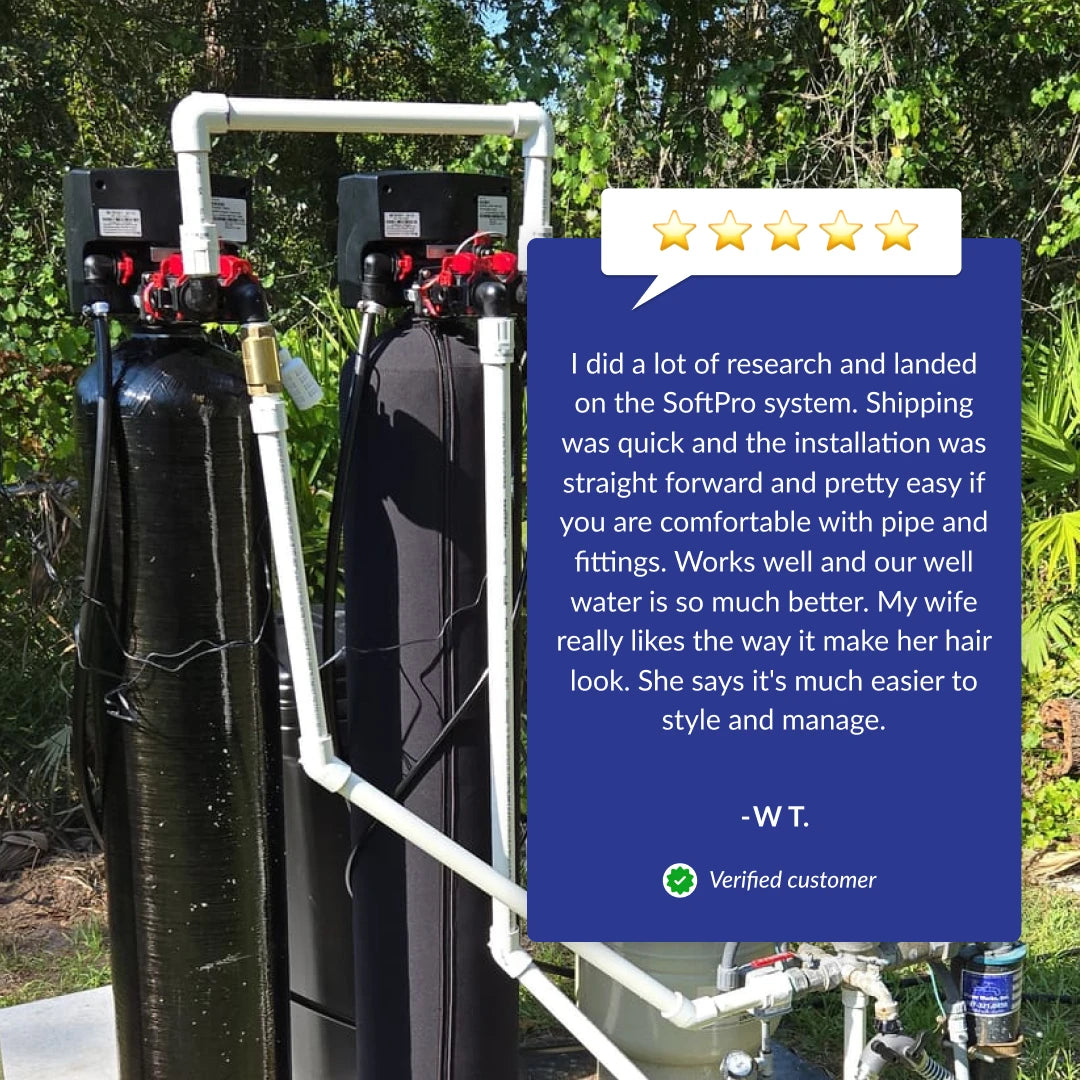
The SoftPro Elite is built to be installed by a confident DIY homeowner, an experienced handyman, or a professional plumber. Most installs are done in two to four hours with basic plumbing tools.
The system goes in at your point of entry, the spot where your main water supply line comes into the house, so every fixture and appliance downstream gets treated water.
The softener connects in-line with your main supply using the included quick-connect fittings or standard plumbing connections depending on your pipe setup. You'll need a drain connection for regeneration waste water, typically a floor drain, utility sink, or standpipe within reach. A standard 110V outlet powers the control valve.
The bypass valve. Every SoftPro Elite comes with a bypass valve, a critical piece that lets you isolate the softener from your water supply for maintenance, regeneration testing, or emergency service without cutting off water to the whole house. The bypass also lets you feed unsoftened water to outdoor irrigation spigots, which is generally the right call for lawn and garden use.
Size your system before installation starts. Too small and you'll either be regenerating constantly or running hard water between cycles. Undersized for your flow rate and you'll feel it in your water pressure. The SoftPro sizing calculator and live support team are there to confirm your configuration before your order ships.
If iron filtration is part of your package, the iron filter installs upstream of the softener. It handles iron before water ever touches the resin, protecting the resin bed and keeping full softening performance intact downstream.
Water Softener Sizing — Getting It Right the First Time
Well water adds variables that city water applications simply don't have. Here's how to size your system correctly.
Step 1: Test your water. Know your hardness in GPG, your iron level in PPM (ferrous and ferric if possible), and your manganese level if you're seeing staining. Many counties offer low-cost or free well water testing through public health offices. Private lab testing kits are also widely available.
Step 2: Adjust for iron. Each PPM of dissolved ferrous iron effectively uses up approximately 4 grains of hardness capacity per gallon. Add 4x your iron PPM to your hardness GPG when calculating capacity. Example: 15 GPG hardness + 2 PPM iron = 15 + 8 = 23 GPG effective hardness for sizing.
Step 3: Calculate daily grain demand. Multiply the number of people in your home by 75 gallons per day, then multiply by your adjusted GPG figure. That's your daily grain removal requirement.
Step 4: Size for a 7-day regeneration interval. Multiply your daily grain requirement by 7. The capacity you choose should comfortably exceed that number. If you have high iron or heavy water use, go one capacity tier above the minimum to give yourself headroom and protect the resin long-term.
Step 5: Match your flow rate. Confirm your well pump's GPM output and pick the flow rate configuration that matches it. Maintain your household water pressure.
Usage and Hardness — How Your Water Profile Shapes System Performance
Hardness level determines how fast the resin exhausts its exchange capacity and how often the system needs to regenerate. A household on 25 GPG water will regenerate about twice as often as one on 12 GPG at the same usage volume. More salt. More water per month. It adds up.
Household water usage determines how much water is being treated each day. Larger families, homes with irrigation systems on softened supply lines, or high hot-water households will exhaust the resin faster than smaller or lighter-use homes.
The SoftPro Elite's metered regeneration continuously monitors actual usage and adjusts timing accordingly. A week with reduced usage during a vacation? The system backs off. A run of heavy use? It responds. No fixed schedule. No wasted cycles. Just smart, responsive performance.
Understanding your hardness and usage before you buy also tells you whether your resin capacity is right, whether a fine mesh resin upgrade makes sense given your iron levels, and whether an upstream iron filter will meaningfully extend the life of your softening media.
Why the SoftPro Elite Well Water Softener Stands Apart
The market is full of generic softeners, private-label rebrands, and entry-level systems that were never built to handle the real demands of private well water. The SoftPro Elite is a different animal entirely.
This is a true well water softener. Not a city water unit with a new label slapped on it. The resin is chosen for iron resistance. The control valve is programmed for the higher regeneration demands that iron and manganese well water creates. Capacity configurations go up to 64,000 grains for larger homes and heavier conditions. And the package options let well water homeowners address hardness, iron, and sulfur in a single integrated, matched, and professionally supported system.
A lifetime limited warranty. A 60-day money-back guarantee. Factory-direct pricing. And a support team with deep well water expertise. This isn't just one of the best well water softeners on the market. It's one of the smartest home infrastructure investments you can make for long-term performance, lower costs, and a noticeably better quality of life.



![SoftPro Chlorine+ Carbon Whole House Water Filter to Remove PFAS, Chlorine, Chloramine & Pesticides [City Water Filters Series]](http://www.softprowatersystems.com/cdn/shop/files/SoftPro_Whole_House_Carbon_Filter_with_Spin_Down_Water_Filter.webp?v=1780515157&width=140)
![SoftPro Iron Filter - Iron Master AIO - Best Iron Filter for Well Water [Air Injected Water Filter / Katalox]](http://www.softprowatersystems.com/cdn/shop/files/SoftPro_AIO_Iron_Master_Iron_Filter_Main.webp?v=1772123747&width=140)


 855-683-8488




 FACTORY-DIRECT SAVINGS


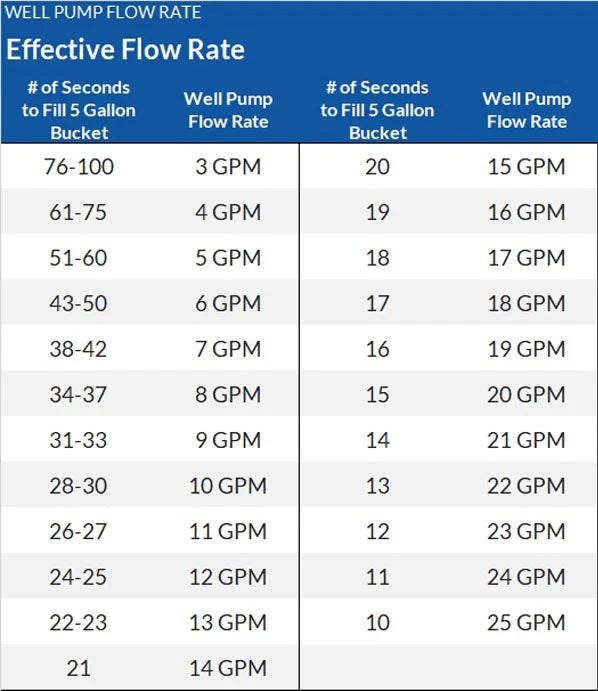
 Shut off all water in the home and fully open a hose bib near your well pump to start the test
 Fill a five gallon bucket and time how many seconds it takes to fill completely
 Use the flow rate chart to match your results with the properly sized system
 Shut off all water in the home and fully open a hose bib near your well pump to start the test
 Fill a five gallon bucket and time how many seconds it takes to fill completely
 Use the flow rate chart to match your results with the properly sized system


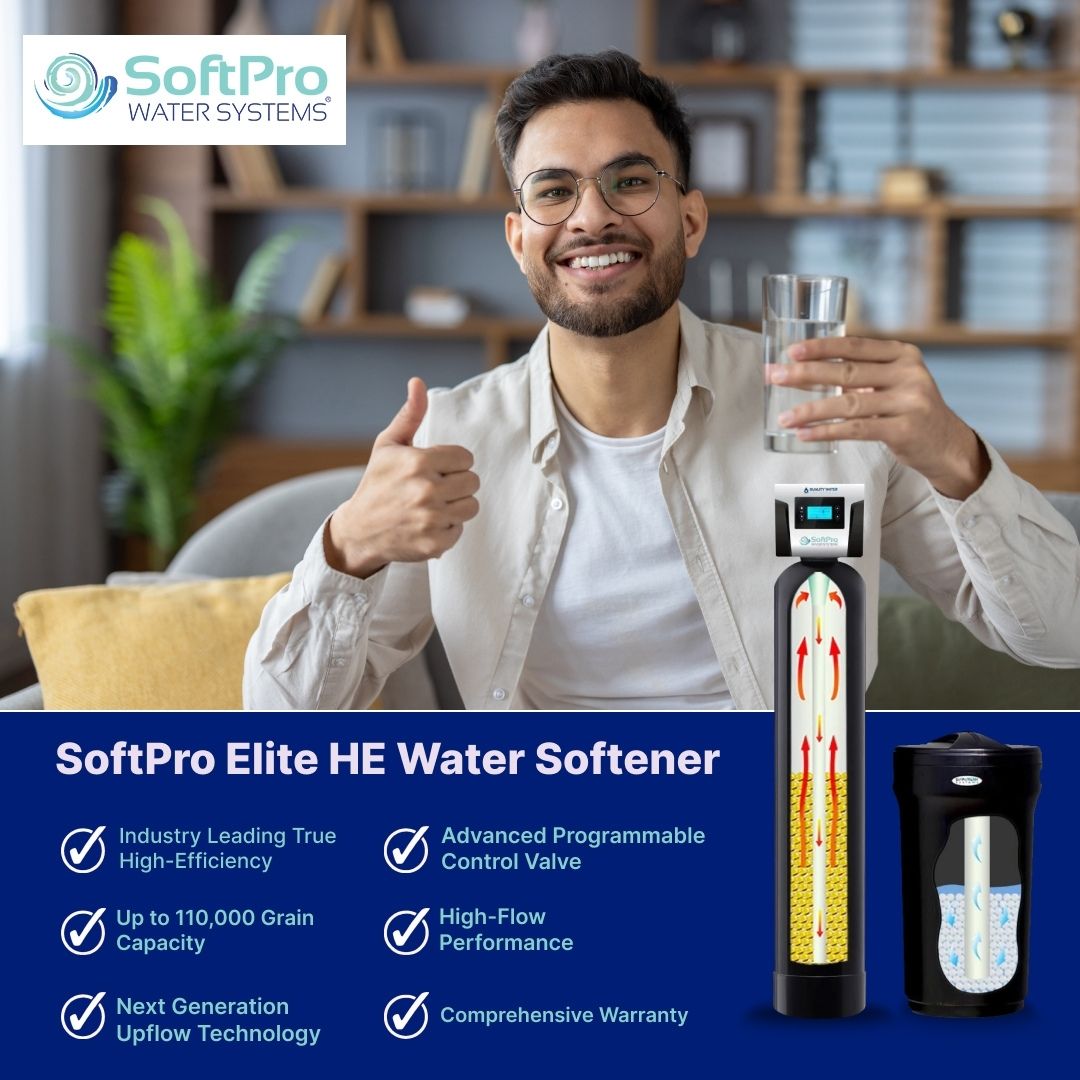
 True high-efficiency upflow design that maximizes performance while minimizing salt and water use
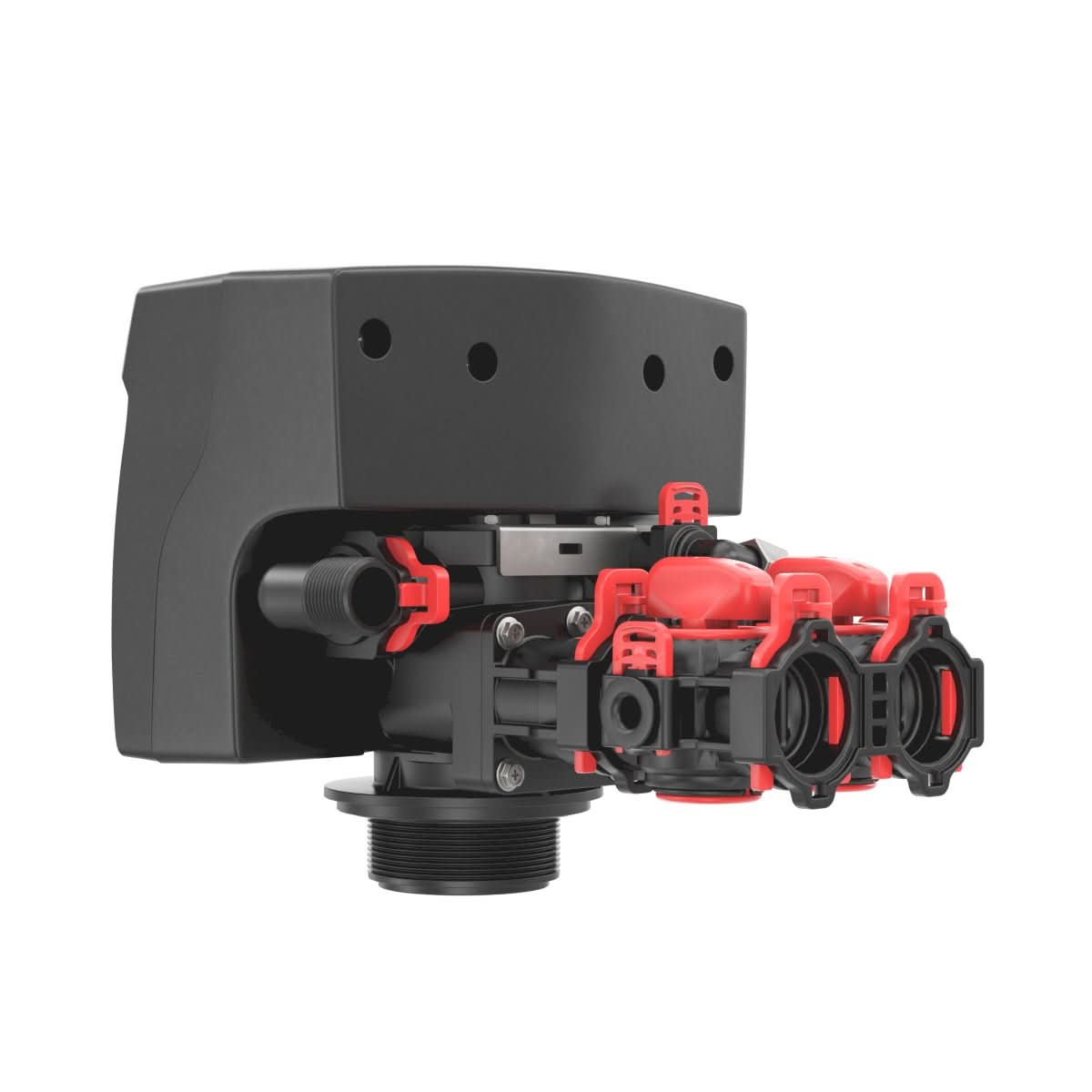
 Next-generation control valve that automatically adapts to your household’s water patterns
 High-flow softening capacity with configurations up to 64,000 grains for larger homes and demanding water conditions