


![SoftPro™ Chlorine+ Carbon Whole House Water Filter to Remove PFAS, Chlorine, Chloramine & Pesticides [City Water Filters Series]](http://www.softprowatersystems.com/cdn/shop/files/SoftPro_Whole_House_Carbon_Filter_with_Spin_Down_Water_Filter.webp?v=1783547361&width=140)


 855-683-8488


EPA Just Delayed PFAS Protection Until 2031
Table of Contents
Regulatory Explainer
EPA's PFAS rule delay pushes the compliance deadline for enforceable PFOA and PFOS limits from 2029 to 2031, but it doesn't change the 4-parts-per-trillion standard itself — what's actually shifting is timing, and the fate of four other regulated chemicals.
Key Takeaways
- The EPA's proposed PFAS rule delay would extend the compliance deadline for PFOA and PFOS drinking water limits from April 2029 to April 2031
- But only for water systems that apply and are approved — EPA.
- The underlying health standard doesn't move: PFOA and PFOS stay capped at 4 parts per trillion each, the same limit EPA set in 2024 — EPA.
- A separate EPA proposal would fully rescind the federal limits for four other PFAS chemicals — PFHxS, PFNA, GenX (HFPO-DA), and a combined Hazard Index — rather than delay them — EPA.
- When EPA finalized the original rule in 2024, it said it had evaluated more than 120,000 public comments.
- That the rule would, over many years, prevent PFAS exposure in drinking water for roughly 100 million people — EPA.
- NRDC senior scientist Anna Reade said the framing is "not about providing additional protections... it's about providing relief in terms of cost to water systems".
- Flagged the Safe Drinking Water Act's anti-backsliding provision as a legal concern.
- Environmental Working Group president Ken Cook was more direct, saying the EPA is "sentencing millions of Americans to drink contaminated water for years to come".
- Utility groups including AWWA, AMWA, and the National Rural Water Association welcomed the extension, citing lab capacity, testing costs.
- Construction timelines as reasons the original 2029 deadline was hard to meet — EPA.
2024 Rule · 2026 Rulemaking
The standard didn't change. The clock did.
Two separate proposals are moving through EPA right now — one delays a deadline, the other would erase four chemicals from the rule entirely.
What Did the EPA Actually Announce About PFAS?
EPA is currently advancing two related but distinct proposed rules under the Safe Drinking Water Act. The first would let eligible public water systems apply for a two-year extension — from April 26, 2029 to April 26, 2031 — to meet the enforceable limits for PFOA and PFOS.
The second proposal is more sweeping — it would fully rescind the federal drinking water limits for four other PFAS chemicals: PFHxS, PFNA, HFPO-DA (commonly called GenX), and the combined Hazard Index standard covering mixtures of those three plus PFBS.
Both proposals stem from a path EPA first announced on May 14, 2025, and formalized as actual rule text on May 18, 2026. The public comment period on both proposals closed July 20, 2026, following a virtual public hearing held July 7, 2026, and EPA has said it intends to take final action on the rescission rule in 2026.
What Is PFAS, and Why Does This Drinking Water Rule Matter?
PFAS — per- and polyfluoroalkyl substances — are a class of thousands of synthetic chemicals used for decades in nonstick cookware, waterproof fabric, firefighting foam, food packaging, and countless other products.
They're nicknamed "forever chemicals" because their molecular bonds resist breaking down in the environment or the human body. Long-term exposure has been linked to certain cancers, liver damage, immune suppression, and developmental harm in children, and biomonitoring by the CDC's National Health and Nutrition Examination Survey has found that most people in the US have measurable PFAS in their blood.
The 2024 rule was the first time EPA had ever set legally enforceable limits on any PFAS chemical in drinking water — a genuine regulatory milestone regardless of what happens to its timeline now.
That's part of why both the delay and the rescission proposal are drawing this much attention: it's not a minor technical tweak, it's the first real test of how durable that milestone turns out to be.
What's Changing — and What Isn't — Under the PFAS Rule Delay?
It's easy to conflate "delay" with "rollback," but the two proposed rules do genuinely different things. This table lays out what each PFAS chemical's status actually looks like under the 2024 rule versus the 2026 proposals:
| Chemical / Provision | 2024 Rule (As Written) | 2026 Proposed Change |
|---|---|---|
| PFOA & PFOS (4 ppt MCL each) | Enforceable; compliance required by April 2029 | MCL unchanged; deadline extendable to April 2031 for systems that apply and qualify |
| PFHxS, PFNA, HFPO-DA / GenX (10 ppt MCL each) | Enforceable; compliance required by April 2029 | Proposed for full rescission — no federal MCL if finalized |
| Hazard Index (mixtures of PFHxS, GenX, PFNA, PFBS) | Enforceable combined standard | Proposed for full rescission alongside the four individual MCLs |
| Monitoring & public reporting requirements | Initial monitoring required by 2027, regardless of MCL compliance date | Unchanged by either proposal |
In other words: PFOA and PFOS get more time on an unchanged bar. The other four chemicals are on track to lose their federal bar entirely, at least until — and unless — EPA re-regulates them through a new process.
EPA has stated it isn't pre-determining the outcome of that future rulemaking and that a new standard, if one comes, could theoretically be stricter, not looser — but there's currently no enforceable federal limit on the table for those four chemicals if the rescission goes through as proposed.
Why Is the EPA Delaying Compliance Until 2031?
EPA's stated rationale centers on practical implementation rather than the underlying science. Administrator Lee Zeldin told Congress in May 2025 that following the legally required process doesn't mean the eventual limits get weaker — "the final [levels] might be a lower number, not a higher number" — framing the delay as a matter of giving systems time to build the right infrastructure, not a signal on the science.
EPA has estimated 6-10% of the nation's roughly 66,000 regulated public water systems will need to take some action to come into compliance.

What Do Water Utilities Say About the Delay?
Groups representing the systems that actually have to build and pay for PFAS treatment have broadly welcomed both proposals. A joint statement from the American Water Works Association and the Association of Metropolitan Water Agencies — two groups that had separately sued EPA over the original rule — said they "strongly support the agency's decision.... and ensure future rulemakings respect the Safe Drinking Water Act process", arguing the process helps direct every ratepayer dollar toward the most pressing public health risks rather than the most legally rushed ones.
What Do Public Health and Environmental Groups Say About the Delay?
The reaction from environmental and public health advocates has been considerably less favorable. Beyond Anna Reade's comments on the Safe Drinking Water Act's anti-backsliding provision — a measure that makes it illegal to weaken a drinking water rule once it's set — communities that have already lived with PFAS contamination for years have pushed back hardest.
Is the PFAS Rule Delay Legal?
This is genuinely contested, not settled. The Safe Drinking Water Act's anti-backsliding provision generally prohibits weakening an existing drinking water standard once finalized, which is the central legal argument critics are raising against the rescission proposal in particular.
EPA's position is that it isn't weakening anything for PFOA and PFOS — the 4 ppt limit stays exactly where it was — and that the rescission of the other four chemicals is a process correction, arguing the Biden EPA didn't properly follow the Safe Drinking Water Act's required sequential steps when it originally set those four standards.
Both the extension and the rescission rules remain proposals rather than final law as of this writing, and litigation over the underlying 2024 rule (American Water Works Association, et al. v. EPA) has continued in parallel in the DC Circuit.
What Does This Mean for Your Tap Water Right Now?
As of today, nothing has changed at the tap. The original 2024 rule, its MCLs, and its 2029 compliance deadline remain the legally binding standard until and unless EPA publishes a final rule changing them — proposals aren't law.
If your utility already has PFAS above the current limits, they're still on the hook to address it under the existing timeline unless a final extension rule is published and they successfully apply for it.
What you can check now, regardless of how the rulemaking shakes out: most utilities publish PFAS results in their annual Consumer Confidence Report, and EPA's own past monitoring data under the Unregulated Contaminant Monitoring Rule (UCMR 5) is public if you want to see what's already been detected in a system near you.
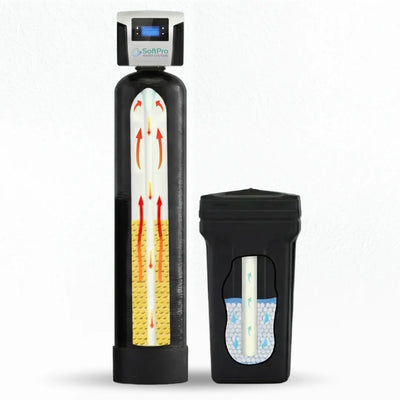
SoftPro™ Elite Smart HE - Best Water Softener for City Water
$1,367.00 $2,468.65 Sale
What Should You Do While the Rule Delay Plays Out?
Regulatory timelines are, by design, slow — and PFAS in a specific household's water doesn't wait for a final rule to publish.
If you want to address PFAS at the tap now rather than on whatever schedule the final rule lands on, activated carbon is one of the treatment approaches EPA recognizes for PFAS, alongside reverse osmosis and ion exchange.
One honest caveat: PFAS reduction varies with the carbon media, the contact time, and how well the filter is maintained, so ask any manufacturer — us included — for test data on the specific unit you're considering.
A whole-house carbon filter built to address PFAS, chlorine, and chloramine treats water at the point where it enters the home rather than at a single tap, and a catalytic carbon and bone char filter is worth a look if fluoride is also a concern in your area. Either way, start with real data rather than guessing. PFAS can't be measured with a home test kit — it takes a certified lab running EPA Method 533 or 537.1, or your utility's published results.
A household water test kit is for the everyday parameters — hardness, iron, pH — that you'll also want to know before sizing a treatment system. Browse the full whole-house filter lineup if you're comparing options, and our FAQs cover common questions about sizing and installation.
Not sure what's actually in your water while the rule plays out?
A SoftPro free water analysis report pulls together what's known about your water supply — hardness, chlorine, reported PFAS and more — so you can decide what, if anything, needs treating now rather than waiting on a federal deadline.
Get Your Free Water Analysis ReportFrequently Asked Questions About the EPA's PFAS Rule Delay
Has the EPA actually finalized the PFAS rule delay yet?
Not as of this writing. Both the compliance extension and the rescission of the other four PFAS standards are proposed rules. The public comment period closed July 20, 2026, and EPA has said it intends to take final action in 2026, but until a final rule is published, the original 2024 standards and 2029 deadline remain legally in effect.
Does the delay mean PFOA and PFOS limits are weaker now?
No. The 4 parts-per-trillion maximum contaminant level for both PFOA and PFOS is unchanged in the proposal. What's proposed to change is the compliance timeline — eligible systems could get until 2031 instead of 2029 to meet that same standard.
What happens to PFHxS, PFNA, GenX, and PFBS limits?
These four are handled differently from PFOA and PFOS. Rather than a delay, EPA has proposed fully rescinding their federal drinking water limits, arguing the original 2024 process for setting them didn't properly follow Safe Drinking Water Act procedure. If finalized, there would be no federal MCL for these chemicals, though EPA says it may pursue new standards later and some states maintain their own limits.
Why do water utilities support extending the deadline?
Utility and state regulator groups have cited limited certified lab capacity, high testing and treatment infrastructure costs, and unrealistic construction timelines as reasons the original 2029 deadline was difficult for many systems — particularly smaller and rural ones — to meet.
Why do environmental groups oppose the delay?
Groups like NRDC and the Environmental Working Group argue the delay and especially the rescission proposal conflict with the Safe Drinking Water Act's anti-backsliding provision, and that communities already dealing with PFAS contamination will be exposed for years longer than the original rule intended.
Is delaying a finalized drinking water rule legal?
That's actively disputed. Critics point to the Safe Drinking Water Act's anti-backsliding provision as a legal obstacle, particularly for the rescission proposal. EPA's position is that the PFOA/PFOS standard itself isn't being weakened, and that correcting a flawed rulemaking process for the other four chemicals is legally distinct from weakening a standard. Litigation over the underlying rule remains ongoing.
Does this affect private well owners?
The federal MCLs apply to public water systems, not private wells, which were never covered by the 2024 rule. Private well owners have always been responsible for their own PFAS testing and treatment decisions, regardless of how this federal rulemaking concludes.
What can I do about PFAS in my water right now, regardless of the rule delay?
Start with data: your utility's published PFAS results, or a certified lab test if you're on a well (home test kits can't measure PFAS). Then look at the treatment approaches EPA recognizes for PFAS — activated carbon, reverse osmosis, and ion exchange — and ask for PFAS test data on any specific system you're considering. You don't need to wait for a federal deadline to address it in your own home — our install guides and about page cover what to look for in a system if you decide to.
Methodology & Sources
This article is built primarily from EPA's own rule text, press releases, and Federal Register filings, supplemented by NPR/member-station reporting, Environmental Health News, and legal analysis from Ballard Spahr and the National Law Review. This is a live regulatory and political topic, so this piece presents the stated positions of EPA, utility groups, and environmental/public health advocates as reported and quoted, without endorsing any position — readers weighing in on the underlying policy should consult the primary EPA docket (EPA-HQ-OW-2025-1742 and EPA-HQ-OW-2025-0654) directly. All figures and quotes trace to a named source rather than an unsourced summary. Regulatory status reflects EPA's public filings as of publication and may have changed since; check EPA's SDWA PFAS pages directly for the current status of both proposed rules.

EPA PFAS Rule Delay — Key Numbers
4 ppt
MCL for PFOA and PFOS — unchanged by the proposed delay
EPA
2029 → 2031
proposed compliance deadline shift for eligible systems
EPA / Federal Register
100 million
Americans EPA says the original rule protects from PFAS exposure over time
EPA
120,000+
public comments EPA evaluated before finalizing the original 2024 rule
EPA
97%
of Americans have measurable PFAS in their blood
CDC biomonitoring data
4
PFAS chemicals proposed for full rescission, not delay
EPA





