


![SoftPro™ Chlorine+ Carbon Whole House Water Filter to Remove PFAS, Chlorine, Chloramine & Pesticides [City Water Filters Series]](http://www.softprowatersystems.com/cdn/shop/files/SoftPro_Whole_House_Carbon_Filter_with_Spin_Down_Water_Filter.webp?v=1783547361&width=140)


 855-683-8488



What is the best water softener system? The one sized to your water's hardness and your household's daily use. For most homes, that's a metered salt-based softener like the SoftPro Elite Smart HE.
Key Takeaways
- The best water softener system for most homes is the SoftPro Elite Smart HE: 10% high-capacity resin, 1" high-flow plumbing, a smart metered valve and city and well versions.
- Hard water starts above 120 mg/L (7 grains per gallon) and "very hard" is anything over 180 mg/L (10.5 gpg), per the USGS hardness scale.
- Roughly 85% of American households deal with hard water, and the average sits between 120 and 140 ppm, per SoftPro's U.S. hardness breakdown.
- Gas storage water heaters on softened water maintained their factory efficiency over a 15-year lifetime, while every 5 gpg of hardness cost about 4% in efficiency, per the WQRF/Battelle study.
- Size it with simple math: people x ~80 gallons x your hardness in gpg, plus 5 grains per 1 ppm of iron. Aim for a regeneration about every 7 to 10 days.
- The SoftPro Elite Smart HE regenerates about every 14 days on average and uses roughly one 40-lb bag of salt every 2 to 4 months.
- Well water above 0.3 mg/L iron (the EPA's secondary limit) needs an iron filter ahead of the softener.
- Softening adds about 8 mg/L of sodium per grain of hardness removed, per NDSU Extension. Leave one kitchen tap unsoftened if you watch your sodium.
Hard water is basically a tiny rock band living in your pipes. Calcium and magnesium show up uninvited, trash the water heater, leave crust on your faucets, and turn your shower into a soap-scum factory. A good softener kicks them out. This page is your shortcut to the best water softener systems we build, led by our top pick, the SoftPro Elite Smart HE, plus the straight talk on picking the right one without getting played.
What is the best water softener system for most homes?
The best water softener system is the one that matches your water source, your hardness, and your household size. Everything else is marketing. If you want the short version, the SoftPro Elite Smart HE is the best water softener for most households, and it comes in city and well versions. Here are all five SoftPro picks, sorted by what you're actually dealing with.
 #1 Pick · City water
SoftPro™ Elite Smart HE - Best Water Softener For City Water
High-flow 1" plumbing, 10% high-capacity resin, smart valve, 32,000 to 64,000 grains.
Shop Now #1 Pick · Well water
SoftPro™ Elite Smart HE - The Best Water Softener For Well Water
Built for changing well chemistry, with flow options from 6-7 GPM up to 11+ GPM.
Shop Now Best value · City water
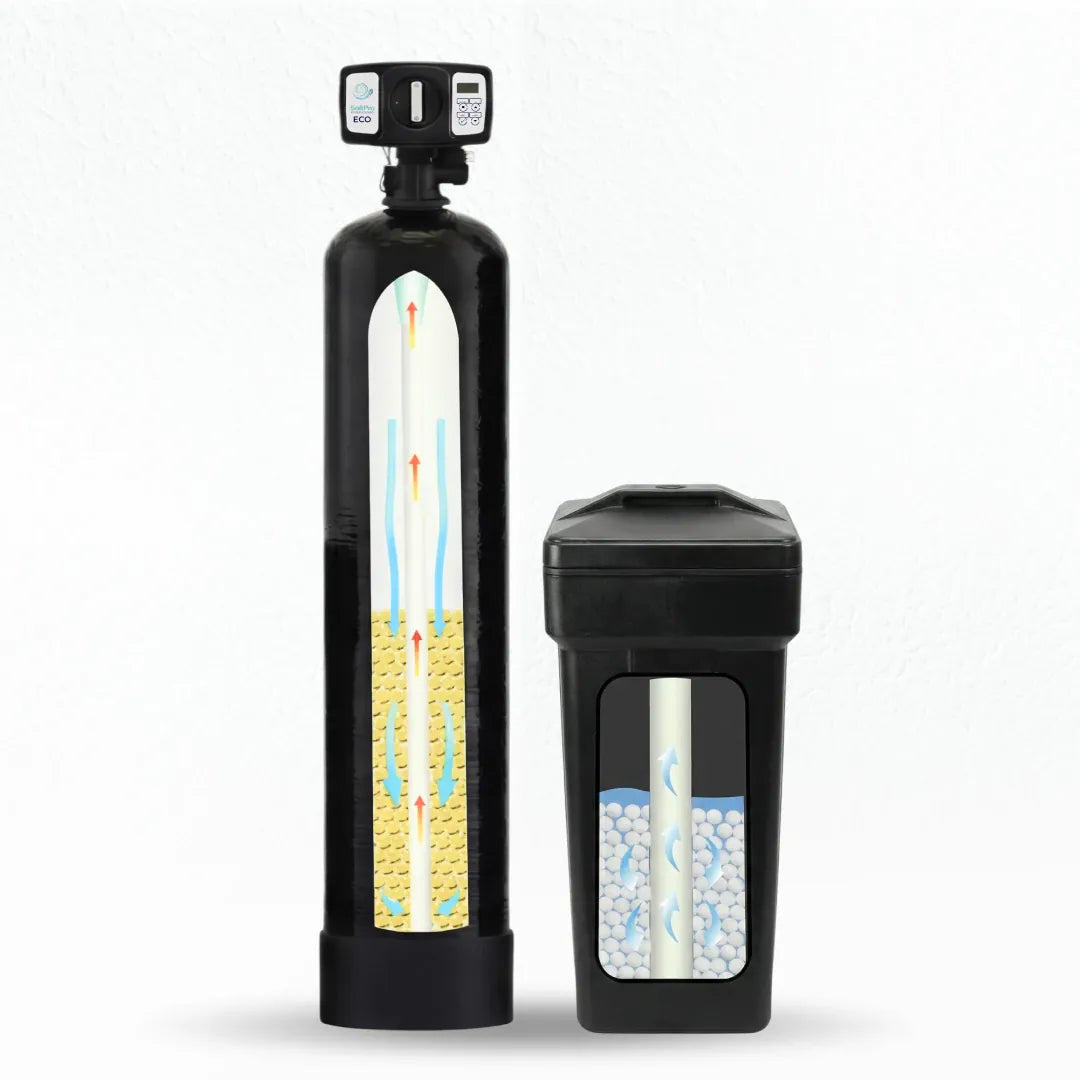
SoftPro ECO™ City Water Softener - Best Water Softener Systems For City Water
Uses 10% less salt than traditional systems. 8% crosslink resin built to last up to 20 years.
Shop Now Top seller · Well water
SoftPro ECO™ Well Water Softener (Top Seller & Lifetime Warranty)
Fine-mesh resin for well water, metered regeneration, lifetime limited warranty.
Shop Now Salt-free · City water
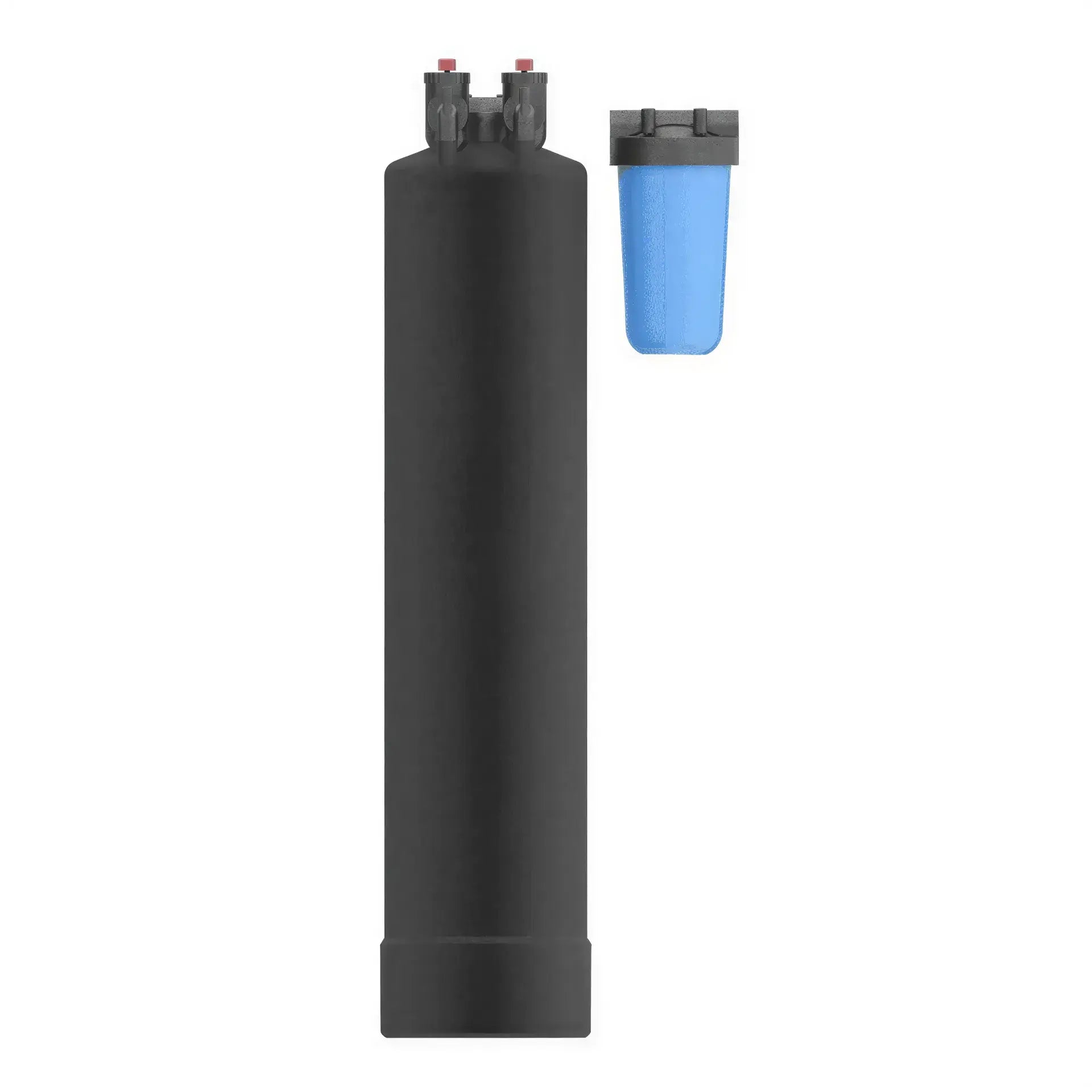
SoftPro™ Elite Salt Free Water Conditioner [CITY WATER]
Scale prevention with no salt and no drain line. Conditions water, doesn't remove minerals.
Shop NowPrices shown reflect current sale pricing for the softener-only package. Gold and Gold+ bundles add whole-house filtration for chlorine, fluoride and VOCs.
Best water softener systems, ranked
If you only read one table, make it this one. The SoftPro Elite Smart HE sits at #1 because it handles the widest range of homes, from a three-bath city house to a well-fed farmhouse.
| Rank | System | Best for | Why it ranks here | From |
|---|---|---|---|---|
| #1 | SoftPro Elite Smart HE (City) | Most city water homes | 1" high-flow, 10% resin, smart metered valve, up to 30% extra salt savings. | $1,367 |
| #2 | SoftPro Elite Smart HE (Well) | Most well water homes | Same smart valve and resin with flow options from 6-7 to 11+ GPM. | $1,327 |
| #3 | SoftPro ECO (City) | Budget city water | 10% less salt than traditional systems and a 15% reserve. | $967 |
| #4 | SoftPro ECO (Well) | Budget well water | Top seller with fine-mesh resin and a lifetime limited warranty. | $947 |
| #5 | SoftPro Elite Salt Free (City) | Scale control without salt | No salt or drain line, but conditions rather than removes minerals. | $1,299 |
Why is the SoftPro Elite Smart HE the best water softener system?
The SoftPro Elite Smart HE is our top choice because it fixes the three things most softeners get wrong: flow, salt and babysitting. The 1-inch high-flow design keeps pressure up when several fixtures run. The 10% high-capacity crosslinked resin does more work per pound of salt than standard 8% resin. And the smart valve tracks your actual water use, so it only regenerates when the resin needs it.
| Feature | SoftPro Elite Smart HE | Why it matters |
|---|---|---|
| Resin | 10% high-capacity crosslink | More softening per pound of salt and stronger on shifting water. |
| Flow | 1" high-flow plumbing | Little to no pressure drop with multiple fixtures running. |
| Valve | Smart upflow valve, demand-initiated regeneration | Regenerates on actual use, not a calendar. |
| Salt use | About one 40-lb bag every 2-4 months | Fewer refills and lower running costs. |
| Smart features | Vacation mode, auto-refresh below 3% capacity, optional Wi-Fi salt sensor ($89) | Hands-off upkeep and a heads-up before the salt runs low. |
| Certifications | NSF/ANSI, WQA, IAPMO, ISO 9001 | Third-party proof it does what it says. |
| Warranty and delivery | Limited lifetime warranty on the valve and key components, free shipping on systems | Long-term peace of mind with no shipping surprise. |
It works on both water types. Choose the Elite Smart HE for city water or the Elite Smart HE for well water. Same smart brain, with the well version built for wells that change with the seasons.
Which best water softener should you choose? A 30-second decision map
What does hard water actually do to your home?
Hard water quietly eats your stuff and your money. The minerals dry into scale inside pipes, water heaters and appliances, which makes everything work harder and wear out faster. The signs are hard to miss once you know them.
Here are the classic signs of hard water: white crust on faucets and showerheads, spots on glassware, soap that refuses to lather, a film on shower doors, and a water heater that sounds like popcorn. Your skin feeling tight after a shower is a common one too.
The numbers back it up. In a study run for the Water Quality Research Foundation, Battelle Memorial Institute tested 30 water heaters over 90 days. Gas storage heaters on softened water held their original factory efficiency over a 15-year lifetime, while every 5 grains of hardness caused about a 4% efficiency loss. The WQA summarizes the findings here. Our own breakdown of what hard water does to appliances goes deeper.
How hard is your water, really?
You can't pick the best water softener system until you know your number. Hardness is measured in grains per gallon (gpg) or milligrams per liter (mg/L), and one gpg equals about 17.1 mg/L. The USGS sorts water into four buckets.
Not sure where you land? Grab the hardness level guide or run a quick test. SoftPro's free water report even spits out sizing recommendations.
Which water softener system is best for city water?
For city water, the SoftPro Elite Smart HE is the best water softener system we make. It's built on a 1-inch high-flow design, so you can run the shower, dishwasher and washing machine at once without your pressure tanking. The smart valve regenerates on demand, not on a dumb timer, and the 10% high-capacity resin does more work per pound of salt than standard 8% resin.
Want the great-value pick? The SoftPro ECO City Water Softener trims salt use by 10% versus traditional systems and only keeps a 15% reserve instead of the usual 30% or more. Same job, lower price, zero drama.
City water also brings chlorine into the party. A softener doesn't touch that, so if your morning shower smells like a swimming pool, stack on a whole house filter via the Gold or Gold+ bundles. Gold+ adds fluoride and VOC reduction too.
Shop city water softenersWhich water softener system is best for well water?
For well water, the SoftPro Elite Smart HE well version is the best water softener we make, with the ECO well version as the budget pick, and you should test your iron first. Wells are moody. Hardness, pH and iron change with the seasons, and the resin has to handle all of it. Both well systems come with flow options (6-7, 8-10 or 11+ GPM) so they keep up with your pump.
Don't know your numbers yet? Start with a well water test kit and then pick your system. It's cheap and it saves you from buying twice.
Shop well water softenersIs a salt-free conditioner the best water softener system for you?
A salt-free conditioner is a scale fighter, not a true softener. It changes how calcium and magnesium behave so they're less likely to stick to pipes and heating elements, but the minerals stay in the water. You won't get that silky, slick feel. You also don't haul salt bags, and there's no drain line.
Here's how to choose between the two: go salt-based if you want genuinely soft water, softer-feeling skin and the best soap lather. Go salt-free (the Elite Salt Free Water Conditioner) if your top priority is scale protection with minimal maintenance.
| Feature | Salt-based softener | Salt-free conditioner | Whole house filter |
|---|---|---|---|
| What it does | Removes calcium and magnesium by ion exchange | Conditions minerals so they cling less | Reduces chlorine, chemicals, sediment |
| Truly soft water | Yes | No | No |
| Needs salt | Yes | No | No |
| Needs a drain line | Yes | No | Depends on the filter |
| Adds sodium | Yes, about 8 mg/L per grain removed | No | No |
| Best for | Hard water of 7+ gpg | Scale prevention, low maintenance | Taste, odor, chlorine |

How do I size the best water softener system for my home?
Sizing is three numbers and a calculator. Multiply the people in your home by roughly 80 gallons of daily use per person, then by your hardness in gpg. That's your daily grain load.
In that example, a 32,000 to 48,000-grain unit fits. A 48,000-grain SoftPro Elite Smart HE gives you breathing room for guests, a hot-tub refill or a growing family. Want the shortcut? Use the sizing calculator or the grain capacity chart. Oversizing is cheap insurance. Undersizing means a softener that's always out of breath.
Water softener size chart: grain capacity by household and hardness
This chart shows the minimum capacity for about one regeneration a week. It assumes 80 gallons per person per day. Add 5 grains of hardness per 1 ppm of iron, and step up one size if you want longer gaps between cycles.
| People in home | 5 gpg | 10 gpg | 15 gpg | 20 gpg |
|---|---|---|---|---|
| 2 | 32,000 | 32,000 | 32,000 | 32,000 |
| 3 | 32,000 | 32,000 | 32,000 | 48,000 |
| 4 | 32,000 | 32,000 | 48,000 | 48,000 |
| 5 | 32,000 | 32,000 | 48,000 | 64,000 |
| 6 | 32,000 | 48,000 | 64,000 | 64,000 or larger, call us |
For a family of four, the SoftPro Elite Smart HE in 48,000 grains is the best water softener system size for most hardness levels. It covers up to 20 gpg with room to spare and keeps the gap between cycles comfortable.
Flow rate matters just as much as grains. Capacity tells you how long the resin lasts. Flow tells you whether the shower stays strong while the dishwasher runs. Wells are limited by the pump, so match the 6-7, 8-10 or 11+ GPM option to your pump output.
How does each SoftPro water softener system compare?
This side-by-side shows what changes and what stays the same across the lineup. All prices are for the softener-only package at the time of writing.
| System | Best for | Capacity options | Resin | Starting price |
|---|---|---|---|---|
| Elite Smart HE (City) | Larger homes, high flow, smart features | 32K / 40K / 48K / 64K | 10% high-capacity | $1,367 |
| Elite Smart HE (Well) | Wells with shifting water chemistry | 32K / 40K / 48K / 64K | 10% high-capacity | $1,327 |
| ECO (City) | Best value on city water | 32K / 48K / 64K | 8% crosslink | $967 |
| ECO (Well) | Budget-friendly well water softening | 32K / 48K / 64K | Fine mesh, well-rated | $947 |
| Elite Salt Free (City) | Scale prevention, no salt | n/a | Salt-free media | $1,299 |
What makes a water softener system the best?
Five things separate a keeper from a regret. Check every one before you hit buy.
- Certification: Look for NSF/ANSI 44 for cation exchange softeners, plus WQA testing. SoftPro systems carry NSF/ANSI, WQA, IAPMO and ISO 9001 credentials.
- Metered regeneration: It cleans the resin when you've used up capacity, not when a clock says so. Less salt, less water, fewer wasted cycles.
- Resin quality: The Elite line uses 10% high-capacity crosslinked resin, the ECO line uses 8% crosslink engineered to last up to 20 years.
- Flow rate: The Elite's 1-inch design keeps pressure steady with several fixtures running. Match flow to your biggest water-use moments.
- Warranty and support: A lifetime limited warranty, a 60-day money-back guarantee, free shipping on systems (excluding AK, HI, PR) and real humans on the phone are the difference between "set it and forget it" and "figure it out yourself."
How does a water softener system work?
A salt-based softener swaps hard minerals for sodium through ion exchange. Water flows through a tank of tiny resin beads. The beads grab calcium and magnesium and release sodium in return. When the beads fill up, the system flushes them with salty brine and starts fresh.
Metered valves make that flush smarter, which is why the SoftPro Elite Smart HE is our top choice. It tracks gallons used, regenerates roughly every 14 days on average, and its precision brining saves up to 30% more salt on top of demand-based regeneration. It also has vacation mode, a 48-hour battery backup and an auto-refresh if capacity drops below 3%.
Is a softener a drinking-water filter? Nope. It treats hardness, which is a nuisance issue rather than a health one: the USGS notes that the EPA hasn't set a limit for hardness because the minerals involved aren't toxic. Pair it with a whole house filter if you want chlorine or fluoride dealt with too.
Does a water softener add sodium to your drinking water?
Yes, a little, and it scales with your hardness. North Dakota State University Extension says about 8 mg/L of sodium is added for every grain of hardness removed. Water at 10 gpg would pick up roughly 80 mg/L.
The fix is easy: leave one kitchen tap unsoftened for drinking and cooking, or ask your doctor if you're on a sodium-restricted diet. NDSU also notes that potassium chloride can replace salt, though it costs more and cuts efficiency by roughly 10%. A drinking-water filter at the kitchen sink is another common choice.
How much does a water softener system cost to buy and run?
SoftPro softener-only systems run from $947 to $1,367. The ECO well model starts at $947, the ECO city model at $967, the Elite Smart HE well at $1,327 and the Elite city at $1,367. Gold and Gold+ bundles add whole-house filtration, and shipping on systems is always free in the continental U.S.
Running costs are mostly salt. A typical household on an Elite Smart HE uses about one 40-lb bag every 2 to 4 months, which works out to roughly 3 to 6 bags a year. The optional Wi-Fi salt sensor ($89) tells you when to refill.
Installing it yourself saves real money. The systems go in at the main line with a drain and a 110V outlet, and the installation guides walk you through it. Prefer a pro? Our team will walk you through the options at 855-683-8488.
What mistakes should you avoid when buying a water softener?
Most softener regrets come from five avoidable mistakes. Dodge these and you're ahead of the game.
- Guessing your hardness: test it, don't eyeball it.
- Undersizing the unit: a tank that regenerates every other day wastes salt and wears itself out.
- Ignoring iron on a well: above 0.3 ppm, add an iron filter or the resin will foul.
- Expecting a softener to remove chlorine: it won't. Add carbon filtration if taste and smell matter.
- Buying on price alone: check certifications, resin, warranty and support, not just the sticker.
What do SoftPro customers say?
Verified customers keep it simple. Here's what a few of them told us after installing.
I just wanted to say thank you for your excellent products and service over the past 12 years.
Daniel R., Texas · Verified Customer
After we installed the Softpro Elite I noticed a significant difference in the house water quality.
Julie M., Florida · Verified Customer
Easy to install. Jeremy helped in making the right purchase!
Denise C., New Hampshire · Verified Customer
Want more? Read the full SoftPro reviews page.
Not sure which size or system fits?
Get your free, instant water report with custom sizing recommendations. Takes a minute, saves you a headache. And every system is backed by a 60-day money-back guarantee.
Talk to a water pro at 855-683-8488, Mon-Fri 9am-7pm CST.
Best water softener system FAQs
What is the best water softener system overall?
For most homes, the best water softener system is the SoftPro Elite Smart HE. It pairs 10% high-capacity resin with 1" high-flow plumbing, a smart metered valve that averages a regeneration about every 14 days, and a limited lifetime warranty on the valve and key components. It is available for city water and for well water.
What is the best water softener for well water?
The SoftPro Elite Smart HE well water version is our top pick for wells, with flow options from 6-7 GPM up to 11+ GPM. If your iron tests above 0.3 ppm, add an iron filter such as the Iron Master ahead of it.
What is the best water softener system for a family of four?
For most four-person homes on city water with moderately hard to hard water, a 48,000-grain metered softener such as the SoftPro Elite Smart HE is the sweet spot. Confirm with the math: people x 80 gallons x your hardness, then size so it regenerates roughly every 7 to 10 days.
Is a salt-based or salt-free system better?
A salt-based softener removes hardness minerals through ion exchange and is the right call when you want truly soft water. A salt-free conditioner changes how minerals behave so scale is less likely to stick, but it does not remove them.
What size water softener do I need?
Multiply the number of people by about 80 gallons per day by your hardness in gpg. Add 5 grains of hardness for every 1 ppm of dissolved iron, then choose a capacity that regenerates about every 7 to 10 days. The sizing calculator does it for you.
Can a water softener work on well water?
Yes, but test first. A softener alone handles hardness, while iron above about 0.3 ppm calls for an iron filter in front of it.
How much salt does a water softener use?
A typical household using a SoftPro Elite Smart HE goes through roughly one 40-pound bag every two to four months, thanks to metered, demand-initiated regeneration and precision brining.
Does a water softener add sodium to drinking water?
Yes. For every grain of hardness removed, about 8 mg/L of sodium is added, according to NDSU Extension. Leaving one kitchen tap unsoftened for drinking and cooking avoids the extra sodium.
Can I install a water softener myself?
Yes. SoftPro systems are designed for DIY installation at the main water line with a drain connection and a standard 110V outlet. Guides, videos and phone support are available, and you can check the FAQ page for more.
Does a water softener remove chlorine?
No. A softener removes hardness minerals, not chlorine or fluoride. Pair it with a carbon filter, or choose the Gold or Gold+ bundle, if taste or smell bothers you.
Do I need a water softener if my water is only moderately hard?
Water between 3.6 and 7 gpg is classed as moderately hard by the USGS. Many homes in that range still see spotting and scale over time, but the case for a softener gets stronger as you move above 7 gpg.
How much does a water softener system cost?
SoftPro softener-only systems start at $947 for the ECO well model and $967 for the ECO city model, with the Elite Smart HE starting at $1,327 to $1,367. Gold and Gold+ bundles add whole-house filtration. Shipping on systems is always free in the continental U.S.
How long does a water softener last?
A well-sized, well-maintained softener runs for many years. SoftPro backs its systems with a lifetime limited warranty, and the ECO line uses 8% crosslink resin engineered to last up to 20 years.
Does soft water feel different?
Soft water feels slicker because soap lathers fully and no mineral film is left behind. Many people notice cleaner-feeling skin and hair and less spotting on glass and fixtures.


![SoftPro™ Elite Salt Free Water Conditioner [CITY WATER]](http://www.softprowatersystems.com/cdn/shop/files/SoftPro_Elite_Salt_Free_Water.webp?v=1785375872&width=600)




