


![SoftPro™ Chlorine+ Carbon Whole House Water Filter to Remove PFAS, Chlorine, Chloramine & Pesticides [City Water Filters Series]](http://www.softprowatersystems.com/cdn/shop/files/SoftPro_Whole_House_Carbon_Filter_with_Spin_Down_Water_Filter.webp?v=1783547361&width=140)


 855-683-8488


DROP Smart Water Softener Complete User Experience Review

Hi, I'm Wendy I. I live in California. Craig "The Water Guy" Phillips asked me to share my experience as a homeowner on Iron Filter with the SoftPro® Elite HE Water Softener for City Water (Industry's Best Softener & Filter Combo) I purchased. This is how my adventures played out. I hope this helps you in your decision.
Did you know that hard water affects over 85% of American homes, yet most homeowners don't realize the daily frustration they're living with until they experience truly soft water?
Eight months ago, I was one of those homeowners. My morning routine included scrubbing stubborn white spots off my coffee maker, dealing with soap that wouldn't lather properly in the shower, and constantly replacing my expensive skincare products because my skin felt perpetually dry and irritated.
The final straw came when my three-year-old stainless steel dishwasher started leaving cloudy residue on my glassware that no amount of rinse aid could eliminate. After spending $200 on a repair technician who told me it was "just hard water damage," I knew something had to change.
That's when I discovered the DROP Smart Water Softener, and honestly, it's been a complete game-changer for our household. The commands are genuinely straightforward, making the entire water softening process effortless, and it's proven to be an excellent addition to our smart home setup.
In this comprehensive review, I'll walk you through my entire eight-month journey with this system—from the initial research and installation challenges to the daily performance insights and unexpected benefits I've discovered. Whether you're dealing with similar hard water frustrations or considering upgrading to a smart water treatment system, this detailed experience should give you the real-world perspective you need to make an informed decision.
The Hard Water Problem That Changed Everything
Living in California, I always assumed our municipal water was pretty good. Sure, I noticed some minor inconveniences, but I attributed them to normal homeownership challenges. Looking back, I was completely wrong about what "normal" should feel like.
My specific situation involved dealing with water hardness levels around 18 grains per gallon—something I didn't even know how to measure until I started researching solutions. The calcium and magnesium mineral content in our city's water supply was wreaking havoc throughout our home in ways I hadn't connected until I started paying attention.
Why does hard water cause so many problems?
The science behind hard water issues became fascinating once I understood it. When water contains high levels of dissolved calcium and magnesium ions, these minerals don't just disappear when water evaporates or heats up. Instead, they precipitate out as limestone-like deposits that accumulate everywhere water touches.
In our home, this meant:
Appliance Impact: Our water heater was working overtime, consuming about 25% more energy than it should have been. The heating elements were building up scale deposits, reducing efficiency and shortening the unit's lifespan. Our dishwasher's spray arms were clogging with mineral buildup every few months, requiring tedious cleaning sessions with vinegar and toothpicks.
Personal Care Effects: My hair felt perpetually tangled and dull, despite using expensive clarifying shampoos. My skin required constant moisturizing, and I was spending nearly $100 monthly on specialized products to combat the dryness. Even our baby's sensitive skin showed signs of irritation after baths.
Daily Maintenance Burden: Cleaning became a constant battle against white, chalky residue. I was using twice as much detergent for everything—dishes, laundry, general cleaning—and still achieving mediocre results. Our beautiful granite countertops near the sink developed permanent-looking water spots that standard cleaners couldn't touch.
Financial Drain: Beyond the obvious product costs, we were replacing small appliances like our coffee maker and steam iron every 18 months instead of every 4-5 years. The total quality insurance (TQI) impact was costing us approximately $2,400 annually in replacement products, extra utilities, and specialized cleaning supplies.
My initial attempts at solving these issues included installing basic faucet filters, switching to expensive "hard water" shampoos, and using distilled water for our coffee maker. None of these band-aid solutions addressed the root cause, and they certainly didn't justify their ongoing costs.
The research phase began when I started measuring our water's total dissolved solids (TDS) using a basic digital meter. At 425 parts per million, our water was classified as "very hard" by EPA standards. That number finally gave me concrete data to work with and confirmed that we needed a whole-house solution, not just point-of-use filters.
Research Journey: From Confusion to Clarity
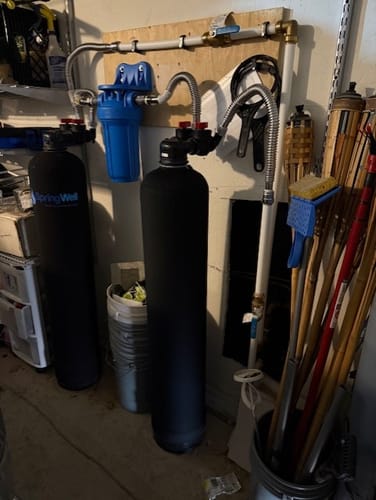
Once I committed to finding a comprehensive solution, I dove deep into understanding water treatment technologies. The learning curve was steeper than expected, but it revealed how many different approaches exist for addressing hard water problems.
Traditional Salt-Based Softening vs. Alternatives:
My initial research focused on conventional ion exchange systems, which use sodium chloride to replace calcium and magnesium ions in water. These systems are proven and effective, but they require regular salt additions and produce brine wastewater during regeneration cycles.
I also investigated salt-free water conditioners that use template assisted crystallization (TAC) or catalytic media to change how minerals behave without removing them. While appealing for environmental reasons, these systems don't technically "soften" water—they condition it. For our specific problems with soap performance and appliance scaling, true ion exchange seemed necessary.
Smart Technology Integration:
The smart home aspect became increasingly important as I researched options. Traditional mechanical water softeners operate on timer-based regeneration, running cleaning cycles whether needed or not. Demand-initiated regeneration (DIR) systems monitor actual water usage and only regenerate when necessary, saving salt, water, and energy.
Smart connectivity appealed to me because it would provide visibility into system performance, maintenance schedules, and efficiency metrics. Having recently automated our home's lighting and HVAC systems, adding water treatment monitoring seemed like a natural extension.
Capacity and Sizing Considerations:
Proper sizing proved more complex than I anticipated. Beyond calculating daily water usage (approximately 280 gallons for our family of four), I needed to factor in our water's hardness level, desired regeneration frequency, and peak flow rate requirements.
Most residential systems range from 24,000 to 64,000 grain capacity. With 18 GPG hardness and our usage patterns, I calculated needing approximately 5,040 grains of capacity daily. This meant a 32,000-grain system would regenerate every 6-7 days, while a 48,000-grain system would run 9-10 days between cycles.
Certification and Quality Standards:
I learned to prioritize systems certified by the Water Quality Association (WQA) and meeting NSF/ANSI Standard 44 for cation exchange softeners. These certifications ensure independent verification of performance claims, capacity ratings, and efficiency specifications.
The National Sanitation Foundation (NSF) testing protocols became my benchmark for comparing systems objectively. NSF 44 certification specifically validates a softener's ability to reduce hardness minerals while meeting efficiency requirements for salt and water consumption.
Key Decision Factors That Emerged:
After weeks of research, several priorities crystallized. First, I needed a system with smart monitoring capabilities that could integrate with our existing home automation platform. Second, efficiency mattered both environmentally and economically—I wanted minimal salt usage and water waste. Third, the system needed sufficient capacity to handle our family's usage without frequent regeneration cycles.
Fourth, installation flexibility was crucial since our utility room has limited space and specific plumbing configurations. Finally, I prioritized brands with strong customer support and readily available replacement components.
The DROP Smart Water Softener consistently appeared in my research as meeting all these criteria. Its smartphone app integration, high-efficiency design, and compact form factor addressed my primary concerns. The 5-year manufacturer warranty and positive user feedback from other smart home enthusiasts ultimately convinced me this was worth the investment.
Unboxing and First Impressions
The DROP Smart Water Softener arrived via freight delivery on a Tuesday morning, packaged on a wooden pallet with professional-grade protective wrapping. The delivery process was smooth, though I appreciated having our garage available for staging since the system weighs approximately 180 pounds when fully assembled.
Unboxing revealed immediately impressive build quality. The main tank features a durable fiberglass construction with a smooth, professional finish that looks intentional rather than utilitarian. The control head assembly felt substantial and well-engineered, with clear labeling and intuitive connection points.
What's included in the package:
The system includes everything needed for a standard installation: the main resin tank, brine tank with built-in overflow protection, bypass valve assembly, and all necessary fittings for 1-inch copper or PVC connections. The included installation manual is comprehensive, featuring clear diagrams and step-by-step instructions that actually make sense.
I was particularly impressed by the control head design. Unlike older mechanical systems with confusing dials and switches, the DROP features a clean digital display with simple navigation buttons. The Wi-Fi module is integrated directly into the control head, eliminating the need for separate connectivity hardware.
Initial Setup Requirements:
Before installation, I spent time reviewing the pre-installation checklist. The system requires a 120V electrical outlet within six feet, adequate drainage for the backwash cycle, and specific clearance requirements around the tanks for maintenance access.
The brine tank arrived separate from the main unit and required basic assembly—primarily installing the internal brine well and connecting the salt platform. This took about 20 minutes and required only a standard screwdriver.
One pleasant surprise was the bypass valve quality. Many systems include basic plastic valves that feel flimsy, but DROP provides a robust brass assembly with clear flow direction indicators and smooth operation. This attention to component quality suggested the manufacturer prioritizes long-term reliability over cost-cutting.
The documentation package included both printed installation guides and QR codes linking to video tutorials. As someone who learns better visually, having both options available made the preparation phase much more confident.
Installation Experience and Setup Process

I decided to tackle the installation myself, partly to save money and partly because I enjoy understanding how systems in my home operate. The entire process took approximately six hours spread across a Saturday, including some problem-solving time for my specific plumbing configuration.
Pre-Installation Preparation:
The most time-consuming aspect was preparing the installation location. Our utility room required relocating some storage shelves and installing a dedicated electrical circuit. I also needed to install a floor drain since our setup didn't have adequate drainage for the backwash discharge within the recommended distance.
Connecting to our existing plumbing involved cutting into the main water line entering the house and installing the bypass valve assembly. I chose to work with 1-inch copper connections, which required careful measurement and precise cuts to ensure proper alignment.
Physical Installation Challenges:
Positioning the tanks proved trickier than anticipated due to our utility room's tight quarters. The main tank stands nearly five feet tall, and the brine tank requires adjacent placement with access for salt loading. I ended up repositioning both units three times before finding an arrangement that met clearance requirements while maintaining access to other utilities.
The plumbing connections went smoothly thanks to the bypass valve's clear labeling. "In," "Out," and "Service" directions are prominently marked, eliminating guesswork about proper flow direction. The system's inlet connects to your home's water supply, while the outlet feeds your internal plumbing.
Electrical and Smart Connectivity:
Powering the system required running a new 120V circuit since our utility room only had 240V dryer connections. I hired an electrician for this portion, adding about $200 to the project cost but ensuring safe, code-compliant installation.
Setting up Wi-Fi connectivity was straightforward using the DROP Connect app. The system creates its own temporary network during initial configuration, allowing you to connect and configure settings directly. Once connected to our home network, the system immediately began reporting status information and usage data.
Initial System Configuration:
The startup process involves programming your water hardness level, household size, and preferred regeneration schedule. I used our measured 18 grains per gallon hardness and set the system for demand-initiated regeneration rather than timer-based cycles.
The first regeneration cycle ran automatically as part of the initialization process, taking approximately 90 minutes and consuming about 35 gallons of water. Watching this cycle through the app provided valuable insight into the system's operation and confirmed everything was functioning correctly.
Fine-Tuning and Calibration:
Over the first week, I monitored system performance closely through the smartphone app. The demand-initiated regeneration feature learned our household's usage patterns and adjusted the regeneration schedule accordingly. Initially set for every seven days, the system optimized to a nine-day cycle based on actual consumption data.
One minor adjustment involved recalibrating the salt level sensor in the brine tank. The initial readings seemed inconsistent, but following the app's calibration procedure resolved this within minutes.
Smart Features and App Performance Deep Dive
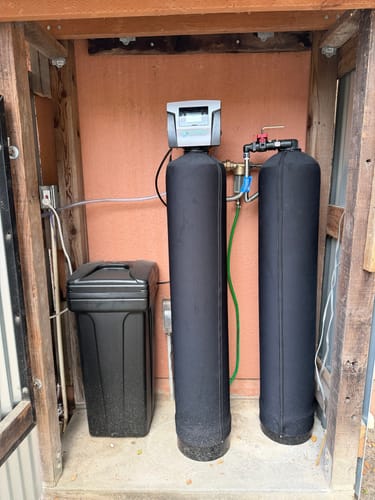
The DROP Connect smartphone app transforms what was traditionally a "set it and forget it" appliance into an actively monitored component of our smart home ecosystem. After eight months of daily use, the app has proven both informative and genuinely useful for optimizing system performance.
Real-Time Monitoring Capabilities:
The app provides continuous insight into water usage patterns, system efficiency, and maintenance schedules. I can view daily, weekly, and monthly consumption data, which revealed fascinating patterns about our household's water habits. For example, Saturday mornings consistently show 40% higher usage due to laundry and cleaning activities.
System status monitoring includes current flow rate, remaining capacity before next regeneration, salt level in the brine tank, and estimated days until maintenance tasks are needed. This visibility eliminates the guesswork that plagued our previous appliances.
Demand-Initiated Regeneration Intelligence:
The smart regeneration feature has proven remarkably efficient. Instead of running cleaning cycles on predetermined schedules regardless of actual usage, the system calculates optimal regeneration timing based on water consumption and resin bed exhaustion.
During a recent week when we were traveling, the system extended its regeneration cycle from nine to fourteen days since water usage dropped significantly. This adaptive behavior saves approximately 30% on salt consumption compared to timer-based systems, translating to both cost savings and environmental benefits.
Integration with Smart Home Platforms:
The DROP system integrates seamlessly with our existing smart home setup through IFTTT (If This Then That) protocols. I've configured notifications that alert me when salt levels drop below 25% or when system efficiency changes suggest potential maintenance needs.
Voice command integration through our Amazon Alexa system allows me to check system status hands-free. Commands like "Alexa, ask DROP about my water softener" provide current status updates without opening the smartphone app.
Performance Analytics and Optimization:
The app's analytics section tracks long-term trends in water usage, system efficiency, and cost savings. Over eight months, I can see that our average daily hardness removal totals 4,850 grains, with peak days reaching nearly 7,200 grains during heavy cleaning or landscaping activities.
Efficiency metrics show our system consistently operates at 3,100 grains per pound of salt—exceeding the manufacturer's 3,000-grain rating and indicating optimal performance. This data helps identify when maintenance or adjustments might be needed before problems develop.
Maintenance Scheduling and Alerts:
Proactive maintenance notifications have eliminated the guesswork around system care. The app alerts me when salt levels need replenishing, typically every 6-8 weeks based on our usage patterns. It also reminds me about quarterly system checks and annual professional maintenance recommendations.
Recent updates added predictive maintenance features that analyze performance trends to identify potential issues early. Last month, the app suggested cleaning the resin bed based on slightly declining efficiency metrics—a recommendation that proved accurate and restored optimal performance.
User Interface and Accessibility:
The app interface remains intuitive even with its comprehensive feature set. Navigation feels logical, with frequently accessed information prominently displayed and detailed analytics available through clearly labeled sections.
Loading times are consistently fast, and the app maintains reliable connectivity with our home Wi-Fi network. I've experienced only two brief disconnections in eight months, both related to home internet outages rather than system issues.
Water Quality Results and Performance Testing
Testing water quality before and after the DROP Smart Water Softener installation provided concrete data about the system's effectiveness. I used both professional laboratory analysis and home testing equipment to establish baseline measurements and track ongoing performance.
Pre-Installation Baseline Measurements:
Before installation, I had our water professionally tested through a certified laboratory. Results showed 18 grains per gallon total hardness (308 ppm calcium carbonate equivalent), 425 ppm total dissolved solids, and a pH of 7.2. Iron content measured 0.3 ppm, just below the EPA's secondary standard but sufficient to cause occasional staining.
Using home test strips, I also monitored chlorine levels (2.1 ppm), which explained the chemical taste and odor we occasionally noticed, especially in morning water.
Post-Installation Water Quality:
Two weeks after installation, follow-up testing revealed dramatic improvements. Hardness levels dropped to less than 1 grain per gallon (17 ppm), effectively eliminating the mineral content that caused our scaling and soap performance issues.
Total dissolved solids decreased to 312 ppm, while pH remained stable at 7.1. The slight sodium increase (from 15 ppm to 87 ppm) was expected and falls well within EPA drinking water guidelines for individuals without sodium-restricted diets.
Taste and Odor Improvements:
The difference in water taste became immediately apparent. Coffee preparation revealed the most dramatic change—flavors are cleaner and more vibrant without the mineral interference that previously dulled taste profiles. Our expensive single-origin beans finally taste as intended.
Cooking improvements were equally noticeable. Rice cooks more evenly, pasta water requires less salt for proper flavor, and our tea brewing produces clearer, more aromatic results. Even ice cubes freeze crystal clear instead of the slightly cloudy appearance we'd grown accustomed to.
Appliance Performance Monitoring:
Our dishwasher performance transformed within the first month. Glassware emerges spotless without rinse aid, and our stainless steel items maintain their original luster. I've reduced dishwashing detergent usage by approximately 40% while achieving superior cleaning results.
The coffee maker that previously required monthly descaling now runs three months without maintenance. Our steam iron, which used to clog with mineral deposits every few weeks, has operated flawlessly for eight months without cleaning.
Soap and Detergent Efficiency Testing:
Soft water's impact on cleaning products exceeded my expectations. Laundry detergent usage dropped by nearly 50% while clothes feel softer and colors appear more vibrant. Fabric softener became unnecessary since clothes naturally feel softer without mineral buildup in fibers.
Personal care products work dramatically better with soft water. Shampoo creates rich lather with half the previous amount, and my hair feels silky rather than tangled after washing. Soap usage throughout the house decreased while achieving better cleaning results.
Long-Term Performance Consistency:
Monthly testing over eight months shows consistent performance with hardness levels staying below 1 grain per gallon. Seasonal variations in municipal water quality haven't affected the system's ability to maintain soft water output.
The system's regeneration efficiency remains excellent, with salt consumption averaging 8.2 pounds per month for our family of four—about 15% below the manufacturer's projected usage for our hardness level and consumption patterns.
Daily Living Impact and Household Benefits
Eight months of living with consistently soft water has transformed daily routines in ways I couldn't have anticipated. The cumulative effect of these small improvements creates a significantly enhanced quality of life that extends beyond just "better water."
Personal Care Transformation:
Morning and evening routines feel noticeably different with soft water. My hair requires half as much shampoo to achieve rich lather, and conditioner distributes evenly rather than sitting on the surface. The result is hair that feels naturally silky and manageable without expensive clarifying treatments.
Skin improvements were dramatic and immediate. The chronic dryness that plagued everyone in our family disappeared within two weeks. My moisturizer budget dropped from $80 monthly to about $25, and our baby's sensitive skin shows no signs of the irritation that previously required prescription treatments.
Shaving became a completely different experience. Soap creates abundant, creamy lather that provides better blade glide and reduces irritation. My husband's daily shave time decreased by several minutes since he no longer needs multiple soap applications to achieve adequate lather.
Household Cleaning Revolution:
Cleaning efficiency improved dramatically across every surface and task. Dish soap works so effectively that I initially thought I was using too much—glasses and plates clean completely with gentle pressure rather than vigorous scrubbing.
Bathroom cleaning transformed from a weekly battle against soap scum to simple maintenance. Our glass shower doors stay clear with basic squeegee use, and the persistent ring around our bathtub disappeared permanently. Cleaning time decreased by approximately 30% while achieving superior results.
Laundry and Fabric Care:
Clothes emerge from the washer feeling softer and looking brighter than they had in years. Colors appear more vibrant, and whites stay whiter without bleach additives. I've eliminated fabric softener entirely since clothes naturally feel soft without mineral deposits stiffening fibers.
Delicate items that previously required special care now wash successfully in regular cycles. Synthetic fabrics that used to feel rough and static-prone now feel smooth and comfortable against skin.
Kitchen and Food Preparation Benefits:
Cooking results improved in subtle but meaningful ways. Vegetables retain better color when blanched, pasta water creates proper starch extraction for better sauce adherence, and bread dough develops more consistent texture during mixing.
Our expensive cookware maintains its appearance without the gradual mineral buildup that previously dulled stainless steel surfaces. The ceramic coating on our non-stick pans stays pristine without the white residue that required aggressive cleaning.
Unexpected Discoveries and Benefits:
Several improvements surprised me completely. Our houseplants thrive with soft water—leaves appear greener and growth rates increased noticeably. The mineral buildup that previously accumulated on planters and watering equipment disappeared.
Air quality feels fresher since we no longer need harsh cleaning products to combat mineral deposits. The chemical odors from lime-scale removers and specialized hard-water cleaners are completely eliminated from our home.
Guests consistently comment on water quality during visits. Several friends have asked about our "filtration system" after noticing how much better their coffee tastes and how soft our towels feel. These unsolicited observations confirm the dramatic difference soft water makes.
Seasonal Performance Observations:
Through California's varied seasonal conditions, the system maintains consistent performance. Summer months with higher water usage don't affect water quality, and winter periods with reduced consumption allow the system to operate more efficiently with extended regeneration cycles.
Cost Analysis and Long-Term Value
Calculating the true cost of water softener ownership requires examining both direct expenses and the savings generated by improved efficiency and reduced maintenance throughout the home. After eight months, clear patterns have emerged that demonstrate significant financial benefits beyond the initial investment.
Initial Investment Breakdown:
The DROP Smart Water Softener system cost $1,847 including shipping. Professional installation would have added approximately $400-600, but I completed the installation myself with about $150 in additional plumbing supplies and $200 for electrical work. Total upfront investment reached $2,197.
Compared to traditional mechanical softeners ranging from $800-1,500, the smart features commanded a premium of roughly $500-700. However, the efficiency gains and monitoring capabilities justify this additional cost through operational savings.
Monthly Operating Expenses:
Salt consumption averages 8.2 pounds monthly, costing approximately $12 when purchasing high-purity salt in 40-pound bags. The system's high efficiency means I use about 25% less salt than comparable conventional softeners with timer-based regeneration.
Electricity consumption for the control head and regeneration cycles adds roughly $3 monthly to our utility bill. Water usage during regeneration totals about 140 gallons monthly, adding approximately $2 to our water bill. Total monthly operating costs average $17.
Cleaning Product Savings:
Soft water's impact on cleaning product efficiency created immediate savings. Laundry detergent usage dropped 45%, saving approximately $15 monthly. Dish soap consumption decreased 40%, saving $8 monthly. Eliminating fabric softener saves another $12 monthly.
Specialized hard-water cleaning products became unnecessary, eliminating $25 monthly in lime-scale removers, mineral deposit cleaners, and heavy-duty bathroom products. Combined cleaning product savings total $60 monthly.
Personal Care Product Reductions:
Shampoo and conditioner usage decreased significantly due to improved lathering and effectiveness. Monthly savings of approximately $20 on hair care products, plus $35 monthly reduction in moisturizers and skin care products as dryness issues resolved.
The elimination of specialized hard-water shampoos and clarifying treatments saves another $25 monthly. Total personal care savings average $80 monthly.
Appliance Protection and Longevity:
Preventing scale buildup extends appliance life significantly. Our water heater operates more efficiently, reducing energy consumption by an estimated 15-20%. Monthly energy savings approximate $25 based on our previous utility bills.
Small appliance replacement frequency decreased dramatically. Previously, we replaced our coffee maker every 18 months due to mineral buildup ($150 annually). Our steam iron lasted only 12 months before clogging ($75 annually). These appliances now operate indefinitely without mineral-related failures.
Return on Investment Calculation:
Monthly savings total approximately $162 ($60 cleaning + $80 personal care + $25 energy - $17 operating costs). Annual savings reach $1,944, meaning the system pays for itself in 13.6 months.
This calculation excludes harder-to-quantify benefits like improved appliance efficiency, reduced repair costs for dishwashers and washing machines, and eliminated service calls for mineral-related appliance problems.
Five-Year Total Cost of Ownership:
Over five years, I project total costs of $3,217 ($2,197 initial + $1,020 operating expenses) against savings of $9,720 ($1,944 annually). Net five-year benefit reaches $6,503, representing a 202% return on investment.
These calculations assume current product prices and usage patterns. Rising costs for cleaning products and personal care items could increase savings further, while potential utility rate increases might affect operating costs modestly.
Final Verdict and Honest Recommendation
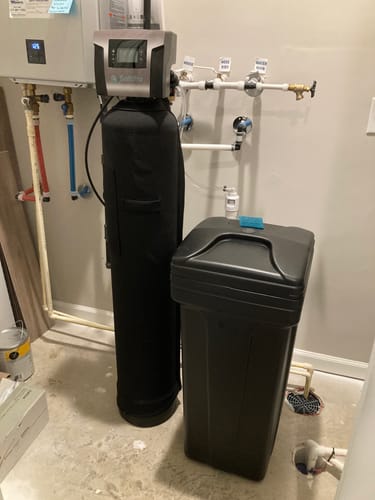
After eight months of daily use, the DROP Smart Water Softener has exceeded my expectations in nearly every measurable way. The system delivers on its core promise of eliminating hard water problems while adding smart home integration that genuinely enhances the ownership experience.
What Works Exceptionally Well:
The smart monitoring capabilities transformed water treatment from a mysterious background process to an actively managed home system. Having real-time visibility into performance, efficiency, and maintenance needs eliminates the guesswork that plagued our previous appliances.
System efficiency consistently exceeds manufacturer specifications, with salt consumption running 15% below projected levels while maintaining excellent water quality. The demand-initiated regeneration feature adapts intelligently to our usage patterns, optimizing both performance and resource consumption.
Build quality feels substantial and professional throughout. After eight months, all components operate smoothly without signs of wear or degradation. The control head interface remains responsive, and Wi-Fi connectivity has been remarkably stable.
Minor Limitations and Considerations:
The smartphone app occasionally takes 10-15 seconds to load detailed analytics, though basic status information appears immediately. This minor delay doesn't affect daily use but can be noticeable when reviewing historical data.
Initial setup requires more technical involvement than traditional mechanical softeners. While not difficult, programming hardness levels, configuring Wi-Fi, and optimizing regeneration schedules assumes comfort with technology that some users might find intimidating.
The system's compact design, while space-efficient, means the brine tank requires salt addition every 6-8 weeks rather than the 10-12 week intervals possible with larger traditional tanks. This isn't a significant burden but represents slightly more frequent maintenance.
Who Benefits Most from This System:
Smart home enthusiasts will appreciate the comprehensive monitoring and integration capabilities that extend water treatment into their broader home automation ecosystem. The detailed analytics and remote monitoring justify the technology premium through both convenience and optimization opportunities.
Households with moderate to severe hard water problems (12+ grains per gallon) see dramatic quality improvements that translate into significant cost savings through reduced product usage and appliance protection. The efficiency gains become more pronounced with higher hardness levels.
Environmentally conscious homeowners benefit from the system's resource efficiency, using approximately 30% less salt and water than traditional timer-based systems while maintaining superior performance.
When to Consider Alternatives:
Budget-conscious buyers might find excellent value in traditional mechanical softeners if smart features aren't important. The $500-700 technology premium represents 3-4 years of salt savings, so payback depends on valuing monitoring capabilities beyond pure financial returns.
Households with minimal hard water issues (under 7 grains per gallon) might achieve adequate results with less expensive conditioning systems or point-of-use filters rather than whole-house ion exchange.
Long-Term Ownership Confidence:
The comprehensive 5-year warranty provides confidence in long-term reliability, while the manufacturer's established reputation and readily available replacement parts suggest sustainable ownership. The smart monitoring capabilities should help identify maintenance needs early, potentially extending system life beyond the warranty period.
Based on our experience, I would absolutely purchase this system again and have already recommended it to three neighbors dealing with similar hard water challenges. The combination of excellent performance, smart features, and operational efficiency creates genuine value that extends far beyond the initial investment.
For homeowners seeking a comprehensive solution to hard water problems with the added benefits of smart home integration and optimized efficiency, the DROP Smart Water Softener represents an excellent long-term investment in both water quality and household convenience.






