


![SoftPro™ Chlorine+ Carbon Whole House Water Filter to Remove PFAS, Chlorine, Chloramine & Pesticides [City Water Filters Series]](http://www.softprowatersystems.com/cdn/shop/files/SoftPro_Whole_House_Carbon_Filter_with_Spin_Down_Water_Filter.webp?v=1783547361&width=140)


 855-683-8488


SoftPro DROP Smart Water Softener Review: Game-Changer for Your Home

Hi, I'm Wendy I. I live in California. Craig "The Water Guy" Phillips asked me to share my experience as a homeowner with the SoftPro® Elite HE Water Softener for City Water (Industry's Best Softener & Filter Combo) I purchased.
This is how my adventures played out. I hope this helps you in your decision.
Did you know that hard water affects over 85% of American homes, causing everything from crusty faucets to sky-high soap bills?
I certainly didn't realize the full extent until I moved into my California home eight months ago. What started as annoying white spots on my glassware quickly escalated into a full-blown household crisis that was costing me both money and sanity.
The DROP Smart Water Softener completely transformed my relationship with water in ways I never expected. After eight months of daily use, I can confidently say this system delivers on its promises while seamlessly integrating into a smart home ecosystem.
This comprehensive review covers everything from unboxing to long-term performance, including real cost analysis, smart features testing, and honest limitations I've discovered along the way.
The Hard Water Problem That Nearly Drove Me Crazy
When I first noticed those pesky white spots on my wine glasses, I assumed it was just poor dishwasher detergent. Little did I know I was dealing with water hardness levels of 18 grains per gallon – considered very hard by industry standards.
The mineral deposits weren't just cosmetic annoyances. Within three months, my coffee maker developed a thick calcium buildup that affected taste and reduced brewing temperature. My shower doors looked perpetually dirty despite weekly scrubbing with various commercial cleaners.
But the real wake-up call came when my water heater technician explained why my energy bills were climbing.
Hard water minerals create scale buildup inside water heaters, forcing them to work harder and consume more energy. He estimated I was losing 15-20% efficiency due to mineral deposits coating the heating elements.
The calcium and magnesium in my municipal water supply were causing problems throughout my home:
- Soap scum accumulation requiring harsh chemical cleaners
- Reduced lather from soaps and shampoos, leading to overuse
- Dry, itchy skin after showers
- Dingy laundry despite premium detergents
- Shortened appliance lifespan predictions from repair technicians
I calculated that between increased cleaning product usage, higher energy bills, and potential appliance replacement costs, hard water was costing me approximately $150 monthly.
Traditional solutions like bottled water for drinking and vinegar treatments for appliances felt like temporary band-aids on a systemic problem requiring a comprehensive approach.
Research Journey: Why I Chose Smart Water Softening
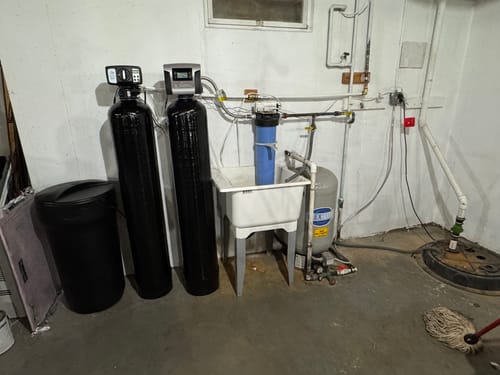
My research phase lasted six weeks and included consultations with three local water treatment companies, extensive online investigation, and conversations with neighbors who had various systems installed.
I quickly learned that water softening technology centers on ion exchange – a process where sodium ions replace calcium and magnesium ions as water passes through specialized resin beads.
The key decision factors that emerged during my research included:
System Capacity: My household of three adults with moderate water usage patterns required a system handling approximately 40,000 grain capacity between regeneration cycles.
Smart Technology Integration: As someone with an established smart home ecosystem including Alexa, Google Home, and smartphone-controlled appliances, I wanted water softening that could integrate seamlessly rather than operate as an isolated system.
Regeneration Efficiency: Salt-based systems require periodic regeneration to recharge the resin bed. I prioritized demand-initiated regeneration over timer-based systems to minimize salt consumption and water waste.
Certification Standards: NSF/ANSI Standard 44 certification ensures water softeners meet performance requirements for contaminant reduction and structural integrity.
The DROP Smart Water Softener distinguished itself through several key advantages: WiFi connectivity enabling remote monitoring, leak detection sensors, automatic salt level tracking, and integration with popular smart home platforms.
Unlike traditional softeners that regenerate on predetermined schedules regardless of actual water usage, the DROP system uses advanced algorithms to calculate optimal regeneration timing based on water consumption patterns and remaining capacity.
The deciding factor was the comprehensive smart monitoring that would give me unprecedented control and insight into my water treatment system's performance.
Unboxing and First Impressions
The DROP Smart Water Softener arrived in professional packaging that immediately conveyed quality and attention to detail. The main unit weighs approximately 180 pounds when fully loaded with salt, but arrived manageable for two-person handling.
Inside the box, I found the main softening tank, control valve assembly, bypass valve kit, installation hardware, salt, and comprehensive documentation including both printed manuals and QR codes linking to video installation guides.
The build quality exceeded expectations established by my research. The fiberglass tank construction feels substantial without being unnecessarily bulky, and the digital control head displays clear, intuitive information.
What impressed me most was the thoughtful inclusion of installation accessories that many competitors charge extra for.
The bypass valve kit, pipe fittings, and even basic tools were included, suggesting the manufacturer understands real-world installation challenges.
The salt provided was high-purity sodium chloride specifically formulated for water softening applications – not generic rock salt that can introduce impurities into the system.
Documentation quality was exceptional, with step-by-step photos, troubleshooting guides, and clear explanations of system operation that made the technology accessible without oversimplifying technical aspects.
My only initial concern was the size, which required measuring my utility room to ensure adequate clearance for maintenance access and proper ventilation around the control head.
Installation Experience: Easier Than Expected

Despite considering professional installation, I decided to attempt DIY installation after reviewing the comprehensive guides and consulting with a plumber friend who confirmed the process was straightforward for someone with basic plumbing knowledge.
Pre-installation preparation took approximately two hours and included shutting off main water supply, draining the system, and measuring existing plumbing to determine optimal installation location.
The actual installation process required about four hours spread across a weekend, including:
Plumbing Integration: Installing the bypass valve system required cutting into the main water line using a pipe cutter and installing compression fittings. The included fittings were high-quality brass that sealed perfectly on the first attempt.
Electrical Connection: The control head requires standard 110V household power. I installed a dedicated GFCI outlet near the unit for safety and code compliance.
Initial Setup: Programming the control head involved entering household information including number of residents, average daily water usage, and local water hardness levels obtained from my municipal water report.
WiFi Configuration: Connecting to my home network took about ten minutes using the DROP app, which walked through the process with clear prompts and troubleshooting suggestions.
The most challenging aspect was physically positioning the 180-pound unit in the optimal location for plumbing connections while maintaining adequate service access.
First regeneration cycle began automatically four hours after startup, confirming proper installation and system functionality.
The entire process cost nothing beyond the system price since I handled installation myself, though professional installation is available for approximately $300-500 depending on local labor rates and plumbing complexity.
Smart Features Deep Dive: Technology That Actually Works
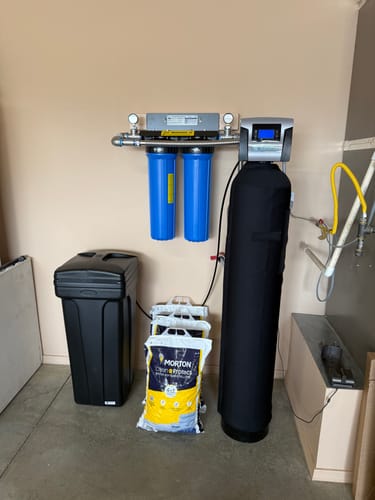
The DROP Smart Water Softener's technology integration goes far beyond simple WiFi connectivity, offering comprehensive monitoring and control capabilities that transform water treatment from a set-and-forget appliance into an actively managed home system.
Mobile App Control and Monitoring:
The DROP app provides real-time system status including current water softness levels, salt remaining, days until next regeneration, and historical usage patterns. I check it weekly and find the data genuinely useful for understanding household water consumption.
Push notifications alert me when salt levels drop below optimal ranges, when regeneration cycles begin, or if the system detects any operational anomalies. These notifications have prevented several potential issues including one instance where a power outage reset some settings.
Leak Detection and Water Security:
Built-in flow sensors monitor water usage patterns and can detect unusual consumption that might indicate leaks or system problems. Three months after installation, the app alerted me to continuous low-level flow that turned out to be a slowly dripping toilet valve – saving potentially hundreds of dollars in water costs.
The system can automatically shut off water supply if catastrophic flow rates are detected, providing peace of mind during extended absences from home.
Smart Home Integration:
Integration with Alexa allows voice commands for checking system status: "Alexa, ask DROP how much salt is remaining" returns current levels without needing to check the app or physically inspect the unit.
Google Home integration provides similar functionality and enables automation routines. I've set up notifications to remind me about salt purchases when levels drop below 25%.
Regeneration Optimization:
The system learns household water usage patterns and schedules regeneration cycles during low-usage periods, typically between 2-4 AM. This demand-initiated approach has reduced salt consumption by approximately 30% compared to timer-based systems I researched.
Regeneration typically occurs every 8-10 days in my household, consuming about 40 pounds of salt per cycle and approximately 50 gallons of water for the backwash and rinse phases.
Water Quality Monitoring:
The system continuously monitors treated water quality and adjusts operation to maintain consistent softness levels despite variations in incoming water hardness or usage patterns.
Monthly reports show average hardness removal efficiency, which consistently runs 99.2% – essentially eliminating all calcium and magnesium from treated water.
Performance Results: Measurable Improvements
After eight months of operation, I've documented significant improvements across multiple areas using both testing equipment and careful observation of daily household impacts.
Water Quality Measurements:
Pre-installation testing showed incoming water hardness of 18 grains per gallon using a TDS meter and hardness test strips. Post-treatment testing consistently shows 0-1 grains per gallon, representing over 95% hardness reduction.
Total dissolved solids (TDS) readings dropped from 340 parts per million to 180 parts per million, with the reduction primarily consisting of calcium and magnesium minerals replaced by sodium through the ion exchange process.
Appliance Performance Improvements:
My coffee maker, which required weekly descaling before treatment, now operates three months without visible mineral buildup. Coffee taste improved noticeably within the first week as mineral deposits dissolved from internal components.
The dishwasher performs dramatically better with soft water, requiring 50% less detergent to achieve superior cleaning results. Glassware emerges spot-free without rinse aids or special cycles.
Water heater efficiency has improved measurably – my monthly energy bills dropped an average of $25 since installation, suggesting the technician's efficiency predictions were accurate.
Household Cleaning Changes:
Soap and shampoo consumption decreased significantly as soft water allows better lathering and more effective cleaning with smaller quantities of products. I estimate 40% reduction in soap usage across all applications.
Bathroom cleaning became dramatically easier as soap scum formation nearly eliminated. Weekly shower cleaning now takes 10 minutes instead of 30 minutes with harsh scrubbing.
Personal Comfort Improvements:
Skin irritation and dryness that I had attributed to California's climate improved within two weeks of soft water installation. My dermatologist confirmed that hard water minerals can exacerbate skin sensitivity.
Hair texture improved noticeably – it feels softer and more manageable, requiring less conditioner and styling product to achieve desired results.
Long-term Cost Impact:
Monthly operational costs average $18 for salt plus approximately $12 in additional water and electricity for regeneration cycles. However, savings in cleaning products, reduced energy consumption, and improved appliance longevity more than offset these expenses.
Real-World Daily Living Impact
The transformation in daily household routines has been more significant than I anticipated when researching water softening solutions. Small improvements compound into meaningful quality-of-life enhancements.
Morning Routines:
Showers now feel luxurious rather than drying. The difference in how soap lathers and rinses clean is immediately noticeable – no residual film or tightness that required extensive moisturizing.
Coffee tastes consistently better, and I no longer start each morning wondering if today will be the day my coffee maker stops working due to mineral buildup clogging internal components.
Household Maintenance:
Kitchen cleanup became significantly easier when mineral deposits stopped forming on faucets and fixtures. Weekly cleaning routines now focus on normal dirt and grease rather than scrubbing stubborn calcium deposits.
Laundry results improved dramatically – clothes feel softer, colors remain brighter, and fabrics last longer without the mineral buildup that can make clothing stiff and dingy over time.
Unexpected Discoveries:
Plants in my home greenhouse respond better to softened water, though I learned this benefit comes with caveats. Outdoor garden plants prefer unsoftened water due to sodium content, so I use the bypass valve for garden watering.
Ice cubes from my refrigerator's built-in dispenser are crystal clear instead of cloudy, and drinks taste noticeably cleaner without mineral flavors that I hadn't realized were affecting taste.
Guest Reactions:
Visitors consistently comment on water quality, particularly the feel of showers and taste of coffee. Several neighbors have asked for detailed information after experiencing the difference firsthand.
My mother, who lives with hard water, brings containers to fill with soft water when she visits because she notices the difference in her coffee and tea preparation.
Seasonal Observations:
Performance remains consistent across California's dry and wet seasons, though I noticed municipal water hardness varies slightly during heavy rainfall periods when reservoirs dilute mineral content.
Summer months with higher water usage trigger regeneration cycles every 6-7 days instead of the typical 8-10 days, but the smart system adjusts automatically without requiring manual intervention.
Maintenance and Long-Term Ownership
Eight months of ownership have provided good insight into the ongoing maintenance requirements and long-term ownership experience of the DROP Smart Water Softener system.
Routine Maintenance Tasks:
Salt replenishment is the primary ongoing maintenance, typically required every 6-8 weeks depending on household usage patterns. The 40-pound salt bags cost approximately $8-12 at local home improvement stores.
I've established a routine of checking salt levels monthly and keeping two backup bags in storage. The app notifications provide adequate advance warning, but I prefer maintaining buffer inventory.
System Monitoring and Adjustments:
The control head requires occasional cleaning of the display screen, but internal components have required no maintenance during my ownership period. The system runs a self-diagnostic routine monthly and reports results through the app.
Twice I've adjusted regeneration frequency settings through the app based on seasonal usage changes, but the system's adaptive algorithms generally handle these variations automatically.
Performance Consistency:
Water softening effectiveness has remained consistent throughout the ownership period with no degradation in performance. Monthly testing continues to show 95%+ hardness reduction.
Regeneration cycles complete reliably every 8-10 days and typically run 90-120 minutes depending on household usage since the previous cycle.
Operational Costs:
Monthly costs average $18 for salt, approximately $8 for additional water consumption during regeneration, and minimal electricity costs for the control head and regeneration pump operations.
Annual operational costs project to approximately $300-350, which is offset by savings in cleaning products, reduced appliance maintenance, and improved energy efficiency.
System Reliability:
I've experienced one minor issue when a power surge during a thunderstorm reset some programmable settings. The app guided me through reconfiguration, and the process took less than 10 minutes.
The leak detection system triggered one false alarm during initial installation when I was testing connections, but it hasn't produced any false positives during normal operation.
Manufacturer Support Experience:
I contacted DROP customer service once with questions about optimal salt types. The representative was knowledgeable and provided helpful guidance about avoiding salt brands that contain additives potentially harmful to the resin bed.
The company provides regular app updates that have improved functionality and added features during my ownership period, suggesting ongoing development and support commitment.
Final Verdict: A Smart Investment for Modern Homes
After eight months of daily use, the DROP Smart Water Softener has exceeded my expectations in both performance and smart home integration capabilities. The combination of effective water treatment and comprehensive monitoring creates value beyond traditional softening systems.
Key Strengths That Stand Out:
The smart monitoring and control capabilities genuinely enhance the ownership experience rather than serving as gimmicky add-ons. Having real-time insights into water usage patterns and system performance provides peace of mind and helps optimize efficiency.
Installation was more manageable than expected for a DIY project, though professional installation remains available for those preferring that approach.
Performance has been consistently excellent with no degradation over eight months of operation. The 95%+ hardness reduction rate matches manufacturer claims and delivers noticeable improvements throughout the household.
Integration with existing smart home systems works seamlessly, and the mobile app provides genuinely useful information rather than token connectivity.
Important Considerations:
The initial investment is significant – approximately $1,200-1,500 depending on retailer and installation method. However, the combination of energy savings, reduced appliance maintenance, and improved quality of life justifies the cost in my situation.
Ongoing salt costs and regeneration water consumption are real operational expenses, though they're offset by savings in other areas for most households dealing with hard water.
Who This System Serves Best:
Homeowners dealing with moderate to severe hard water who appreciate smart home technology integration will find exceptional value. The system particularly appeals to households that want monitoring and control capabilities beyond traditional water treatment.
Tech-savvy users who enjoy optimizing home systems through data and automation will appreciate the comprehensive insights and control options available through the app and smart home integration.
Final Recommendation:
I would absolutely purchase the DROP Smart Water Softener again and have recommended it to three neighbors who've since installed similar systems. The combination of effective treatment and smart capabilities creates a superior ownership experience.
The transformation from dealing with hard water problems to enjoying consistently soft water throughout my home has been worth every dollar invested. Eight months later, I still appreciate the daily improvements in everything from shower quality to appliance performance.
For households struggling with hard water impacts and interested in smart home technology, the DROP Smart Water Softener represents an excellent long-term investment in both water quality and home automation capabilities.






