


![SoftPro™ Chlorine+ Carbon Whole House Water Filter to Remove PFAS, Chlorine, Chloramine & Pesticides [City Water Filters Series]](http://www.softprowatersystems.com/cdn/shop/files/SoftPro_Whole_House_Carbon_Filter_with_Spin_Down_Water_Filter.webp?v=1783547361&width=140)


 855-683-8488


Iron Bacteria vs. Ferrous Iron in Well Water: Critical Differences Every Well Owner Must Know

Ferrous iron and iron bacteria are two very different well water problems, and mixing them up leads to treatments that simply don't work. Ferrous iron is an invisible, dissolved metal that leaves reddish stains after oxidizing. Iron bacteria, on the other hand, produce slimy, jelly-like buildup that clogs pipes and creates foul odors. Each one demands its own specific solution. Keep going, and we'll show you exactly how to identify and tackle both.
Key Takeaways
- Ferrous iron (Fe²⁺) is dissolved and invisible in water, while iron bacteria produce visible slime, oily sheens, and gelatinous deposits.
- Ferrous iron causes reddish-brown stains after oxidizing, whereas iron bacteria create foul odors and jelly-like buildup inside pipes and tanks.
- Standard water softeners cannot remove ferrous iron; specialized oxidation and filtration systems are required for effective treatment.
- Iron bacteria form protective masses resistant to standard treatments, requiring continuous or shock chlorination to eliminate them effectively.
- Accurate testing is essential—ferrous iron and iron bacteria require completely different treatments, and no single solution addresses both problems.
What Is Ferrous Iron and Why Can't You See It?

Ferrous iron, or Fe²⁺, is a sneaky culprit in well water — it's completely dissolved and invisible to the naked eye, so you won't notice it until it's too late.
Unlike its oxidized counterpart, ferric iron, Fe²⁺ flows through your pipes without triggering any visual alarm. Your water looks crystal clear straight from the tap.
Here's where it gets tricky: the moment that water meets oxygen, Fe²⁺ transforms into Fe³⁺, producing those telltale reddish-brown particles. Suddenly, your fixtures are stained, your laundry is ruined, and your plumbing's compromised.
Because ferrous iron hides so effectively, standard water softeners won't catch it. You need filtration systems specifically engineered for dissolved iron — because what you can't see absolutely can hurt your water quality.
How Iron Bacteria Create Slime, Sheens, and Clogs in Your Well
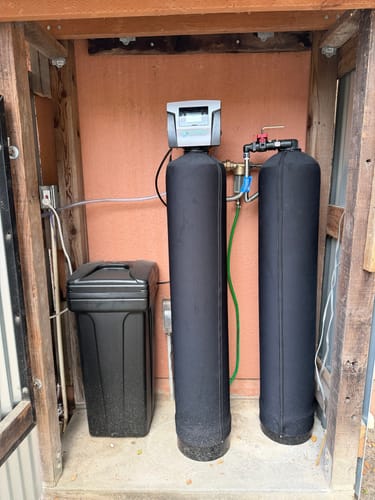
Where ferrous iron goes, iron bacteria often follow — and that's where things get really messy.
These bacteria consume ferrous iron and convert it into a thick, jelly-like substance that coats your pipes, clogs your well, and creates real maintenance headaches.
You'll recognize their presence by two telltale signs: oily sheens floating on your water's surface and brownish-red, gelatinous deposits inside your toilet tank. Both signal active biofilm formation.
That biofilm is the real problem. As it builds up inside your plumbing, it restricts water flow and causes pressure drops throughout your system.
Left unchecked, it compounds your existing iron problem by making treatment far more complicated.
Chlorination remains the go-to solution for eliminating these bacteria and dismantling their byproducts.
Which One Is Destroying Your Well: Ferrous Iron or Iron Bacteria?
Knowing which problem you're actually dealing with changes everything about how you treat it.
Ferrous iron stays invisible in water until it oxidizes, then reveals itself through metallic tastes and reddish staining.
Iron bacteria, however, announce themselves through slime, sheens, and foul odors that no filtration alone will fix.
Here's the critical distinction: ferrous iron responds well to oxidation and filtration, while iron bacteria form protective masses that laugh at standard chemical treatments.
You'll need microbiological testing or visible gelatinous deposits to confirm bacteria, whereas a basic water test catches ferrous iron.
Misidentifying one for the other wastes time and money.
Get accurate testing first, then match your treatment strategy precisely to what's actually compromising your well.
How to Test Your Well Water for Ferrous Iron and Iron Bacteria
Once we grasp what we're looking for, testing becomes our sharpest tool. The Minnesota Department of Health recommends regular testing for well owners—and for good reason. Each contaminant requires a different diagnostic approach.
Here's how we identify each threat:
- Visual inspection — Look for yellow or red discoloration suggesting ferrous iron, or jelly-like clumps and oily sheens in toilet tanks indicating iron bacteria.
- Laboratory testing — Thorough water tests confirm dissolved ferrous iron concentrations with precision.
- Specialized microbial testing — Targeted tests measure iron bacteria presence directly, separate from standard iron panels.
Accurate identification isn't optional—it's foundational.
Accurate identification isn't a preference or a shortcut—it's the non-negotiable foundation everything else is built on.
Without knowing exactly what we're dealing with, we risk choosing the wrong treatment and leaving our water quality compromised.
Treatment Options That Actually Work for Ferrous Iron and Iron Bacteria
Identifying the problem gets us halfway there—now we need solutions that actually do the job.
For ferrous iron, oxidation is our go-to strategy—converting dissolved Fe²⁺ into filterable Fe³⁺ that specialized oxidation filters then capture efficiently. These same filters also tackle colloidal iron, giving us thorough coverage.
Iron bacteria require a different approach entirely. Continuous chlorination eliminates these slime-producing organisms before they colonize our plumbing.
When bacteria concentrations run high, though, continuous chlorination isn't enough—we'll need shock chlorination to disinfect the entire system and reset conditions that prevent regrowth.
Here's the critical takeaway: treating one problem doesn't automatically address the other. Many well owners mistakenly assume a single solution covers both.
Matching the right treatment to the specific contaminant is what actually delivers lasting results.
Frequently Asked Questions
Can Iron Bacteria Contaminate Wells?
Yes, iron bacteria can absolutely contaminate your well. They thrive by feeding on dissolved ferrous iron, producing a slimy biofilm that clogs pipes, creates foul odors, and compromises your water quality greatly.
How to Tell if You Have Iron Bacteria in Your Well Water?
We can spot iron bacteria by looking for jelly-like deposits, an oily sheen in toilet tanks, and noticing a musty or earthy odor—distinct from iron's metallic taste. Lab testing confirms it definitively.
Will Shocking a Well Get Rid of Iron Bacteria?
Shocking your well can eliminate iron bacteria, but it's often a temporary fix. If ferrous iron remains in your water, bacteria will return. We recommend combining shock treatments with proper filtration for lasting results.
What Is the Difference Between Iron and Iron Bacteria in Water?
Iron's an inorganic mineral dissolved in your water, while iron bacteria are living microorganisms that feed on that iron. Both cause staining, but bacteria also create slimy biofilms, clogs, and foul odors.






