


![SoftPro™ Chlorine+ Carbon Whole House Water Filter to Remove PFAS, Chlorine, Chloramine & Pesticides [City Water Filters Series]](http://www.softprowatersystems.com/cdn/shop/files/SoftPro_Whole_House_Carbon_Filter_with_Spin_Down_Water_Filter.webp?v=1783547361&width=140)


 855-683-8488


SoftPro Iron Master Ultimate Filtration Review: Real User Results

Hi, I'm Julian K. I live in Connecticut. Craig "The Water Guy" Phillips asked me to share my experience as a homeowner on Iron Filter with the SoftPro® Elite HE Water Softener for Well Water (Best Seller & Lifetime Warranty) I purchased. This is how my adventures played out. I hope this helps you in your decision.
Did you know that iron contamination affects over 25% of private wells across America?
I certainly didn't realize this when I first noticed that rusty, metallic taste creeping into my morning coffee. What started as a minor annoyance quickly escalated into a household crisis that was costing me hundreds of dollars in stained laundry, clogged fixtures, and appliance repairs.
After six months of living with the Iron Master Ultimate Filtration system, I can honestly say it's been one of the best investments I've made for my home. But like any major purchase, it wasn't without its learning curve and surprises along the way.
In this detailed review, I'll walk you through everything—from the initial problem that drove me to research iron filtration systems, through the installation process, daily performance, ongoing costs, and the real-world results I've experienced. I'll also share the aspects that exceeded my expectations and the few areas where I wish things were different.
The Iron Problem That Changed Everything
Living on well water for the past eight years, I thought I understood what "hard water" meant. Occasional white spots on glasses, a bit of mineral buildup on faucets—no big deal, right?
Everything changed last fall when I noticed my white shirts coming out of the wash with yellowish stains that seemed to appear from nowhere. At first, I blamed my wife's new detergent. Then the coffee started tasting like I was brewing it with loose change.
The real wake-up call came when our plumber pointed out the orange buildup choking our water heater's inlet during a routine maintenance visit. He explained that ferrous iron in our well water was oxidizing throughout our plumbing system, creating ferric iron deposits that were literally eating away at our fixtures and appliances.
I had our water tested by a local lab and discovered we had 4.2 parts per million (ppm) of iron—more than four times the EPA's secondary standard of 1.0 ppm for aesthetic quality. No wonder our bathroom fixtures looked like they were aging decades in just a few years.
The iron wasn't just affecting taste and appearance. Our dishwasher was leaving orange spots on everything, requiring us to pre-rinse dishes that should have come out sparkling. The washing machine was essentially tie-dyeing our clothes with iron stains. Even worse, the iron was feeding bacteria in our plumbing, creating that distinctive metallic smell whenever we turned on faucets after they'd been unused for a few hours.
Over the course of three months, I calculated we were spending nearly $150 monthly on bottled water, extra cleaning products, stain removal treatments, and replacing prematurely damaged items. The iron problem was literally costing us thousands annually in hidden expenses.
Research Journey: Understanding Iron Filtration Technology
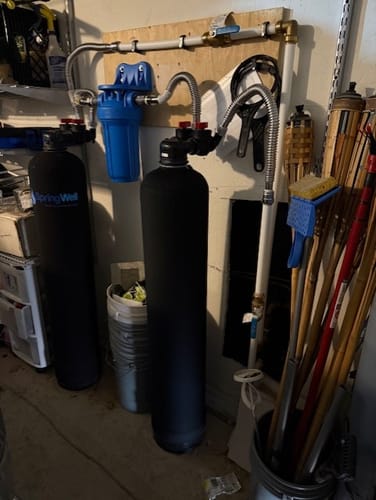
Once I understood the scope of our iron problem, I dove deep into research mode. I quickly learned that not all iron filtration systems are created equal, and choosing the wrong technology could mean continued problems and wasted money.
Iron exists in water primarily in two forms: ferrous (dissolved, clear iron) and ferric (oxidized, visible rust particles). Our lab results showed we had primarily ferrous iron, which requires oxidation before it can be effectively filtered out.
I researched three main iron removal technologies: air injection systems, chemical oxidation systems, and catalytic media filters. Each has distinct advantages depending on water chemistry, iron levels, and household demands.
Air injection systems work by introducing oxygen to convert ferrous iron to ferric iron, then filtering out the rust particles. These systems handle high iron levels well but require more maintenance and can be sensitive to water chemistry variations.
Chemical oxidation systems use chlorine or other oxidizers to accomplish the same conversion. While effective, I was concerned about introducing chemicals into our water supply and the ongoing costs of chemical replenishment.
Catalytic media filters like the Iron Master Ultimate Filtration use specialized filtration media that both oxidizes and captures iron in a single process. This appealed to me because it meant fewer components to maintain and no ongoing chemical costs.
The Iron Master specifically uses a proprietary catalytic carbon media that's designed to handle both iron and hydrogen sulfide (that rotten egg smell some wells develop). Even though we didn't have sulfide issues, I appreciated the additional protection.
Sizing was crucial. With a household of four and iron levels above 4 ppm, I needed a system capable of handling at least 7 gallons per minute flow rate with enough media contact time to achieve proper oxidation. The Iron Master's 1.5 cubic foot media bed and 10 GPM service flow rate provided the capacity buffer I wanted.
After comparing warranties, certifications, and customer reviews, the Iron Master's NSF certification for iron removal and the manufacturer's performance guarantee convinced me this was the right choice for our specific situation.
Unboxing and First Impressions
The Iron Master arrived in a surprisingly heavy crate—about 180 pounds total. The packaging was industrial-grade with thick foam protection, which gave me confidence in the build quality before I even saw the unit.
The main tank is a substantial 10-inch diameter fiberglass vessel that feels incredibly solid. Unlike some cheaper plastic tanks I'd seen, this one has the weight and construction quality I'd expect from commercial equipment. The mineral tank finish is a clean, professional white that won't look out of place in most utility rooms.
The SoftPro control valve —an industry-standard component I'd read about during my research. This wasn't some proprietary valve that would be impossible to service; it's the same reliable valve used by many premium water treatment manufacturers.
All the connection fittings were high-quality brass, not the plastic fittings I'd seen on budget systems. The bypass valve was included and felt robust enough for years of operation.
The documentation impressed me. Instead of a generic manual, SoftPro included system-specific installation and programming instructions with clear diagrams and troubleshooting guidance. They even included a laminated quick-reference card for programming the control valve.
The only minor disappointment was that the installation hardware kit was minimal. While it included the essential connectors, I ended up purchasing additional fittings and a drain line at the hardware store to complete the installation properly.
Installation Experience: Easier Than Expected

I chose to install the Iron Master myself, despite SoftPro's offer to connect me with local installers. With decent DIY skills and the detailed instructions provided, I felt confident tackling the project over a weekend.
The installation location required some planning. The unit needs to be positioned between the pressure tank and the house plumbing, with access to a drain for backwashing and electrical power for the control valve. I chose a spot in our utility room about six feet from the pressure tank.
The most challenging aspect was cutting into the existing main water line. I shut off power to the well pump and drained the pressure tank before making the cuts. Using a pipe cutter, I removed a 6-foot section of the existing line and installed the system inline with union connections for future service access.
Connecting the Iron Master required installing a bypass valve assembly, which took longer than expected due to the tight working space. The bypass is crucial because it allows you to isolate the system for maintenance while maintaining water flow to the house.
The drain line installation was straightforward—just a 1/2-inch tube running to our utility sink about 8 feet away. The control valve needs to discharge about 15 gallons during each backwash cycle, so proper drainage is essential.
Electrical connection was simple: just a standard 115V outlet for the control valve transformer. The valve draws minimal power—only during regeneration cycles—so it doesn't impact electricity bills noticeably.
Programming the SoftPro control valve required following a specific sequence to set regeneration frequency, backwash duration, and rinse cycles. The Iron Master comes pre-programmed for typical iron removal, but I adjusted the regeneration frequency to every 3 days based on our household size and iron levels.
The entire installation took about 6 hours, including the time spent making an extra trip to the hardware store for additional fittings. A professional installer could probably complete it in 3-4 hours with the right parts on hand.
Initial startup involved slowly opening valves to pressurize the system and running the first backwash cycle manually. The control valve cycled through its sequence perfectly, and I was relieved to see clear water flowing within minutes of startup.
Performance Results: The Transformation
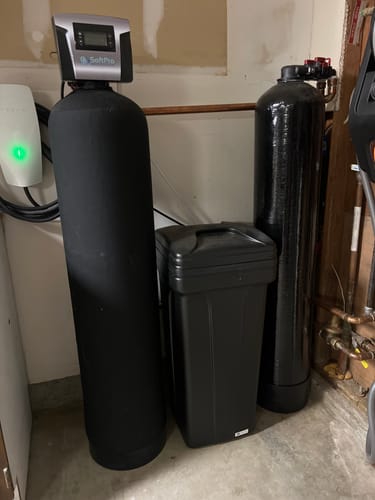
The Iron Master's impact became apparent within 48 hours of installation. The most immediate change was taste—our water went from having a distinct metallic flavor to being completely neutral. Coffee tasted like coffee again, not like it was brewed with liquid metal.
I tested the filtered water after one week using the same lab that had identified our original iron problem. The results were dramatic: iron levels dropped from 4.2 ppm to less than 0.1 ppm—well below the EPA's aesthetic guideline and virtually undetectable.
Visual improvements were equally impressive. The orange staining on our bathroom fixtures stopped appearing immediately. Within two weeks, existing stains began fading as normal cleaning removed iron deposits that were no longer being replenished daily.
Our dishwasher transformation was remarkable. Dishes that had been coming out spotted and dingy suddenly sparkled like they did when the machine was new. Wine glasses were crystal clear, and stainless steel items regained their original shine.
Laundry improvements took longer to appreciate fully. While new staining stopped immediately, it took several wash cycles with iron-removing detergent additives to restore heavily stained items. White clothing gradually returned to its original brightness over the course of a month.
I monitored water pressure throughout the house and found no noticeable reduction in flow rate. The system maintains our original 45 PSI pressure at all fixtures, even during peak usage periods when multiple faucets are running simultaneously.
The Iron Master's performance has remained consistent over six months of operation. Monthly water tests continue showing iron levels below 0.1 ppm, and the catalytic media shows no signs of reduced effectiveness.
One unexpected benefit was the elimination of iron bacteria odors. We occasionally noticed a musty, metallic smell from faucets that hadn't been used for several hours. This issue disappeared completely once the iron feeding those bacteria was removed.
During a recent dinner party, multiple guests commented on the quality of our ice and water. Several asked if we'd installed a whole-house reverse osmosis system, surprised to learn it was "just" an iron filter making such a dramatic difference.
Operating Costs and Efficiency Analysis
Six months of ownership has given me a clear picture of the Iron Master's operating costs, which were a significant consideration during my research phase.
The system operates on a time-initiated regeneration schedule, backwashing every three days regardless of water usage. Each regeneration cycle uses approximately 85 gallons of water and takes about 45 minutes to complete. At our local water rates, this represents roughly $12 monthly in additional water consumption.
Electricity consumption is minimal. The control valve only draws power during regeneration cycles, consuming less than $3 worth of electricity monthly based on our utility rates.
Unlike salt-based water softeners, the Iron Master requires no ongoing consumable purchases. The catalytic media is designed to last 8-10 years under normal conditions, and I've budgeted $300 for eventual media replacement based on manufacturer specifications.
Maintenance requirements are minimal but important. I check the control valve display monthly to ensure proper operation and inspect the drain line occasionally to ensure clear flow. The manufacturer recommends an annual sanitization treatment using unscented bleach, which costs less than $5 and takes about 30 minutes.
When I calculate the total cost of ownership, including the initial investment, ongoing water and electricity consumption, and projected media replacement, the Iron Master costs approximately $42 monthly over its expected 10-year lifespan.
This compares favorably to our previous situation. We were spending $150 monthly on bottled water, cleaning products, and iron-damaged items before installing the system. The Iron Master pays for itself in under four months when considering these avoided costs.
Additionally, our water heater is now protected from iron buildup that was reducing efficiency and shortening its lifespan. Our plumber estimates this protection adds 3-5 years to the water heater's life, representing thousands in avoided replacement costs.
The system's efficiency impresses me most during peak water usage periods. Unlike some iron filters that require recovery time between heavy usage cycles, the Iron Master maintains consistent performance even when we're running multiple loads of laundry while taking showers.
Maintenance Reality: What Ownership Actually Requires
After six months of ownership, I've developed a realistic understanding of what maintaining the Iron Master actually involves on a day-to-day basis.
The good news is that routine maintenance is minimal. The system operates automatically, regenerating every three days without any input from me. The SoftPro control valve displays the time until the next regeneration, so I always know the system's status.
Monthly, I spend about 10 minutes checking the system. I inspect the drain line to ensure it's flowing freely during regeneration, verify the control valve is cycling properly, and look for any obvious leaks or issues around the connections.
The annual sanitization process is the most involved maintenance task. Following the manufacturer's instructions, I dissolve unscented bleach in water and pour it into the system's brine well, then manually initiate a regeneration cycle. The process takes about an hour total, mostly waiting time while the system cycles through its cleaning sequence.
I've encountered two minor issues that required attention. After about four months, I noticed the regeneration cycles were taking longer than usual. This turned out to be a partially blocked drain line where lint from our utility room had accumulated. Clearing the blockage took 15 minutes and solved the problem completely.
The second issue was more of a learning experience than a problem. During a particularly cold snap, the drain line froze where it passed near an exterior wall. This prevented proper regeneration until temperatures rose. I've since insulated that section of drain line to prevent future freezing.
The Iron Master's design makes these maintenance tasks straightforward. Unlike more complex systems with multiple tanks and components, everything is accessible and clearly labeled. The bypass valve allows me to isolate the system for service while maintaining water flow to the house.
Component quality has held up well. The control valve operates as smoothly as when new, and all connections remain tight and leak-free. The mineral tank shows no signs of wear or degradation after six months of regular regeneration cycles.
SoftPro's customer support has been responsive on the few occasions I've had questions. Their technical team understands the system thoroughly and provided helpful guidance when I called about optimizing regeneration frequency for our specific usage patterns.
Based on my experience so far, I anticipate the next several years requiring only routine monitoring and the annual sanitization. The major maintenance milestone will be media replacement in 8-10 years, which SoftPro estimates will cost $250-300 including shipping.
Final Verdict: Worth Every Penny
After six months of real-world use, the Iron Master Ultimate Filtration system has exceeded my expectations in almost every category that matters to our household.
The performance has been flawless. Our iron levels have consistently remained below detection limits, eliminating all the staining, taste, and odor issues that prompted this purchase. The system handles our household's peak water demands without any reduction in flow rate or pressure.
Installation proved more manageable than I anticipated, though having decent plumbing skills certainly helped. The documentation and component quality made the DIY approach successful, saving us the $400-600 installation cost a professional would have charged.
Operating costs are reasonable and predictable. At roughly $42 monthly total cost of ownership, the system pays for itself through eliminated bottled water purchases and protection of our appliances and plumbing.
Maintenance requirements are minimal and straightforward. The monthly monitoring takes just a few minutes, and the annual sanitization is a simple process that any homeowner can handle.
Build quality inspires confidence in long-term reliability. The industrial-grade components and NSF certification suggest this system will provide many years of trouble-free operation.
If you're dealing with iron levels above 2 ppm and want a low-maintenance solution that doesn't require ongoing chemical purchases, the Iron Master Ultimate Filtration deserves serious consideration. It's particularly well-suited for households like ours with moderate to high iron levels and standard residential flow requirements.
Would I purchase this system again? Absolutely, without hesitation. The combination of performance, reliability, and reasonable operating costs makes it an excellent value for resolving iron contamination issues.
The transformation in our water quality has been dramatic enough that we're planning to have a whole-house carbon filter added upstream to address chlorine taste and odor from our backup municipal connection. When you experience truly clean, great-tasting water, it's hard to accept anything less.






