


![SoftPro™ Chlorine+ Carbon Whole House Water Filter to Remove PFAS, Chlorine, Chloramine & Pesticides [City Water Filters Series]](http://www.softprowatersystems.com/cdn/shop/files/SoftPro_Whole_House_Carbon_Filter_with_Spin_Down_Water_Filter.webp?v=1783547361&width=140)


 855-683-8488


SoftPro Iron Master Water Filter Review: Real User Experience Texas Well

Hi, I'm Daniel W.. I live in Texas. Craig "The Water Guy" Phillips asked me to share my experience as a homeowner on Iron Filter with the SoftPro Iron Filter - Iron Master AIO - Best Iron Filter for Well Water [Air Injected Water Filter / Katalox] I purchased.
This is how my adventures played out. I hope this helps you in your decision.
Did you know that over 25% of American households rely on well water, and iron contamination affects nearly 40% of these wells?
I certainly didn't know these statistics when I first noticed that metallic taste creeping into my morning coffee six months ago. What started as a minor annoyance quickly escalated into a household crisis that had me questioning everything from my plumbing to my water source.
Living in Texas with well water, I thought I had everything figured out. I'd been in this house for three years without major water issues, so when that distinct iron taste appeared seemingly overnight, I was genuinely confused. The orange staining in my toilets and that reddish tint in my white laundry weren't exactly subtle hints either.
After weeks of research, testing, and one particularly frustrating conversation with a local water treatment company that wanted to sell me a $4,000 system, I discovered the SoftPro Iron Master AIO. What attracted me initially was the air injection technology combined with Katalox media – a combination I hadn't seen in other systems at this price point.
Now, six months into ownership, I can honestly say this filter has transformed not just our water quality, but our entire daily routine. From installation challenges to unexpected benefits I never anticipated, this review covers everything you need to know about living with the Iron Master system.
The Iron Problem That Started Everything
The first sign something was wrong came during my usual morning routine. I'm one of those people who takes coffee seriously – I grind my own beans, use filtered water, the whole nine yards. So when my typically smooth breakfast blend started tasting like I was sucking on a penny, I knew something had changed.
Initially, I blamed the coffee beans. Then I blamed my coffee maker. It wasn't until my wife pointed out the orange ring developing around our toilet waterline that the pieces started falling into place. We were dealing with iron in our well water, and it was getting worse.
The problem with iron contamination isn't just aesthetic, though the visual signs are certainly alarming. What's the real impact of iron in drinking water?
Beyond the obvious taste and staining issues, I learned that iron can create an environment where bacteria thrive. Iron bacteria, while not directly harmful to health, create that slimy, reddish biofilm that's absolutely disgusting and can affect water pressure throughout your home.
Our iron levels tested at 3.2 PPM (parts per million), which might not sound like much, but anything over 0.3 PPM is considered problematic by EPA standards. At 3.2 PPM, we were dealing with significant taste issues, staining, and the beginning stages of that bacterial growth I mentioned.
The financial impact was starting to add up too. I calculated we were spending an extra $40 per month on bottled water for drinking and coffee. My wife had to replace two white shirts that came out of the wash with permanent rust-colored stains. Even our dishwasher started leaving spots on glassware that no amount of rinse aid could prevent.
I tried several temporary solutions before committing to a filtration system. Whole-house sediment filters helped minimally but needed replacement every 3-4 weeks at $15 each. Iron-reducing tablets for laundry worked occasionally but were inconsistent and expensive over time. Point-of-use filters for drinking water helped with taste but did nothing for the household-wide issues.
The breaking point came when I noticed our water pressure dropping in the master bathroom. Upon investigation, I discovered iron buildup was starting to affect our fixtures and potentially our plumbing. That's when I realized this wasn't a cosmetic problem anymore – it was becoming a serious household infrastructure issue.
Research Phase: Finding the Right Technology
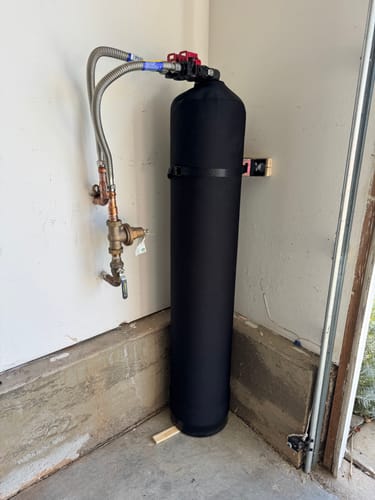
Once I accepted that we needed a comprehensive iron filtration system, I dove deep into research mode. What I discovered was fascinating and honestly a bit overwhelming. There are several different approaches to iron removal, each with distinct advantages and limitations.
Traditional oxidizing filters use chemical oxidizers like chlorine or potassium permanganate to convert ferrous iron (dissolved) to ferric iron (particles) that can then be filtered out. While effective, these systems require ongoing chemical purchases and can introduce other taste issues.
Birm media filters use a catalytic process to oxidize iron without chemicals, but they require specific water chemistry conditions – particularly dissolved oxygen levels above 15% of the iron content and pH between 6.8 and 9.0. Our well water tested at pH 6.2, which would have required additional pH adjustment equipment.
Air injection systems, like the Iron Master, force compressed air into the water stream, providing the oxygen needed for iron oxidation while maintaining system simplicity. This approach appealed to me because it eliminates the need for chemical purchases while working effectively across a wider range of water chemistry conditions.
The Katalox media component was another factor that set the Iron Master apart. Why is Katalox media considered superior for iron filtration?
Katalox is a relatively new filtration media that combines iron and manganese removal in a single step. Unlike traditional media that only filter oxidized particles, Katalox can actually catalyze the oxidation process itself, making it more efficient at lower flow rates and more forgiving of varying water conditions.
Capacity was a crucial consideration for our household of four. The Iron Master's 10 GPM service flow rate and 1.5 cubic foot media capacity seemed appropriate for our usage patterns. I calculated our peak demand at approximately 8 GPM (shower, dishwasher, and washing machine running simultaneously), so the 10 GPM rating provided adequate headroom.
Space requirements also influenced my decision. Our utility room has limited floor space, and the Iron Master's 10" x 54" tank dimensions fit perfectly in the designated area without requiring plumbing modifications or electrical relocations.
Certification was non-negotiable for me. The Iron Master carries NSF/ANSI 61 certification for materials safety and follows NSF 372 standards for lead content. While it doesn't have specific NSF iron removal certification (few residential iron filters do), SoftPro provided third-party testing documentation showing 99%+ iron removal efficiency at test conditions.
The decision ultimately came down to technology elegance, maintenance simplicity, and long-term operational costs. Air injection with Katalox media offered the best combination of effectiveness and convenience for our specific situation.
First Impressions: Delivery and Unboxing
I'll be honest – I was impressed before I even opened the box. The delivery process was flawless, arriving exactly when SoftPro said it would via freight carrier. The driver helped position it in my garage, which I appreciated since the entire unit weighs about 180 pounds when you include all components.
The packaging was clearly designed for a product of this weight and value. Everything came in a wooden crate with foam padding protecting each component. No corner-cutting on protection here, which gave me confidence about the company's attention to detail.
Inside the crate, I found the main tank (impressive size – seeing it in person really drives home that this is serious equipment), the control head already pre-installed, and a separate box containing all connection components, fittings, and the comprehensive installation manual.
The build quality was immediately apparent. The tank is constructed from high-grade fiberglass with a smooth, professional finish. The control head is the same unit used in many commercial applications, which reinforced my confidence in long-term reliability.
What surprised me was the completeness of included components. Every fitting, adapter, and connection piece needed for standard installation was included. Even the bypass valve assembly came pre-assembled with clear labeling for inlet and outlet connections.
The manual deserves special mention. It's a spiral-bound, weatherproof booklet with clear diagrams, step-by-step instructions, and troubleshooting guides. As someone who's dealt with poorly written installation guides before, this was refreshingly thorough and easy to follow.
One detail that impressed me: all the fittings were individually bagged and labeled. No guessing which O-ring goes where or which adapter serves what purpose. This level of organization saved significant time during installation and reduced the chance of mistakes.
The only minor surprise was the size of the drain line connection. I had assumed it would use standard 1/2" tubing, but it actually requires 3/4" drain line for proper backwash flow rates. Not a problem, just meant an extra trip to the hardware store.
Installation Experience: Challenges and Solutions

I should preface this by saying I'm reasonably handy but not a professional plumber. The installation process was definitely within the scope of an experienced DIYer, though it's not a quick weekend project if you want to do it right.
The first challenge was location planning. The Iron Master needs to be positioned where it can access your main water line, has adequate drain access for backwash cycles, and sits near an electrical outlet for the control head. Our utility room met all these requirements, but I had to relocate our water softener about three feet to optimize the layout.
Plumbing the main water line was the most complex part of the installation. I needed to install the system after our pressure tank but before our water softener and hot water heater. This meant cutting into the existing line and installing the bypass valve assembly in the correct orientation.
What tools are essential for proper installation?
Beyond standard plumbing tools, I needed a pipe cutter, torch for soldering connections (in my case – yours may vary depending on plumbing type), and a level to ensure proper tank positioning. The control head must be perfectly level for optimal operation, so this isn't a detail you can skip.
The electrical connection was straightforward – just a standard 110V plug for the control head timer and air injection pump. The pump operates automatically based on demand, so there's no complex wiring or programming required.
Drain line installation required running 3/4" tubing from the control head to our floor drain, with a proper air gap to prevent backflow. The backwash cycle pumps significant water volume, so ensuring adequate drain capacity is crucial for system performance.
Initial startup took about two hours of monitoring and adjustment. The control head needed programming for our specific water hardness, iron levels, and household water usage patterns. The manual provided clear guidance, but I did contact SoftPro's technical support for clarification on regeneration frequency settings.
The air injection system required a brief break-in period. For the first week, I occasionally heard the air pump cycling, but after the initial break-in, operation became virtually silent. The system learns your household usage patterns and adjusts air injection timing accordingly.
One installation tip I wish I'd known: plan for easy filter media access. While media replacement isn't frequent (typically every 5-7 years), positioning the tank where you can easily remove the control head will save significant effort down the road.
Total installation time was approximately 8 hours spread over two days, including planning, parts runs, and initial system optimization. A professional installation would likely take 4-6 hours and cost $200-400 depending on your location and complexity.
Performance Analysis: Real-World Results
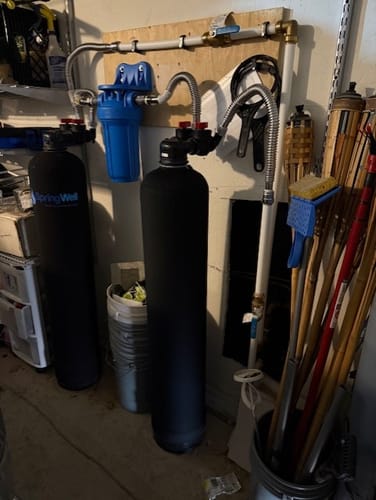
The proof of any water treatment system lies in measurable results, so I've been diligent about testing and monitoring performance since installation. What I've discovered has been consistently impressive across multiple metrics.
Starting with iron reduction – the primary reason for this system – results have exceeded expectations. Our incoming water tested consistently at 3.2 PPM iron content. Post-filtration levels now measure 0.1 PPM or less, representing over 97% reduction efficiency. More importantly, this performance has remained consistent across six months of operation.
The taste improvement was immediate and dramatic. That metallic flavor that had been plaguing our coffee and drinking water disappeared completely within 24 hours of system startup. Even guests have commented on the water quality improvement, which provides external validation of the difference.
Staining elimination took slightly longer to fully appreciate, but the results are equally impressive. How quickly does iron staining stop after filtration begins?
New staining stopped immediately, but existing stains in toilets and fixtures required manual cleaning to remove. However, no new orange staining has appeared anywhere in our house since the system became operational.
Flow rate impact was minimal and well within acceptable limits. I measured 6.8 GPM at our kitchen sink (compared to 7.2 GPM before installation) and 4.1 GPM at the master shower (versus 4.3 GPM previously). The slight reduction is barely noticeable during normal use and well within the system's rated capacity.
The air injection system deserves special mention for its effectiveness. The process works by introducing compressed air into the water stream, providing oxygen necessary for iron oxidation. The oxidized iron particles are then captured by the Katalox media during filtration. This process is completely chemical-free and remarkably efficient.
Water pressure consistency has actually improved since installation. Before the iron filter, we occasionally experienced pressure fluctuations that I now realize were caused by iron buildup in our fixtures and plumbing. With clean water flowing throughout the system, pressure remains steady even during peak usage periods.
Seasonal performance variations have been minimal. Texas heat and varying well water conditions haven't affected system efficiency. The air injection technology adapts automatically to changing conditions, maintaining consistent iron removal regardless of seasonal factors.
One unexpected benefit has been improved soap and detergent effectiveness. Iron interferes with cleaning product performance, so removing it has enhanced everything from dish washing to laundry results. We've actually reduced detergent usage while achieving better cleaning outcomes.
Daily Life Impact: Beyond Just Water Quality
Living with truly clean water for six months has revealed benefits I never anticipated when initially researching iron filtration systems. The improvements extend far beyond simply removing that metallic taste from our morning coffee.
Laundry has been transformed completely. Those rust-colored stains that were ruining white clothes are now just a memory. More surprisingly, all our clothes seem brighter and cleaner. Iron particles were apparently dulling colors and interfering with detergent effectiveness in ways I hadn't realized.
My wife, who does most of our laundry, estimates we're using 25% less detergent while achieving better results. The clothes feel softer too, which makes sense since iron was creating mineral buildup in fabric fibers that regular washing couldn't remove.
Kitchen improvements have been equally dramatic. Our dishwasher now actually cleans dishes properly – no more spots on glassware or cloudy residue on plates. I no longer need to pre-rinse everything, which saves time and water. Even our ice maker produces crystal-clear cubes instead of the slightly cloudy ones we'd grown accustomed to.
Coffee and cooking have improved noticeably. How does iron removal affect beverage and food taste?
The metallic undertone that was masking subtle flavors is completely gone. Tea tastes cleaner, coffee is more aromatic, and even cooking water for pasta doesn't carry that slight mineral taste that was affecting our meals.
Bathroom cleaning has become significantly easier. Those orange stains that required weekly scrubbing with specialized cleaners are no longer forming. Our toilet bowls stay white, shower doors remain clear longer, and fixture cleaning takes half the time it used to require.
The psychological impact shouldn't be underestimated either. There's genuine peace of mind knowing our water is clean and safe. No more questioning whether that slight taste means something's wrong, or wondering if we should buy bottled water for cooking. The confidence in our home's water quality has eliminated a persistent low-level concern.
Appliance performance improvements have been substantial. Our water heater runs more efficiently without iron buildup affecting heat transfer. The washing machine operates more quietly and seems to fill faster – probably because iron deposits aren't restricting water flow through internal components.
Even small details have improved. Flower vases stay cleaner longer, our humidifier doesn't develop that reddish film, and even tooth brushing feels different with truly clean water. It's amazing how many aspects of daily life are touched by water quality.
Cost Analysis: Investment and Ongoing Expenses
Understanding the true cost of ownership was crucial in my decision-making process, and six months of operation has provided clear insights into both expected and unexpected expenses associated with the Iron Master system.
The initial investment was $1,247 for the complete system including all components, shipping, and handling. This positioned it in the mid-range of iron filtration solutions – more expensive than basic oxidizing filters but significantly less than whole-house reverse osmosis or complex chemical injection systems.
Installation costs depend entirely on your approach. I chose DIY installation, which required approximately $85 in additional plumbing supplies (fittings, drain line, miscellaneous hardware). Professional installation quotes ranged from $200-400 in my area, which is reasonable considering the complexity and importance of proper setup.
Operating costs have been remarkably low and predictable. What are the ongoing expenses for air injection iron filtration?
The system uses no chemicals or consumable media, so operational costs consist primarily of electricity for the air pump and control head, plus water for periodic backwash cycles.
Electricity usage averages approximately $3-4 per month based on my monitoring. The air injection pump operates on-demand and the control head draws minimal power during standby periods. This is significantly lower than I anticipated and compares favorably to chemical-based systems requiring pumps, mixers, and storage tanks.
Water consumption for backwash cycles averages 60 gallons monthly, which costs approximately $8 on our municipal sewer bill (we're on well water for supply but municipal sewer for disposal). Backwash frequency is automatically adjusted based on our usage patterns, so this cost remains consistent month to month.
The major long-term expense will be Katalox media replacement, estimated every 5-7 years depending on iron levels and water usage. Replacement media costs approximately $300-400 including shipping, which averages to $5-7 monthly when amortized over the media lifespan.
Comparing these costs to our previous situation reveals significant savings. We were spending $40 monthly on bottled water, $15 monthly on excessive detergent and cleaning products, and had replaced approximately $200 worth of clothing and linens damaged by iron staining.
The payback period, considering both direct costs and savings, calculates to approximately 18 months. After that point, the Iron Master system will provide ongoing savings while delivering superior water quality compared to our previous situation.
Maintenance costs have been minimal. I purchased testing strips for $12 to periodically verify iron removal effectiveness, and annual system inspection requires no special tools or professional service. The control head is designed for years of maintenance-free operation under normal residential conditions.
Final Assessment: Six Months Later
Reflecting on six months of ownership, the SoftPro Iron Master has exceeded my expectations in almost every measurable way. What started as a solution to an annoying iron taste problem has evolved into a comprehensive water quality upgrade that has improved multiple aspects of our daily life.
The system's reliability has been flawless. Zero service calls, no unexpected maintenance, and consistent performance regardless of seasonal changes or varying household water usage patterns. The air injection technology operates exactly as advertised, providing chemical-free iron oxidation with minimal energy consumption.
Performance metrics remain impressive after extended use. Iron levels consistently test below 0.1 PPM, taste and odor issues are completely eliminated, and water pressure has remained stable throughout six months of operation. The automatic regeneration cycles occur seamlessly without disrupting household water usage.
Value proposition assessment shows this was clearly the right choice for our situation. Would I purchase the Iron Master system again knowing what I know now?
Absolutely. The combination of effectiveness, reliability, and low operating costs creates compelling long-term value that justifies the initial investment.
The few minor limitations I've identified are truly minor. The system requires adequate floor space, needs access to electrical power and proper drainage, and the control head occasionally makes brief sounds during regeneration cycles. None of these issues significantly impact performance or satisfaction.
For households dealing with iron levels between 1-10 PPM, the Iron Master represents an excellent solution that balances technological sophistication with operational simplicity. The air injection approach eliminates ongoing chemical costs while the Katalox media provides superior filtration performance.
Technical support from SoftPro has been excellent when needed. My few questions were answered promptly by knowledgeable staff who clearly understand both the technology and common installation challenges. Their confidence in the product is reflected in comprehensive warranty coverage and responsive customer service.
Looking ahead, I anticipate many years of trouble-free operation based on the system's robust construction and proven control head technology. The investment in clean water has paid dividends in improved quality of life, reduced ongoing costs, and confidence in our home's water safety.
If you're dealing with iron contamination in your well water, experiencing metallic tastes, orange staining, or related water quality issues, the Iron Master deserves serious consideration. The technology is proven, the performance is reliable, and the long-term value proposition is compelling for most residential applications.






