


![SoftPro™ Chlorine+ Carbon Whole House Water Filter to Remove PFAS, Chlorine, Chloramine & Pesticides [City Water Filters Series]](http://www.softprowatersystems.com/cdn/shop/files/SoftPro_Whole_House_Carbon_Filter_with_Spin_Down_Water_Filter.webp?v=1783547361&width=140)


 855-683-8488


SoftPro Catalytic Carbon Filter Review: Well Water Solution

Hi, I'm Ryan Hoffman from Minnesota. Craig "The Water Guy" Phillips reached out asking me to share my real-world experience with the SoftPro® Catalytic Whole House Carbon Filter for Well Water (Best Seller & Lifetime Warranty) that I installed six months ago. After dealing with well water issues for years, I'm excited to walk you through exactly how this system has performed in my home. I hope my honest assessment helps you make the right choice for your situation.
The Well Water Problems That Drove Me to Find a Solution
Living in rural Minnesota, I've dealt with well water challenges for over a decade. The metallic taste was the first red flag – every glass of water tasted like I was drinking from a rusty pipe. But the real frustration came from the rotten egg smell that would hit you the moment you turned on any faucet.
The hydrogen sulfide odor was embarrassing when guests visited. I'd watch their faces scrunch up when they walked into the kitchen or used the bathroom sink. Even worse, the smell would linger on dishes after washing, no matter how much soap I used.
My coffee maker started showing rust-colored stains within months of buying it. The same discoloration appeared on my white laundry, turning everything into an unpleasant yellowish tint. I was spending extra money on bottled water for drinking and cooking, which added up to about $80 monthly for our family of four.
The final straw came when my plumber pointed out black staining in my toilet tanks and warned me about the long-term damage these contaminants could cause to my fixtures and appliances. I realized I needed a comprehensive solution, not just temporary fixes.
My Research Journey Into Catalytic Carbon Filtration
I spent weeks researching different filtration technologies before landing on catalytic carbon systems. Traditional activated carbon filters seemed insufficient for my specific combination of hydrogen sulfide and organic compounds. Regular carbon has limited effectiveness against sulfur compounds, which was my primary concern.
Catalytic carbon works differently because it's been treated to enhance its oxidative properties. Instead of just trapping contaminants like standard carbon, it actually converts hydrogen sulfide into elemental sulfur through a chemical reaction. This process eliminates the source of the odor rather than simply masking it.
The SoftPro system caught my attention because of its high-capacity design and the catalytic carbon media's proven track record with well water applications. At 1.5 cubic feet of media, it offered substantial contact time for thorough treatment. The automatic backwash feature was particularly appealing since it would maintain the system's efficiency without requiring manual intervention.
I also researched the company's reputation and found consistently positive feedback about their customer service and product reliability. The lifetime warranty provided additional confidence in my investment decision.
Unboxing and First Impressions of the System
The SoftPro filter arrived in excellent packaging that clearly prioritized protection during shipping. Every component was individually wrapped and secured, which immediately gave me confidence in the company's attention to detail.
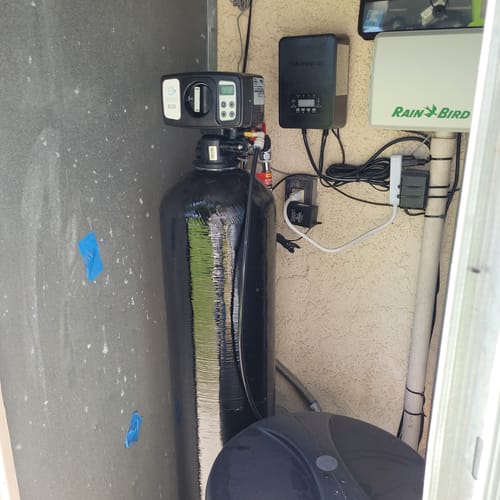
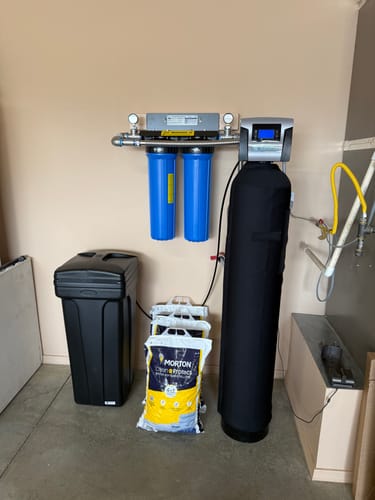
The mineral tank itself is impressive – much more substantial than I expected. The fiberglass construction feels durable and professional-grade. At roughly 54 inches tall and 10 inches in diameter, it requires adequate space, but the footprint isn't overwhelming for most utility rooms.
The control valve is where this system really shines. The digital display is intuitive and provides clear information about system status, remaining capacity, and regeneration schedules. The programming options allow for customization based on your specific water usage patterns and contaminant levels.
All necessary fittings and connections were included, along with detailed installation instructions. The bypass valve assembly is well-engineered and provides reliable system isolation when needed for maintenance or emergencies.
Installation Experience and Initial Setup Challenges

I decided to tackle the installation myself, having some plumbing experience from previous home projects. The process took me about six hours, including the time spent ensuring everything was properly positioned and connected.
The most challenging aspect was positioning the system in my utility room while maintaining adequate clearance for the control valve and ensuring proper drain line routing. The unit needs about 18 inches of overhead clearance for media replacement, which required some rearrangement of my storage shelving.
Connecting to my existing 1-inch copper supply lines required some additional fittings not included in the standard package. I invested in quality brass fittings to ensure long-term reliability and prevent any potential leak issues down the road.
The initial startup sequence was straightforward. The system automatically initiated a backwash cycle to settle and clean the catalytic carbon media. This process took about 45 minutes and produced some temporary discoloration, which is completely normal according to the documentation.
Programming the control valve for my specific water conditions and household usage patterns was intuitive. The manual provides clear guidance for determining optimal regeneration frequency based on water test results and daily consumption.
Six-Month Performance Analysis and Measurable Results
The transformation in water quality was immediately noticeable. Within 24 hours of installation, the hydrogen sulfide odor was completely eliminated. I'm not exaggerating – it went from overwhelming to nonexistent overnight.
The metallic taste disappeared just as quickly. Water from every faucet now tastes clean and neutral, exactly what you'd expect from quality treated water. My family actually started drinking tap water again instead of relying on bottled alternatives.
I conducted before-and-after testing using a comprehensive water analysis kit. The hydrogen sulfide levels dropped from 0.8 ppm to undetectable levels. Dissolved organic compounds showed similar dramatic reductions, with the overall taste and odor scores improving significantly.
Coffee and tea preparation improved noticeably. The off-flavors that were masking the intended taste profiles are gone. Even my wife, who has a sensitive palate, commented on how much better her morning coffee tastes now.
Laundry results have been equally impressive. The yellowish staining on white fabrics has stopped entirely. Clothes come out cleaner and don't retain any of the previous sulfur odor that would sometimes persist even after washing.
The system has maintained consistent performance throughout the six-month period. Flow rates remain strong even during peak usage times, and I haven't noticed any decline in treatment effectiveness.
Operational Costs and Long-Term Maintenance Requirements
The operational expenses are refreshingly minimal compared to my previous bottled water costs. The system uses approximately 150 gallons of water per regeneration cycle, which occurs every 7-10 days based on our usage patterns.
Electricity consumption is negligible – the control valve draws minimal power and only operates during regeneration cycles. I estimate the monthly electrical cost at less than $3 based on our local utility rates.
The catalytic carbon media has an expected lifespan of 5-8 years under typical well water conditions. Replacement media costs approximately $200-250, making the annual operating cost quite reasonable when amortized over the media's lifetime.
Maintenance tasks are minimal but important for optimal performance. I check the system monthly to ensure proper operation and verify that regeneration cycles are occurring as scheduled. The digital display makes monitoring straightforward and user-friendly.
The automatic backwash feature eliminates the manual maintenance required by some competing systems. This automation ensures consistent performance while reducing the time investment required for system upkeep.
Addressing the System's Limitations and Realistic Expectations
While I'm extremely satisfied with this system's performance, it's important to set realistic expectations about what catalytic carbon filtration can and cannot accomplish.
This system excels at removing hydrogen sulfide, chlorine, and organic compounds that cause taste and odor issues. However, it's not designed for iron removal or water softening. If you have high iron levels or hard water, you'll need additional treatment systems to address those specific problems.
The initial investment is substantial – around $1,200 for the complete system. While the long-term value is excellent, the upfront cost may be prohibitive for some budgets. However, when compared to ongoing bottled water expenses and potential appliance damage, the return on investment becomes clear.
Installation space requirements are worth considering carefully. The system needs adequate room for maintenance access and proper drainage. If your utility area is cramped, you might need to make modifications to accommodate the unit properly.
The regeneration cycles produce some noise and water usage during backwash periods. While not excessive, it's something to consider if the system will be located near living areas where the sound might be noticeable during nighttime cycles.
Final Assessment and Recommendation for Minnesota Well Water
After six months of daily use, I can confidently say this SoftPro catalytic carbon filter has exceeded my expectations in every meaningful way. The elimination of hydrogen sulfide odor and metallic taste has genuinely improved our quality of life.
The system's build quality and engineering appear designed for long-term reliability. The control valve operates smoothly and consistently, and the mineral tank shows no signs of wear or degradation despite our harsh Minnesota water conditions.
For homeowners dealing with similar well water issues – particularly hydrogen sulfide odor and organic taste compounds – this system provides an effective, automated solution. The combination of proven catalytic carbon technology and quality components justifies the investment.
The lifetime warranty provides additional peace of mind and demonstrates the manufacturer's confidence in their product. Based on my experience, I would purchase this system again and readily recommend it to neighbors facing similar water quality challenges.
If your well water suffers from sulfur odors, metallic taste, or organic contamination, the SoftPro catalytic carbon filter deserves serious consideration. The performance improvements and operational simplicity make it an excellent long-term solution for rural homeowners seeking reliable water treatment.






