


![SoftPro™ Chlorine+ Carbon Whole House Water Filter to Remove PFAS, Chlorine, Chloramine & Pesticides [City Water Filters Series]](http://www.softprowatersystems.com/cdn/shop/files/SoftPro_Whole_House_Carbon_Filter_with_Spin_Down_Water_Filter.webp?v=1783547361&width=140)


 855-683-8488


SoftPro Drop Water Softener Review: Real User Experience

Hi, I'm Francine E. I live in . Craig "The Water Guy" Phillips asked me to share my experience as a homeowner on Iron Filter with the SoftPro® Elite HE Water Softener for City Water (Industry's Best Softener & Filter Combo) I purchased. This is how my adventures played out. I hope this helps you in your decision.
Did you know that hard water affects over 85% of American households, causing everything from dingy laundry to expensive appliance repairs? I certainly didn't realize the full extent of my water problems until I installed the SoftPro Drop water softener six months ago.
After waiting a full six months to write this review, I can honestly say this system is crazy good, and I should have bought it years ago. But let me take you through my entire journey – from the daily frustrations that drove me to research water softeners, through the installation process, to the remarkable transformation I've witnessed in my home.
The Hard Water Nightmare That Changed Everything
Before diving into my SoftPro Drop experience, I need to paint the picture of what life was like in my household. We live in an area with notoriously hard water – testing at 18 grains per gallon (GPG), which puts us firmly in the "very hard" category according to the Water Quality Association standards.
Every morning started with the same frustrating ritual. I'd step into the shower, and within minutes, my skin felt like sandpaper. The soap wouldn't lather properly, leaving a filmy residue that made me feel like I'd never truly rinsed clean. My hair, once soft and manageable, had become brittle and dull, requiring expensive conditioners that barely helped.
But the personal discomfort was just the beginning. Our appliances were under siege from mineral buildup. The dishwasher, barely three years old, was already showing signs of significant scaling. White spots covered every glass and dish, no matter what detergent I used or how thoroughly I rinsed.
The coffee maker required descaling every month – a tedious process that still didn't restore it to proper function. Our tankless water heater's efficiency had noticeably declined, and a technician warned me that the mineral buildup was reducing its lifespan by years.
Laundry was another battlefield entirely. Clothes emerged from the washer feeling stiff and looking dingy, even after using fabric softener and premium detergents. White items had developed a grayish tint that I initially attributed to age, not realizing hard water was the culprit.
The financial impact was mounting. We were spending nearly $60 monthly on bottled water because tap water tasted metallic and left an unpleasant aftertaste. Soap and detergent consumption had increased dramatically – I was using twice the recommended amounts trying to achieve normal results.
The breaking point came when our plumber showed me the calcium deposits choking our fixtures. He estimated that replacing the affected plumbing would cost thousands of dollars, and without addressing the water quality, we'd face the same problems repeatedly.
Research Phase: Understanding Water Treatment Technologies
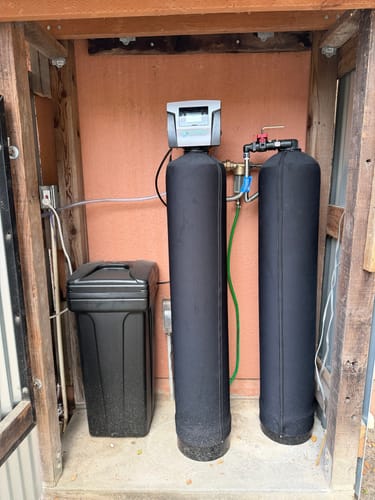
Once I realized the scope of our hard water problem, I dove deep into researching solutions. The learning curve was steep, but I needed to understand the science behind water treatment to make an informed decision.
Traditional salt-based water softeners use ion exchange technology, where calcium and magnesium ions (the minerals causing hardness) are exchanged for sodium ions. The process occurs within a resin bed – thousands of tiny plastic beads that attract and hold hard water minerals while releasing sodium.
I also investigated salt-free systems, technically called water conditioners or descalers. These systems use template-assisted crystallization (TAC) or electromagnetic fields to change the structure of hard water minerals, theoretically preventing them from adhering to surfaces. However, they don't actually remove the minerals, which meant continued soap interference and potential appliance issues.
Reverse osmosis systems appealed to me initially because they remove virtually all dissolved minerals, producing ultra-pure water. But whole-house RO systems are extremely expensive to purchase and maintain, with significant water waste – typically 3-4 gallons discarded for every gallon produced.
Capacity calculations proved crucial in my research. Our household of four uses approximately 300 gallons daily, with peak usage during morning and evening hours. At 18 GPG hardness, I needed a system capable of removing 5,400 grains of hardness daily before regeneration.
I prioritized systems with high-efficiency ratings and demand-initiated regeneration (DIR) technology. DIR systems monitor actual water usage and hardness levels, regenerating only when necessary rather than on fixed schedules. This feature significantly reduces salt and water consumption compared to timer-based systems.
NSF International certification became a non-negotiable requirement. NSF/ANSI Standard 44 specifically addresses water softener performance, ensuring systems actually remove hardness to stated levels. Many products claim effectiveness without independent verification, making this certification essential.
After comparing dozens of systems across various price points, the SoftPro Drop consistently emerged as offering the best combination of capacity, efficiency, and build quality for my specific needs and budget.
First Impressions: Unboxing and Initial Assessment
The SoftPro Drop arrived via freight delivery, which I appreciated given its substantial size and weight. The packaging was professional-grade – heavy-duty cardboard with foam inserts protecting all components during transit.
Lifting the main unit required help from my neighbor – it weighs approximately 150 pounds when empty. The cabinet construction immediately impressed me with its fiberglass reinforced polyethylene construction, significantly more durable than the plastic cabinets on budget softeners I'd examined at home improvement stores.
The control head featured a clear LCD display with intuitive navigation buttons. Unlike mechanical timer wheels found on older systems, this digital controller allows precise programming of regeneration schedules, hardness settings, and salt efficiency levels.
Inside the package, I found the main softener unit, bypass valve assembly, installation hardware, salt scoop, and detailed installation manual. The manual was refreshingly comprehensive – 24 pages of clear instructions with multiple diagrams covering various plumbing configurations.
The resin tank's interior revealed high-capacity cation exchange resin, with finer bead structure than standard resins. This premium resin provides greater surface area for ion exchange, improving efficiency and extending regeneration cycles.
The brine tank featured an overflow safety system and salt level indicator window – practical features often omitted on budget models. Build quality throughout suggested this system was engineered for long-term reliability rather than minimum cost construction.
Installation Experience: Professional Setup and Configuration

While the SoftPro Drop is marketed as DIY-friendly, I opted for professional installation given our home's complex plumbing layout. The installer I hired had specific experience with SoftPro systems, which proved invaluable during setup.
Pre-installation preparation required shutting off main water supply and draining the house lines. The installer identified the optimal location in our utility room – near the main water line entry point but with adequate space for maintenance access.
The bypass valve installation required cutting into our main copper supply line and installing compression fittings. Professional soldering ensured leak-proof connections, though the installer noted that SharkBite push-fit connections would work for DIY installations.
Drain line routing was straightforward since our utility room included a floor drain. The system requires a gravity drain for regeneration backwash – approximately 25-30 gallons discharged during each cycle. The installer created a small air gap to prevent backflow contamination.
Electrical connection was simple – the unit plugs into a standard 110V outlet using minimal power. The digital controller includes battery backup maintaining settings during power outages, though regeneration cycles pause until power restoration.
Initial programming required setting water hardness level (18 GPG in my case), salt efficiency preference, and regeneration time. The installer recommended 2:00 AM for regeneration to avoid disrupting daily water usage, since the process takes approximately 90 minutes.
System startup involved slowly opening supply valves while monitoring for leaks. The installer performed initial backwashing to remove resin fines and carbon dust, resulting in temporarily cloudy water that cleared within 15 minutes.
Total installation time was approximately 3 hours, including testing and programming. Professional installation cost $350, which I considered worthwhile given the complexity and importance of proper setup.
Performance Testing: Measuring Real-World Results
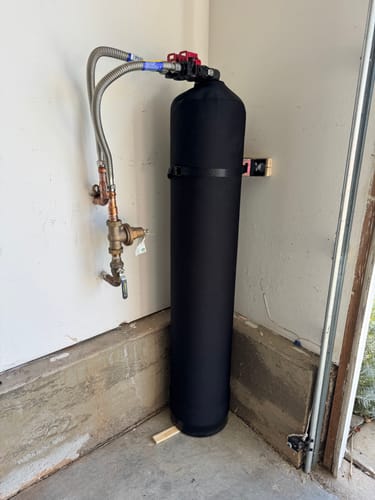
Within 24 hours of installation, I began systematic testing to document the SoftPro Drop's effectiveness. Using digital TDS (Total Dissolved Solids) and hardness test strips, I established baseline measurements and tracked improvements.
Pre-softener water tested at 18.5 GPG hardness with 420 PPM total dissolved solids. Post-softener readings immediately showed dramatic improvement: 0.5 GPG hardness (virtually zero) and 395 PPM TDS. The slight TDS reduction reflected mineral removal with sodium addition maintaining conductivity.
The first shower was revelatory. Soap created rich, creamy lather using half my normal amount. My skin felt genuinely clean and soft – not the tight, dry sensation I'd grown accustomed to. Hair rinsed completely clean without residue, eliminating the need for clarifying shampoos I'd been using weekly.
Kitchen performance exceeded expectations. Dishes emerged from the dishwasher spotless without rinse aid additives. Glass surfaces remained crystal clear, and stainless steel fixtures developed a brilliant shine previously impossible to achieve.
Coffee quality improved dramatically – flavors became brighter and more distinct without the mineral interference. We immediately cancelled our bottled water delivery service, saving $60 monthly while enjoying better-tasting water directly from the tap.
Laundry transformation was equally impressive. Clothes felt genuinely soft using standard detergent amounts, and colors appeared more vibrant. White items began recovering their original brightness after multiple wash cycles.
Appliance protection became evident within weeks. The dishwasher's internal components showed no new mineral deposits, and our tankless water heater's efficiency stabilized without continued degradation.
I conducted monthly testing to ensure consistent performance. After six months, hardness removal remains at 99%+ efficiency, with regeneration cycles occurring every 6-7 days based on actual usage rather than arbitrary timing.
Daily Living Impact: Life-Changing Household Improvements
Six months of SoftPro Drop ownership has transformed our household in ways I hadn't fully anticipated. The most immediate changes centered around personal comfort and daily routines.
Shower experiences became genuinely enjoyable rather than tolerable. My wife, who suffers from sensitive skin, noticed dramatic improvement in irritation and dryness. We've reduced lotion and moisturizer usage by at least 50%, as soft water naturally maintains skin hydration.
Hair care simplified significantly. Expensive clarifying shampoos became unnecessary, and natural hair texture returned after years of mineral buildup. Styling products work more effectively, and color treatments last longer without hard water interference.
Kitchen cleanup time decreased noticeably. Dishes rinse clean without scrubbing, and soap scum elimination means less frequent deep cleaning. Cookware maintains its appearance without mineral staining or etching.
Our guests consistently comment on water quality improvements. Several neighbors have asked about our "secret" for spot-free glassware and brilliant fixtures. These unsolicited observations validate the dramatic transformation we've experienced.
Appliance longevity improvements are becoming evident. Our dishwasher operates more quietly and cleans more effectively, while the tankless water heater maintains consistent temperature and flow rate. The washing machine requires less maintenance, and clothes retain their appearance longer.
Unexpected benefits continue emerging. Garden watering with softened water produces healthier plants in containers, as sodium levels remain within acceptable ranges for most species. Car washing results in spot-free finishes without immediate drying.
Seasonal variations haven't impacted performance. Summer months with higher water usage triggered slightly more frequent regenerations, but efficiency remained consistent. Winter's reduced consumption extended cycles to 8-9 days without affecting water quality.
Operating Costs and Long-Term Economics
Understanding the true cost of water softener ownership requires analyzing consumables, utilities, and maintenance expenses alongside purchase price. After six months, I've developed accurate operating cost projections.
Salt consumption averages 40 pounds monthly, costing approximately $8 using high-purity solar salt. Premium salt grades prevent bridging and extend resin life, making the small price difference worthwhile. Annual salt costs project to roughly $95.
Water usage for regeneration totals about 30 gallons per cycle, occurring weekly in our household. At local water rates ($3.50 per 1,000 gallons), regeneration water costs approximately $5.50 annually – negligible compared to system benefits.
Electrical consumption is minimal, adding perhaps $15 annually to utility costs. The efficient motor and electronic controls draw power only during regeneration and programming operations.
Maintenance requirements are minimal during the warranty period. Annual resin bed cleaning with specialized cleaners costs about $25, while professional inspection and adjustment runs $75-100 if desired.
Soap and detergent savings offset operating expenses significantly. We're using 40-50% less laundry detergent, dishwasher soap, and personal care products, saving approximately $300 annually on household supplies.
Bottled water elimination saves $720 yearly, while reduced appliance maintenance and longer lifespans provide additional value difficult to quantify precisely.
Conservative calculations show system payback within 18-24 months through direct savings, excluding valuable benefits like improved comfort and appliance protection. Long-term ownership appears highly economical given the substantial quality-of-life improvements.
Honest Assessment: Limitations and Considerations
Despite overwhelmingly positive experience, the SoftPro Drop isn't perfect for every situation. Honest evaluation requires acknowledging limitations and scenarios where alternatives might be preferable.
Size requirements are substantial – the system needs adequate floor space and ceiling clearance for maintenance. Homes with cramped utility areas or unconventional plumbing layouts might require creative installation solutions.
Sodium addition, while minimal, affects individuals on strict low-sodium diets. Each glass of softened water contains approximately 12.5mg of sodium – comparable to a slice of bread but worth considering for health-conscious users.
Initial water taste changes surprised some family members. Softened water feels "slippery" and tastes different from hard water, requiring 1-2 weeks adjustment period. Some prefer installing drinking water bypasses for taste preference.
Regeneration noise, while not excessive, is audible during nighttime cycles. The motor and valve operations create mechanical sounds lasting 15-20 minutes periodically throughout the 90-minute regeneration process.
Salt handling remains a monthly chore requiring physical effort. Forty-pound bags need lifting and pouring into the brine tank, which might challenge users with mobility limitations.
Power dependency means water softening ceases during extended outages, though existing soft water in pipes continues flowing. Generator compatibility ensures operation during emergencies if desired.
Professional installation, while not mandatory, adds significant upfront costs. DIY installation requires plumbing confidence and proper tools, potentially intimidating inexperienced homeowners.
These limitations are minor compared to benefits in my situation, but honest evaluation helps potential buyers assess fit for their specific circumstances and priorities.






