


![SoftPro™ Chlorine+ Carbon Whole House Water Filter to Remove PFAS, Chlorine, Chloramine & Pesticides [City Water Filters Series]](http://www.softprowatersystems.com/cdn/shop/files/SoftPro_Whole_House_Carbon_Filter_with_Spin_Down_Water_Filter.webp?v=1783547361&width=140)


 855-683-8488


SoftPro Iron Master With Elite Water Softener Pairing: Flow Rate, Installation Order, and Settings

When pairing the SoftPro Iron Master with the Elite Water Softener, installation order matters more than most people realize. The Iron Master goes first, intercepting iron and sediment before they ever reach the Elite Softener's resin beads. Keep your combined flow rate between 5-10 gallons per minute, match your hardness settings to your water test results, and plan regeneration cycles every two to three days. Stick around, and we'll walk you through everything you need to get this system running at its best.
Key Takeaways
- Install the Iron Master before the Elite Softener to intercept iron and sediment, protecting resin beads from damage.
- Maintain a combined flow rate of 5-10 gallons per minute to prevent channeling and resin bed degradation.
- Test water hardness in grains per gallon and iron concentration in mg/L before configuring system settings.
- Adjust iron removal settings when iron exceeds 3 mg/L and schedule regeneration cycles every two to three days.
- Perform monthly maintenance checks, including hardness tests, salt levels, and injector cleaning, for optimal system performance.
Why the Iron Master Installs Before the Elite Softener

When pairing the SoftPro Iron Master with the Elite Water Softener, installation order isn't just a suggestion — it's the difference between a system that thrives and one that struggles.
The Iron Master goes first, and here's why that matters.
Iron and sediment are brutal on resin beads. Without the Iron Master intercepting those contaminants upstream, they'd tear through your Elite Softener's resin, causing channeling, premature degradation, and costly maintenance.
By handling the heavy work first, the Iron Master delivers appreciably cleaner water to the Elite Softener, letting it focus purely on softening.
The result? Optimized flow rates, less clogging, and a softener that actually lasts.
Sequence isn't procedural — it's protective. Get it right, and your entire system performs exactly as designed.
Step-by-Step Installation Order for the Iron Master and Elite Softener
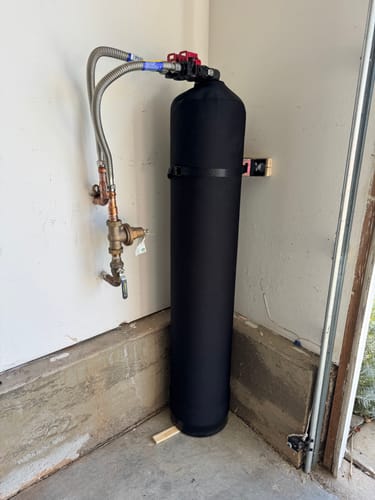
Before anything touches a pipe, let's get both units unpacked and accounted for.
Check every component carefully and handle the tanks gently—resin spills create headaches you don't want.
Next, assemble the Iron Master first.
Snap the brine tank legs on with a push-and-twist, then seat the white cone firmly into the control valve.
Connect the bypass valve and turbine assembly, confirming inlet and outlet orientation before locking the red clips.
For the drain line, use flexible tubing secured with a hose clamp, and maintain an air gap to prevent backflow.
Once plumbing modifications are complete, restore the main supply gradually.
Let air escape through open faucets, check for leaks, then move into programming and testing both the Iron Master and Elite Softener.
Flow Rate Settings for the Iron Master and Elite Softener Together
Getting flow rates right is where these two systems either work in harmony or fight each other. We recommend keeping your combined flow rate between 5-10 gallons per minute—the manufacturer's sweet spot for both units performing at their best.
Here's why it matters: push beyond that range, and you'll trigger channeling in the Iron Master's resin bed, accelerating bead degradation and compromising iron removal efficiency.
Push past the recommended flow rate, and channeling in the resin bed will degrade beads and compromise iron removal.
Use a flow meter during installation to confirm you're hitting the right numbers before finalizing any connections.
Water conditions change, though. Hardness levels shift seasonally, and household usage fluctuates.
We suggest building a regular testing schedule into your maintenance routine so you can recalibrate flow rates proactively, protecting both systems and reducing unnecessary salt and water consumption during regeneration.
How to Configure Hardness, Regeneration, and Iron Settings
Once you've nailed your flow rates, the next step is telling both systems what they're actually working with.
Start by testing your water — you'll need hardness in grains per gallon and iron concentration in mg/L. Set the Iron Master's hardness control to match your test results exactly.
If iron exceeds 3 mg/L, adjust the iron removal setting per the manufacturer's guidelines — don't guess here.
For regeneration, factor in your daily water usage and peak demand. A cycle every two to three days typically works well for higher iron levels, but dial it in to avoid burning through salt unnecessarily.
Water chemistry shifts over time, so retest periodically and update your settings. Staying calibrated keeps both systems performing at their peak.
Monthly Maintenance Checks for the Iron Master and Elite Softener
Keeping both systems in peak shape comes down to a handful of monthly checks that take less time than you'd think.
Staying on top of both systems is easier than you think — just a few monthly checks keeps everything running perfectly.
Here's what we recommend staying on top of:
- Flow rate – Confirm it stays between 5–10 gallons per minute for ideal performance.
- Resin bed – Watch for channeling or bead degradation, which signals hard water breakthrough or pressure drops.
- Brine tank salt – Maintain two to three 40-pound bags between visits to sustain efficiency.
- Injector and brine line – Clear any obstructions to protect regeneration cycles and extend system life.
Also test water hardness monthly.
If levels creep up, adjust your settings immediately.
These small habits prevent costly repairs and keep your water quality exactly where it needs to be.
Frequently Asked Questions
What Should the Flow Rate Be on My Water Softener?
We recommend keeping your flow rate between 5 to 10 gallons per minute. Divide your total daily water usage by peak demand hours to dial in your system's ideal performance setting.
How to Install a Water Softener Step by Step?
We'll start by unpacking components, attaching brine tank legs, securing the white cone, connecting the bypass valve with Teflon tape, setting up the drain line, then shutting off water supply before finalizing plumbing connections and programming settings.
What Settings Should My Water Softener Be On?
We recommend setting your flow rate between 5-10 GPM, calibrating controls to your household's daily usage and peak demand times. Regularly test water hardness levels to fine-tune settings and maximize your softener's efficiency.
What Are the Stages of a Water Softener in Order?
We'll walk you through the five stages: hard water intake, ion exchange (removing calcium and magnesium), backwashing (cleaning resin beads), regeneration (recharging with brine), and rinsing (flushing excess salt) — leaving you with pure, softened water.






