


![SoftPro™ Chlorine+ Carbon Whole House Water Filter to Remove PFAS, Chlorine, Chloramine & Pesticides [City Water Filters Series]](http://www.softprowatersystems.com/cdn/shop/files/SoftPro_Whole_House_Carbon_Filter_with_Spin_Down_Water_Filter.webp?v=1783547361&width=140)


 855-683-8488


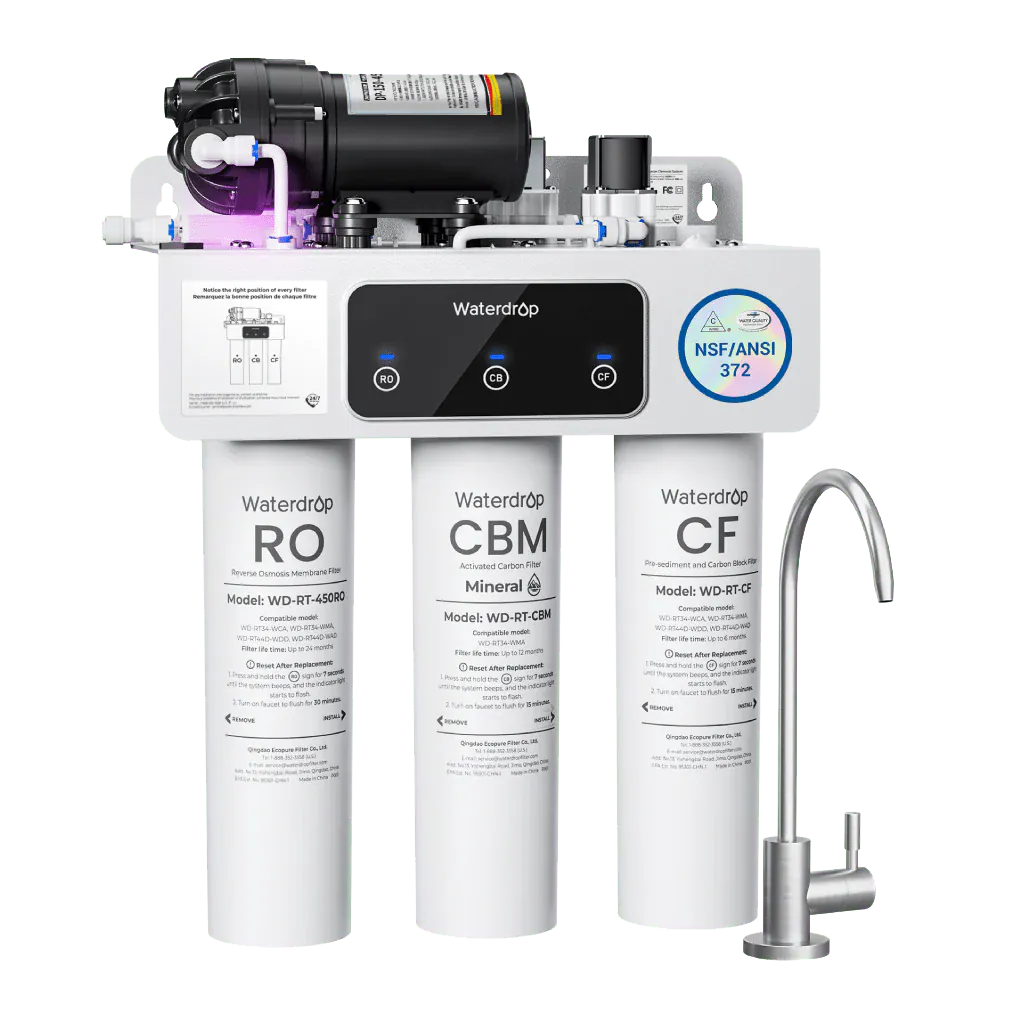


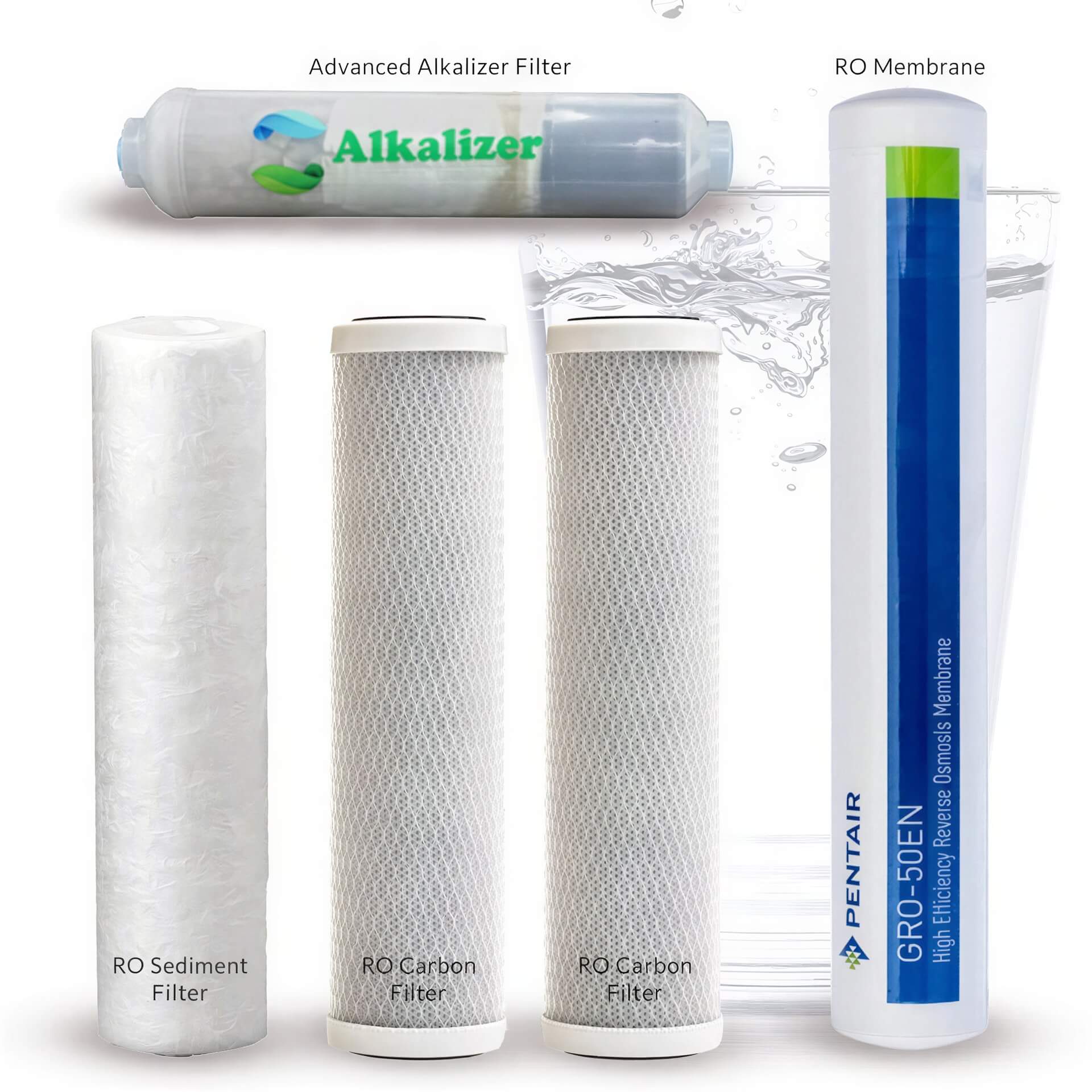
A reverse osmosis filter is a multi-stage system that forces your tap water through a semipermeable membrane fine enough to block dissolved salts, lead, arsenic, PFAS, and chlorine — while the clean water molecules pass right through.
Key Takeaways
- RO membranes use pores around 0.0001 microns wide — tight enough to reject up to 99% of dissolved salts and minerals, per NSF/ANSI 58 testing standards.
- The EPA reports reverse osmosis removes 90–99% of PFAS ("forever chemicals") from drinking water, more than almost any other home treatment method.
- 58% of U.S. households say they're concerned about their tap water's safety, according to the Water Quality Association's 2025 Consumer Insights Report.
- Water treatment product ownership is up 35% since 2021, and 91% of current owners say they'll keep using their system — people who buy one rarely regret it.
- A typical RO membrane lasts 2 to 5 years; pre- and post-filters need swapping every 6–12 months to protect it.
- Modern tankless RO systems have cut waste-water ratios to roughly 2:1 pure-to-drain, down from the 3:1–4:1 that older tanked systems typically ran.
- Every SoftPro RO system on this page is NSF/ANSI tested for either TDS reduction (58), aesthetic effects like chlorine and taste (42), or lead-free construction (372).
What Is a Reverse Osmosis Filter?
A reverse osmosis filter is the closest thing to a bouncer for your drinking water. It doesn't negotiate with contaminants, it doesn't "reduce" them politely, it shoves your water through a membrane with holes smaller than most viruses and tells everything else to wait outside. Dissolved salts, heavy metals, chlorine byproducts, the works — none of it gets a VIP pass.
The technology isn't new. Reverse osmosis traces back to desalination research in the 1950s, with the thin-film composite membranes that power today's residential systems developed by researchers at UCLA in the 1960s. What started as a way to turn seawater into drinking water for ships and desert cities is now small enough to live under your kitchen sink.
You can read the full history and mechanics in our guide to what a reverse osmosis water filter actually is.
How Does a Reverse Osmosis Filter Work?
Most reverse osmosis filters run water through three to nine stages, but they all boil down to the same three jobs: protect, purify, polish. First, sediment and carbon pre-filters strip out the dirt, rust, and chlorine that would otherwise chew through an RO membrane in weeks instead of years.
Then the water hits the membrane itself, where pressure forces it through microscopic pores while everything dissolved in it gets left behind and flushed to drain. Finally, a post-filter — sometimes a carbon polish, sometimes a remineralization cartridge — fine-tunes the taste before it hits your glass.
Here's the short version, stage by stage:
Want the long version with every sub-stage broken down? Read what are the stages of reverse osmosis filtration, or see how tank, tankless, and countertop designs route water differently in the different types of reverse osmosis systems.
Shop SoftPro Reverse Osmosis Filters
Here's the lineup, and every single one of these ships from SoftPro's own stock. No dropshipped mystery boxes, no "available in 6-8 weeks." Pick the format that fits your kitchen and your patience for plumbing.

Waterdrop T4-A 450GPD Alkaline Dual Flow RO System

Waterdrop G3P600 Reverse Osmosis System
Waterdrop T3-M 450G Remineralization RO Under-Sink Filter

Waterdrop M6SL Mineral RO Countertop Filter

Reverse Osmosis Replacement Filters for SoftPro GREEN RO Systems
Need something for the whole house instead of just the kitchen tap? RO filters are a point-of-use fix — for whole-home treatment, browse our whole house water filter systems or pair an RO filter with a water softener if hardness is your bigger problem.
Which Reverse Osmosis Filter Fits Your Kitchen?
Tank, tankless, or countertop — it's less about which is "best" and more about which one matches how your sink is built. Here's how the three formats actually compare:
| Format | Installation | Space Used | Best For |
|---|---|---|---|
| Tankless Under-Sink (G3P600, T4-A) | Push-fit lines, no soldering, ~1–2 hrs DIY | Up to 70% less cabinet space than tanked RO | Renters and small cabinets who still want full filtration on demand |
| Remineralizing Under-Sink (T3-M) | Push-fit lines, standard under-sink mount | Compact, tankless footprint | Households who find straight RO water tastes flat |
| Countertop (M6SL) | Zero plumbing — fill the tank, plug it in | Sits on the counter, no cabinet space needed | Renters, apartments, or anyone who wants it running today |
For a deeper breakdown of every format and hybrid on the market, see what are the different types of reverse osmosis systems.
What Does a Reverse Osmosis Filter Actually Remove?
Short answer: almost everything you don't want in your glass. A certified RO membrane reduces heavy metals like lead, arsenic, and chromium, dissolved salts and minerals, PFAS and PFOA "forever chemicals," chlorine and chloramine, fluoride, nitrates, and a long list of pesticide and herbicide residues. The EPA's drinking water regulations set the legal limits for most of these; RO membranes routinely test well inside them.
On PFAS specifically: independent research cited in the EPA's PFAS treatment technology fact sheet puts reverse osmosis removal rates at 90–99% for most PFAS compounds — tighter than nanofiltration and leagues ahead of a basic carbon pitcher.
If arsenic, lead, or chlorine byproducts are your specific concern, our contaminant guides go deeper: removing arsenic from water, getting rid of lead in water, and removing chlorine and chloramine. For the full rundown by contaminant class, read what contaminants does a reverse osmosis system remove.


Does a Reverse Osmosis Filter Remove Healthy Minerals Too?
Yes, and let's not dance around it — a standard RO membrane doesn't know the difference between lead and calcium. Both are dissolved solids, both get rejected at the membrane.
That's exactly why remineralization exists as its own filtration stage: cartridges like the one built into the Waterdrop T3-M add calcium and magnesium back in after the membrane strips everything out, so you're not left with the flat, "bottled water with a markup" taste that gives straight RO a bad reputation.
If you've heard RO water is "unhealthy" because it's stripped of minerals: the minerals you'd lose from a glass of water are a rounding error compared to what you get from food. The EPA doesn't regulate drinking water for mineral content for a reason — it regulates it for contaminants, which is exactly what RO is built to handle.
How Long Does a Reverse Osmosis Filter Last, and How Do You Maintain One?
The membrane itself is good for 2 to 5 years under normal residential use, while sediment and carbon pre-filters typically need swapping every 6 to 12 months — think of those as the bodyguards taking the hits so the membrane doesn't have to.
Skip those swaps and you're not saving money, you're just shortening the life of the expensive part. Full replacement-schedule math and warning signs are in our RO membrane lifespan guide. Need replacement cartridges instead of a whole new system? Check replacement water filters.
What Are the Downsides of a Reverse Osmosis Filter?
We're not going to stand here and tell you RO is flawless, because it isn't. It wastes some water to drain during filtration, it needs periodic filter changes, and a straight (non-remineralizing) system strips out minerals along with the bad stuff. None of those are dealbreakers — they're trade-offs, and modern tankless designs have shrunk the waste-water problem considerably.
For the honest, unfiltered (sorry) list, read reverse osmosis water filter drawbacks and weigh it against the benefits of reverse osmosis water filters.

How Do I Choose the Right Reverse Osmosis Filter for My Home?
Start with your water, not the specs sheet. A city-water household dealing with chlorine and taste issues has different priorities than a well-water household worried about arsenic or iron. Here's what actually matters when picking between systems:
Match these to your situation:
- Daily output (GPD): 450 GPD comfortably covers drinking and cooking water for most households; go higher if you're filling a lot of pitchers or running an ice maker off the line.
- Tank vs. tankless: tankless saves cabinet space and avoids stored, stagnant water; tanked systems can deliver faster bursts of filtered water on demand.
- Stage count: more stages generally means broader contaminant coverage, but only if each stage is independently tested — stage count alone is a marketing number, not a performance guarantee.
- Certification: look for NSF/ANSI 58 for TDS and contaminant reduction, NSF/ANSI 42 for chlorine and taste, and NSF/ANSI 372 for lead-free construction.
- Installation tolerance: if you don't want to touch your plumbing at all, a countertop unit like the M6SL skips installation entirely.
If you're on well water and iron or sulfur is the bigger fight, pair an RO filter with our iron filter systems or check water softeners for well water. On municipal water, a city water softener upstream of your RO filter extends membrane life by cutting hardness before it ever reaches it.
Stop Drinking "Acceptable." Start Drinking Actually Clean.
Every SoftPro reverse osmosis filter on this page ships free, comes backed by a 1-year warranty, and gives you 30 days to send it back if it's not for you.
SHOP ALL RO FILTERSFrequently Asked Questions About Reverse Osmosis Filters
What is a reverse osmosis filter?
A reverse osmosis filter is a multi-stage water filtration system that forces tap water through a semipermeable membrane with pores roughly 0.0001 microns wide, physically blocking dissolved salts, heavy metals, PFAS, and other contaminants while letting clean water molecules through.
How does a reverse osmosis filter work?
Water moves through sediment and carbon pre-filters to strip out grit and chlorine, then gets pushed under pressure through the RO membrane itself, then usually through a post-filter that polishes taste before it reaches the faucet.
What does a reverse osmosis filter remove from water?
A properly certified RO filter reduces lead, arsenic, chromium, PFOA/PFOS, fluoride, nitrates, chlorine, chloramine, and up to 99% of dissolved salts and minerals, per NSF/ANSI 58 testing and EPA research on membrane filtration.
Do reverse osmosis filters remove healthy minerals from water?
Yes, standard RO membranes remove most dissolved minerals including calcium and magnesium along with the contaminants, which is why remineralization RO filters add a dedicated stage to put beneficial minerals back in after filtration.
How long does a reverse osmosis filter last?
The RO membrane itself typically lasts 2 to 5 years depending on water quality and usage, while pre-filters and post-filters usually need replacing every 6 to 12 months to protect the membrane and keep output consistent.
Do I need a storage tank with my reverse osmosis filter?
No. Tankless reverse osmosis filters generate filtered water on demand instead of storing it in a pressurized tank, which saves under-sink space and avoids water sitting stagnant between uses, though tanked systems are still common and effective.
Can I install a reverse osmosis filter myself?
Most modern under-sink reverse osmosis filters are designed for DIY installation with push-fit connections and no soldering, and countertop reverse osmosis filters need zero installation at all since they simply connect to a faucet or fill by hand.
How much water does a reverse osmosis filter waste?
Older RO systems commonly wasted 3 to 4 gallons for every gallon of filtered water produced, but newer tankless designs like the Waterdrop T4-A have pushed that ratio down to roughly 2:1 or better.
Consumer-sentiment statistics come from the Water Quality Association's 2025 Consumer Insights Report, a national survey the WQA runs independently every two years. No third-party brands are named or compared on this page by design — it's a buying guide for our own lineup, not a market comparison.

Craig "The Water Guy" Phillips
Craig writes about water treatment and filtration systems for SoftPro Water Systems. Connect with him on LinkedIn.




