


![SoftPro™ Chlorine+ Carbon Whole House Water Filter to Remove PFAS, Chlorine, Chloramine & Pesticides [City Water Filters Series]](http://www.softprowatersystems.com/cdn/shop/files/SoftPro_Whole_House_Carbon_Filter_with_Spin_Down_Water_Filter.webp?v=1783547361&width=140)


 855-683-8488


Acidic Well Water and Iron Filtration: Why pH Levels Are Critical for Effective Iron Removal

When your well water is acidic, it transforms iron into a dissolved ferrous form that slips right through standard filters undetected. Most iron filters, like Birm and Katalox Light, need a pH of at least 6.5 to 7.0 to work properly. Below that threshold, your filter media degrades, your pipes corrode, and iron keeps flowing straight to your tap. Understanding why pH matters so much is the first step toward actually solving the problem—and we'll show you exactly how.
Key Takeaways
- Acidic water (pH < 7.0) converts iron into dissolved ferrous form, allowing it to bypass standard filtration systems undetected.
- Iron filters like Birm require pH ≥ 7.0 to function, while Katalox Light loses effectiveness below pH 6.5.
- Acidic water corrodes pipes and filter components, continuously leaching iron and heavy metals into your water supply.
- The optimal pH range for effective iron filtration is between 6.8 and 9.0, with 7.0 being ideal.
- Installing a calcite-based acid neutralizer before your iron filter protects equipment, improves performance, and extends filter lifespan.
Why Acidic Well Water Makes Iron Filtration Harder

When well water turns acidic—dropping below a pH of 7.0—it becomes a surprisingly stubborn enemy of iron filtration.
Acidic well water isn't just a chemistry problem—it's a silent saboteur making iron filtration nearly impossible.
Here's why: acidic water transforms iron into its dissolved ferrous form, and standard filters simply can't catch what they can't "see." Ferrous iron slips right through filtration media like a ghost.
It gets worse. Acidic water aggressively corrodes your pipes, continuously leaching more iron into your supply.
You're practically fighting a battle on two fronts—dissolved iron and a deteriorating plumbing system feeding it.
Systems like Birm filters require a minimum pH of 7.0 to function properly, while Katalox Light filters lose effectiveness below 6.5.
Without adequate pH, the oxidation process that converts ferrous iron into filterable particles simply won't happen.
Test Your Water Before Choosing an Iron Filter
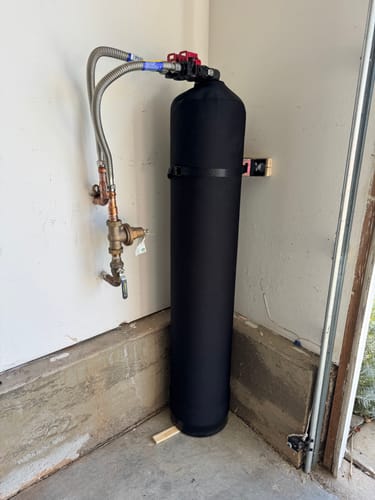
So now that we recognize why acidic water throws a wrench into iron filtration, the obvious next question is: what's actually in your water?
Before choosing any system, we need precise answers. Here's what to test for:
- Iron levels — anything exceeding 3 ppm risks gastrointestinal discomfort and demands serious filtration.
- pH — systems perform most effectively at 7.0 or above; lower readings compromise iron removal entirely.
- Manganese, hardness, and sulfur — these hidden variables determine which filter type actually works for your situation.
The EPA's secondary limit sits at just 0.3 ppm for iron — surprisingly low.
That's why guessing won't cut it. Send your sample to a reputable laboratory, get accurate results, and let the data drive your filter selection.
What pH Range Does Your Iron Filter Actually Need?
pH 6.8. That's the threshold that separates a well-functioning iron filter from one that's quietly failing you.
Most iron filters need water sitting between pH 6.8 and 9.0, but here's what matters most—the sweet spot is 7.0 or higher.
Drop below that, and your acidic water starts working against the filtration process. Dissolved iron slips through, water quality suffers, and your system wears down faster than it should.
Take Birm iron filters as a clear example. They won't touch acidic water below pH 7.0—full stop. That's not a minor limitation; it's a dealbreaker.
If your well water tests acidic, a neutralizer like the Fleck 2510SXT can raise that pH first, giving your iron filter the alkaline conditions it actually needs to perform.
How Acidic Water Destroys Your Iron Filter Media
Acidic water doesn't just underperform in an iron filter—it actively eats away at the media inside. When pH drops below 7.0, here's what we're really dealing with:
- Katalox Light media degrades — it requires neutral to slightly alkaline conditions to oxidize iron effectively; acid dismantles that chemistry.
- Heavy metals leach into your water — below pH 6.5, acidic conditions pull contaminants directly from plumbing and filter components, poisoning what you're trying to purify.
- Your system's lifespan shrinks — corroded media means more maintenance, more replacements, and more costs.
We've seen homeowners skip pre-treatment and wonder why their filter fails prematurely. Acidic water isn't just inefficient—it's destructive.
Treating pH before filtration isn't optional; it's the foundation everything else depends on.
Fix Acidic Well Water Before It Ruins Your Iron Filter
If your well water's pH is below 7.0, your iron filter is already fighting a losing battle—but the fix is straightforward.
Pair your iron filter with an acid neutralizer first. Systems like the Fleck 2510AIO Katalox Light perform effectively at pH 7.0 or higher—below that threshold, you're not filtering; you're just accelerating media degradation.
Here's what we recommend: test your water regularly. If pH drops below 6.5, implement neutralization before water ever reaches your iron filter.
Calcite-based neutralizers raise pH naturally, protecting both your filtration media and your plumbing infrastructure from corrosive damage.
Think of it as a two-stage defense—neutralize first, filter second.
That sequence doesn't just preserve your iron filter; it extends the life of every pipe and appliance downstream.
Frequently Asked Questions
Why Is It Important to Treat Corrosive Water or Water With a Lower pH (Acidic)?
We must treat acidic water because it leaches dangerous heavy metals like copper and lead into our supply, corrodes our plumbing, shortens appliance lifespans, and creates unpleasant metallic tastes that compromise our water's quality.
What Is the Optimum pH for Iron Removal?
We've found the sweet spot for iron removal sits between 6.8 and 9.0. Within this range, ferrous iron oxidizes into ferric iron, making it filterable and keeping your water clean and your plumbing protected.
How to Fix pH Level in Well Water?
We can fix well water pH by adding soda ash via a chemical feed system, using backwashing acid neutralizers like Calcite, or installing a two-tank system for severely low pH levels.
How to Remove Ferric Iron From Well Water?
To remove ferric iron, we'll need an oxidizing filter like an air injection or Birm filter. First, let's verify our water's pH sits between 7.0 and 9.0, then backwash regularly to prevent clogging.






