


![SoftPro™ Chlorine+ Carbon Whole House Water Filter to Remove PFAS, Chlorine, Chloramine & Pesticides [City Water Filters Series]](http://www.softprowatersystems.com/cdn/shop/files/SoftPro_Whole_House_Carbon_Filter_with_Spin_Down_Water_Filter.webp?v=1783547361&width=140)


 855-683-8488


Activated Carbon Iron Filter Water Treatment: Can It Actually Remove Iron or Is That a Myth?

Activated carbon filters can remove some iron, but it's not that simple. GAC filters won't touch iron at all — they just let it pass right through. Carbon block filters rated at one micron or less can capture dissolved ferrous iron, but only under specific conditions and concentrations below 10 ppm. For serious iron problems, you'll need a dedicated removal system. Stick with us, and we'll break down exactly which solution matches your situation.
Key Takeaways
- Activated carbon filters can remove iron, but effectiveness depends on filter type, iron form, and concentration levels.
- Carbon block filters rated at one micron or less can physically trap iron particles; GAC filters cannot.
- Dissolved ferrous iron requires oxidation before activated carbon filtration can effectively capture it.
- Iron removal capability of carbon filters diminishes significantly above 10 ppm, requiring dedicated removal systems.
- For severe iron contamination, oxidation-based, greensand, or potassium permanganate systems outperform carbon filters significantly.
How Activated Carbon Filters Actually Work on Iron

When it comes to activated carbon filters and iron removal, the reality is more nuanced than most people realize. Activated carbon excels at eliminating chlorine, tastes, and odors—but iron? That's where things get complicated.
Granular Activated Carbon (GAC) filters simply aren't designed to attract iron molecules, making them largely ineffective against this contaminant without additional treatment.
Granular Activated Carbon filters weren't built to fight iron—making them largely ineffective without additional treatment.
Here's what's genuinely interesting: carbon block filters rated at one micron or less can capture some iron, but only under specific design conditions and certifications.
The critical variable nobody mentions? Dissolved ferrous iron requires prior oxidation before activated carbon can do anything meaningful with it. Without that oxidation step, you're fundamentally running iron-contaminated water through a filter that wasn't built for this fight.
Where Carbon Filters Hit Their Limit With Iron
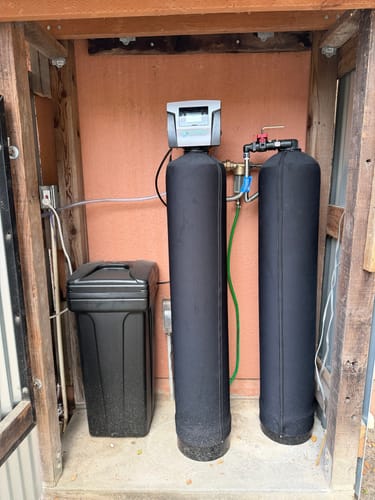
Even though carbon block filters rated at one micron or less can intercept some dissolved ferrous iron, that capability vanishes fast once iron levels climb above 10 ppm—and that's where most well water problems actually live.
Here's what we need to understand: GAC filters don't attract iron at all. There's no chemical affinity pulling iron toward the carbon surface, which means standard granular activated carbon simply lets iron pass through untouched.
Carbon genuinely excels at stripping chlorine, organic compounds, and bad tastes—but iron isn't in that category.
When your iron problem is serious, carbon alone won't solve it. You'll need dedicated iron removal systems or reverse osmosis working alongside your carbon filter.
Recognizing this limitation isn't defeatist—it's exactly what drives smarter filtration decisions.
Carbon Block vs. GAC: Which Type Handles Iron Better?
Not all carbon filters are created equal, and that distinction matters a lot when iron's in the picture. Carbon block filters, especially those rated at one micron or less, can physically trap iron particles—something GAC filters simply can't do. GAC lacks attraction to iron, making it useful only as a polishing filter for VOCs and odors.
| Feature | Carbon Block | GAC |
|---|---|---|
| Iron Removal | Yes (≤1 micron) | No |
| VOC/Odor Removal | Yes | Yes |
| Iron Certification | Varies | Not applicable |
Your micron rating determines your outcome. Lower ratings mean tighter filtration and better iron capture. If iron's your concern, carbon block wins—but we'd still recommend consulting a water treatment specialist for levels above 10 ppm.
Iron Removal Systems That Outperform Activated Carbon
Carbon block filters do a decent job with particulate iron, but let's be honest—they're not built for serious iron problems.
When dissolved ferrous iron exceeds 3.0 ppm, you need systems engineered specifically for iron removal.
Aeration and oxidation-based systems work by converting dissolved ferrous iron into solid ferric iron, which can then be filtered out mechanically. That's a fundamentally different—and far more effective—approach.
We also recommend considering continuous regeneration greensand systems or potassium permanganate systems, both of which tackle iron contamination directly and consistently.
Water softeners can handle low ferrous iron concentrations below 3.0 ppm, but they'll struggle beyond that threshold without complementary filtration support.
The pattern is clear: serious iron problems demand dedicated iron removal technology, not activated carbon workarounds.
Which Iron Removal System Fits Your Contamination Level?
How do you know which iron removal system is right for your water? It starts with a detailed water analysis. You need to know your iron type and concentration before selecting anything.
Here's a practical breakdown:
- Under 3 ppm: A water softener can handle this, though it's far from ideal.
- 3–10 ppm: Oxidation-based systems convert dissolved ferrous iron into filterable ferric iron, making them far more reliable.
- Above 10 ppm: You'll need potassium permanganate or chlorine-based systems, which demand careful maintenance and precise dosing.
- Certified carbon block filters (≤1 micron): These can remove dissolved iron, but only if explicitly certified for that performance.
Don't guess. Test first, then match your system to your contamination level precisely.
Frequently Asked Questions
Does an Activated Carbon Filter Remove Iron?
Activated carbon filters don't effectively remove iron from your water. They're designed for taste and odor, not iron. You'll need a specialized iron removal system to tackle elevated iron levels above 10 ppm.
What Water Filter Removes Iron From Water?
We recommend oxidation systems, sedimentation filters, or NSF-certified specialized iron removal filters. For levels above 10 ppm, you'll need advanced treatment—standard carbon filters simply won't cut it. Consult a water treatment specialist for your best solution.
What Are the Disadvantages of an Activated Carbon Filter?
We've found that activated carbon filters can't remove dissolved iron above 10 ppm, nitrates, dissolved solids, or certain bacteria—and they're rarely NSF-certified for iron removal, making them inadequate as standalone treatment solutions.
What Is the Cheapest Way to Remove Iron From Well Water?
We've found that water softeners are your cheapest option for low iron levels under 3.0 ppm. For higher concentrations, aeration systems offer an affordable alternative, oxidizing dissolved iron into filterable particles without breaking your budget.






