


![SoftPro™ Chlorine+ Carbon Whole House Water Filter to Remove PFAS, Chlorine, Chloramine & Pesticides [City Water Filters Series]](http://www.softprowatersystems.com/cdn/shop/files/SoftPro_Whole_House_Carbon_Filter_with_Spin_Down_Water_Filter.webp?v=1783547361&width=140)


 855-683-8488


Activated Carbon Iron Filter Water Treatment Systems With Carbon Beds — What Every Homeowner Must Know

Activated carbon iron filters are multi-tasking powerhouses that remove chlorine, heavy metals, VOCs, and even low concentrations of iron and manganese from our water. They can achieve up to 99.9% removal of certain contaminants, protecting our plumbing, appliances, and health. But not all carbon filters work the same way, and knowing when they're failing can save us from serious water quality problems. Stick with us, and we'll walk you through everything you need to make the right call.
Key Takeaways
- Activated carbon iron filters remove chlorine, heavy metals, VOCs, and chloramines, achieving up to 99.9% removal of certain contaminants.
- Carbon bed filters effectively target low iron and manganese concentrations, reducing discolored water and unpleasant odors.
- Catalytic carbon outperforms GAC for iron and manganese removal by promoting oxidation and converting soluble iron.
- Filter lifespan ranges from 3 to 10 years, depending on iron concentration levels, usage frequency, and maintenance regularity.
- Warning signs of filter failure include dropping water pressure, metallic odors, brownish water, and staining on fixtures or laundry.
What Does an Activated Carbon Iron Filter Actually Do?

When it comes to cleaning up your water, an activated carbon iron filter does a lot more than just tackle iron.
Think of it as a multi-tasking powerhouse working inside your pipes every day.
Here's what's actually happening: the carbon bed adsorbs chlorine, heavy metals, and VOCs while catalytically breaking down chloramines — those stubborn compounds cities use that standard filters struggle against.
We're talking up to 99.9% removal of certain contaminants.
The real story isn't just cleaner water — it's what that water does for your home.
The real win isn't just purer water — it's everything cleaner water quietly protects behind the scenes.
When corrosive chemicals stop flowing through your plumbing, your appliances last longer, your pipes stay healthier, and every tap delivers water that genuinely tastes and smells better.
That's whole-house protection working silently, continuously, and effectively.
What Iron and Contaminant Problems Can a Carbon Bed Filter Fix?
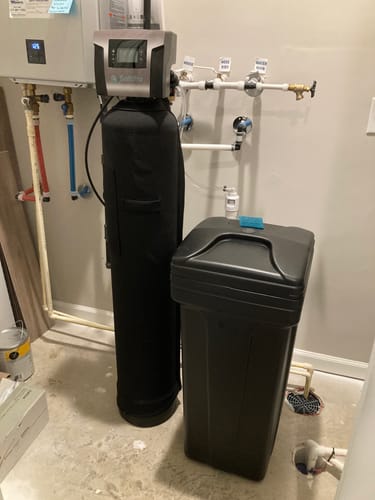
So what exactly can a carbon bed filter tackle when it comes to iron and other contaminants? It's more capable than most homeowners realize. Beyond stripping chlorine, VOCs, and foul tastes and odors, carbon bed filters effectively reduce low concentrations of iron and manganese — two culprits behind discolored water and unpleasant smells.
Here's what we love about this solution: it directly targets the aesthetic problems iron creates, including that rusty color and murky sediment you've probably noticed.
However, we need to be honest — high iron concentrations demand additional treatment methods. Carbon filters aren't a standalone solution for severe contamination. That's why regular water testing matters. You'll know exactly what your filter's handling and when it's time to intervene.
GAC vs. Catalytic Carbon: Which Bed Medium Removes Iron Better?
Not all carbon filter media are created equal — and that distinction matters when iron is your main concern. GAC excels at removing chlorine, taste, and odor, but it wasn't engineered for iron. Catalytic carbon was. It promotes oxidation reactions that convert soluble iron into filterable, insoluble particles — a chemistry GAC simply can't replicate efficiently.
| Feature | GAC | Catalytic Carbon |
|---|---|---|
| Iron Removal | Limited | Superior |
| Filtration Size | ~20 microns | Finer particles |
| Best Use Case | Chlorine/odor | Iron/manganese |
If your water carries high iron concentrations, catalytic carbon isn't just better — it's the right tool. We always recommend matching your media to your problem, and for iron, catalytic carbon wins decisively.
How Long Does a Carbon Bed Iron Filter Actually Last?
How long your carbon bed iron filter lasts depends on more than just time — it depends on how hard it works. Most systems last between 3 to 10 years, but that range tells only part of the story.
How long a carbon bed iron filter lasts depends on how hard it works — not just how long it runs.
Think of it this way: a filter battling high iron concentrations daily ages faster than one handling moderate loads. Contaminant levels, usage frequency, and pre-treatment measures all shape the carbon medium's lifespan considerably.
We recommend watching for warning signs — rising iron concentrations, unpleasant odors, or dropping water pressure. These aren't inconveniences; they're signals demanding action.
Regular backwashing, timely carbon replacement, and scheduled water testing after installation keep your system performing at its peak, helping you catch problems before they compromise your water quality entirely.
Water Quality Dropping? Signs Your Carbon Iron Filter Needs Attention
Knowing your filter's lifespan is one thing — recognizing when it's failing before it quietly wrecks your water quality is another. Watch for these red flags: dropping water pressure signals a clogged filter bed. Metallic or earthy odors mean the carbon's losing its adsorption capacity. Brownish or reddish water tells you iron's breaking through unchallenged. Staining on fixtures and laundry confirms excessive iron levels demanding immediate action.
Don't rely on visual cues alone. Test your water regularly, targeting iron levels below 0.3 mg/L — that's the benchmark for safe drinking water. When readings creep above that threshold, your filter's already behind the curve.
Catching these warning signs early protects your plumbing, your appliances, and ultimately your family's health.
Frequently Asked Questions
What Are the Disadvantages of an Activated Carbon Filter?
We've found that activated carbon filters can't remove heavy metals, dissolved minerals, or microorganisms. They also need replacing every 6-12 months, and neglecting maintenance risks bacterial growth, leaving your water potentially unsafe.
Do I Need to Rinse Activated Carbon Before Use?
Yes, we recommend rinsing activated carbon before use. It removes dust and loose particles that affect taste and odor. A few minutes under cold running water guarantees your filter performs at its absolute best.
How Often Should I Change My Whole House Carbon Water Filter?
We recommend replacing media-bed systems every 5 years and cartridge-based systems every 6-12 months. Watch for reduced flow rates or changes in taste and odor—those are your clearest signals it's time.
What Are the Side Effects of a Carbon Water Filter?
We've seen carbon filters cause bacterial growth, reduced flow rates, and lingering contaminants like heavy metals if neglected. They won't soften water either. Stay ahead by replacing filters regularly and maintaining proper installation.






