


![SoftPro™ Chlorine+ Carbon Whole House Water Filter to Remove PFAS, Chlorine, Chloramine & Pesticides [City Water Filters Series]](http://www.softprowatersystems.com/cdn/shop/files/SoftPro_Whole_House_Carbon_Filter_with_Spin_Down_Water_Filter.webp?v=1783547361&width=140)


 855-683-8488


After Shock Chlorination for Iron Bacteria: The Critical Next Steps to Stop It From Returning

After shock chlorination kills iron bacteria, our work isn't done. Residual bacteria hiding in well walls, pipes, and equipment can quickly bounce back if conditions stay favorable. We need to seal the well properly, maintain disinfected tools, and consider filters like UV systems or reverse osmosis to starve bacteria of nutrients. Regular water testing confirms whether treatment actually worked. Stick with us, and we'll walk you through every critical step to keep iron bacteria gone for good.
Key Takeaways
- Test water one to two weeks after chlorination, ensuring coliform bacteria are absent and iron levels stay below 0.3 mg/L.
- Seal the well casing properly, keeping it capped, watertight, and at least one foot above ground to prevent recontamination.
- Install sediment filters, UV light systems, or reverse osmosis to eliminate iron bacteria's food sources and prevent regrowth.
- Disinfect all tools and equipment before well maintenance to avoid reintroducing bacteria into a recently treated system.
- Consider continuous chlorination dosing if iron bacteria recur within weeks, signaling a persistently supportive well environment.
Why Iron Bacteria Returns After Shock Chlorination

Even after a successful shock chlorination treatment, iron bacteria can make a frustrating comeback — and understanding why helps us stop it from happening again. Residual bacteria hiding in well walls, pipes, and equipment survive the initial treatment and quietly rebuild colonies.
Poor well construction — missing caps, inadequate sealing — lets surface water sneak back in, reintroducing contaminants. Even routine maintenance activities like pump installation can unknowingly reintroduce bacteria if tools aren't properly sanitized.
What makes this worse? If your well's conditions still favor iron bacteria — low dissolved oxygen, high iron content, warm temperatures — you've practically left the welcome mat out. Shock chlorination isn't a one-time fix; it's the starting point for a smarter, more disciplined water management approach.
How to Seal Your Well Against Iron Bacteria Recontamination
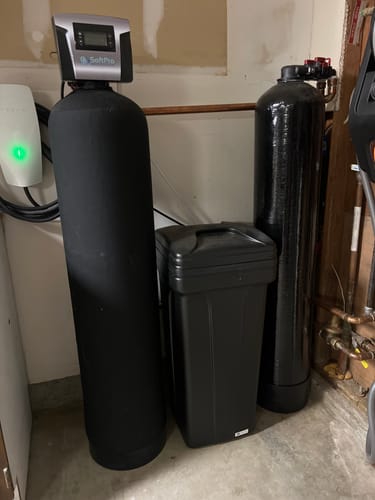
Sealing your well properly gives iron bacteria one less way back in — and there are five key measures that make all the difference.
Seal your well correctly, and you take away one of iron bacteria's most reliable routes back in.
First, confirm your casing is capped, watertight, and extends at least one foot above ground — surface water is a primary recontamination vector.
Second, schedule regular structural inspections to catch vulnerabilities before bacteria exploit them.
Third, use only disinfected water during any drilling, repairs, or maintenance.
Fourth, protect your wellhead during repairs: keep equipment off the ground and disinfect every tool with a chlorine solution beforehand.
Fifth — and most overlooked — test annually for coliform bacteria and nitrates. You can't manage what you don't measure.
These five steps transform your well from a recurring problem into a reliably protected water source.
Which Filters and Treatments Slow Iron Bacteria Regrowth
Filters and treatments are your second line of defense once shock chlorination is done — but only if you choose the right ones. Stack the wrong system, and iron bacteria bounce back fast.
| Treatment | What It Targets | Why It Matters |
|---|---|---|
| Sediment Filters | Iron particles, debris | Starves bacteria of fuel |
| UV Light Systems | Active iron bacteria | Disrupts cellular function |
| Reverse Osmosis | Dissolved iron, contaminants | Eliminates bacterial food source |
| Chlorination Dosing | Bacterial resurgence | Maintains residual disinfection |
| Regular Maintenance | Filter cartridge buildup | Prevents system failure points |
We recommend layering these solutions — no single filter wins alone. Replace cartridges on schedule, keep UV bulbs fresh, and stay consistent with chemical dosing. That consistency is what separates households that beat iron bacteria from those that fight it forever.
What Your Water Tests Should Show Before Repeating Treatment
Before you repeat shock chlorination, your water tests need to tell a clear story. Coliform and E. coli should be completely absent—that's your baseline confirmation that disinfection worked.
But bacteria aren't your only concern. Iron levels must sit below 0.3 mg/L, because anything higher creates conditions where iron bacteria thrive despite treatment.
We also watch manganese closely—if it exceeds 0.05 mg/L, it compounds the problem and demands its own intervention.
Don't ignore your senses either. Persistent rusty stains or foul odors signal that iron bacteria haven't surrendered, regardless of what basic tests show.
Time your re-testing strategically: wait one to two weeks post-chlorination. That window reveals whether bacteria are rebounding or whether your treatment genuinely held.
Signs You Need Continuous Disinfection Instead of Shock Chlorination
There are 5 clear signs that shock chlorination isn't enough and that your well needs continuous disinfection instead.
First, if iron bacteria return within weeks of treatment, your well environment is actively supporting their regrowth.
Second, recurring rust stains, odd odors, or strange tastes mean periodic treatment can't keep up.
Third, visible slime or clumping signals a deeper infestation that demands consistent control.
Fourth, frequent clogging or reduced water flow from bacterial buildup requires a long-term solution like continuous chlorination or UV treatment.
Fifth, if bacteria keep returning despite proper maintenance, you're fighting a systemic problem, not an isolated event.
Continuous disinfection stops contamination before it escalates rather than forcing you into an endless cycle of reactive treatments.
Frequently Asked Questions
How to Stop Iron Bacteria?
We'll stop iron bacteria by shock chlorinating every six months, keeping your well casing sealed, using disinfected water during repairs, testing annually, and considering UV or ozone treatment for persistent cases.
How Long to Run Water After Shock Chlorination?
We recommend running water from all taps for at least 30 minutes to 2 hours until the chlorine odor disappears. Deeper wells with heavier chlorination need longer flushing to fully clear your system.
Will Shocking a Well Get Rid of Iron Bacteria?
Shock chlorination can kill iron bacteria, but it won't fully eliminate them if they've formed protective slime layers. We'll likely need higher chlorine concentrations or continuous disinfection methods to keep them from returning.
How to Get Rid of Iron Bacteria in a Toilet Tank?
To eliminate iron bacteria in your toilet tank, we'll add 1 cup of bleach directly to the tank, let it sit 30 minutes, scrub away slimy deposits, then flush to clear it out.






