


![SoftPro™ Chlorine+ Carbon Whole House Water Filter to Remove PFAS, Chlorine, Chloramine & Pesticides [City Water Filters Series]](http://www.softprowatersystems.com/cdn/shop/files/SoftPro_Whole_House_Carbon_Filter_with_Spin_Down_Water_Filter.webp?v=1783547361&width=140)


 855-683-8488


How AIO Air Injection Iron Filter Systems Also Handle Hydrogen Sulfide Alongside Iron Removal

AIO air injection iron filter systems handle hydrogen sulfide by using a Venturi injector to pull oxygen into the water stream, oxidizing both ferrous iron and hydrogen sulfide simultaneously. The oxygen converts iron into solid particles while transforming hydrogen sulfide into filterable sulfur. Your system maintains a compressed air pocket to keep this process continuous. As long as pH stays at or above 6.8, treatment stays effective — and there's a lot more to unpack about getting this right.
Key Takeaways
- AIO systems use a Venturi injector to introduce oxygen, simultaneously oxidizing ferrous iron into solid particles and converting hydrogen sulfide into sulfur.
- A compressed air pocket maintains continuous air contact with water, ensuring consistent treatment of both iron and hydrogen sulfide contaminants.
- AIO systems effectively handle up to 7 ppm of iron and 8 ppm of hydrogen sulfide before efficiency begins to decline.
- Water pH must remain at or above 6.8 for the oxidation processes targeting both iron and hydrogen sulfide to work optimally.
- Selecting appropriate filter media, such as Katalox Light or Catalytic Carbon, ensures targeted removal of both iron and hydrogen sulfide odors.
Why Hydrogen Sulfide Is Harder to Remove Than Iron Alone

When iron stains your sink or tub, you can see the problem right away — but hydrogen sulfide is a different beast entirely. That rotten egg odor creeps through your water invisibly, making it harder to detect and even harder to eliminate.
Hydrogen sulfide doesn't stain your sink — it haunts your nose, slipping through your water undetected until the damage is done.
Unlike iron, which oxidizes and filters out relatively easily, hydrogen sulfide forms soluble sulfides that interfere with filtration, demanding higher doses of oxidizing agents just to get the job done.
It also requires a pH of around 8 or above to oxidize effectively into filterable sulfur particles. Miss that window, and you're fighting a losing battle.
That's why treating hydrogen sulfide isn't simply an extension of iron removal — it's a more complex, condition-sensitive process that demands a smarter system.
How AIO Systems Oxidize Iron and Hydrogen Sulfide at Once
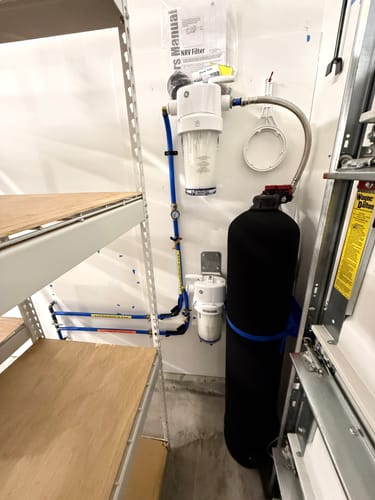
Because iron and hydrogen sulfide rarely show up alone, AIO systems are built to tackle both at once — and the key is a Venturi injector that pulls oxygen directly into your water as it flows through the system.
That oxygen immediately gets to work, converting dissolved ferrous iron into solid particles while simultaneously transforming hydrogen sulfide into harmless sulfur.
The system maintains a compressed air pocket inside the tank, ensuring constant air contact with incoming contaminants.
One critical detail: your water's pH must stay at or above 6.8, or those oxidation reactions lose effectiveness.
Once oxidation completes, daily backwashing flushes out the accumulated iron and sulfur particles, resetting the system.
It's a seamless, continuous process that handles both problems without requiring separate treatment stages.
Choosing the Right AIO Filter Media for Iron and Hydrogen Sulfide
Choosing the right media makes or breaks how well your AIO system performs. We've seen systems underperform simply because the media didn't match the water chemistry. Here's what we recommend comparing:
| Media | Targets | Best For |
|---|---|---|
| Katalox Light | Iron, H₂S odors | High iron levels |
| Catalytic Carbon | H₂S odors | Rotten egg smell |
| Blended Media | Iron + H₂S | Complex water issues |
| Standard Birm | Iron only | Low-sulfide water |
| Greensand Plus | Iron, manganese | Varied contaminants |
Your pH also matters greatly. We need levels between 6.8 and 9.0 for proper hydrogen sulfide oxidation. Outside that range, even premium media struggles. That's why we always recommend testing your water first—it tells us exactly which media selection will deliver lasting, effective results.
How Much Iron and Hydrogen Sulfide Can an AIO System Actually Handle?
How much can an AIO system actually take on before it starts struggling? For most households, the numbers are reassuring. We're talking up to 7 ppm of iron and up to 8 ppm of hydrogen sulfide—levels that cover the vast majority of problem wells we encounter.
Here's what makes those numbers work: dissolved oxygen drives the oxidation process, converting both iron and hydrogen sulfide into solid particles the filter media captures.
Dissolved oxygen does the heavy lifting—oxidizing iron and hydrogen sulfide into solid particles the filter media can capture.
But there's a catch—your water's pH can't dip below 6.8. Below that threshold, efficiency drops fast.
We also want to emphasize that these limits aren't self-sustaining. Regular backwashing clears out accumulated iron and sulfur compounds, keeping the system performing at its ceiling rather than slowly declining toward failure.
How to Maintain Your AIO Filter Before Iron Buildup Becomes a Problem
Staying ahead of iron buildup is far easier than recovering from it, and that starts with keeping your valve clean. Regular valve cleaning prevents iron deposits from quietly strangling your system's performance over time.
We also recommend inspecting the injector assembly periodically — a clogged injector means weak air injection, and weak air injection means iron and hydrogen sulfide aren't getting oxidized properly.
Make daily backwashing non-negotiable. It keeps your filter media free of debris and working at full capacity.
If you're running Birm media, monitor your pH closely — it needs to stay between 6.8 and 9.0 to perform effectively.
Finally, clean your injectors consistently to prevent iron buildup from blocking air suction. Stay proactive, and your AIO system will reward you with years of reliable performance.
Frequently Asked Questions
What Filters Remove Hydrogen Sulfide?
We recommend catalytic carbon filters and AIO air injection systems to remove hydrogen sulfide. They oxidize and neutralize that rotten egg smell, transforming it into harmless sulfur—giving you clean, odor-free water you'll actually enjoy drinking.
Does Birm Remove Hydrogen Sulfide?
Birm doesn't remove hydrogen sulfide. It's designed for iron and manganese oxidation, and hydrogen sulfide actually interferes with its performance. We recommend catalytic carbon or AIO air injection systems for effective sulfur removal instead.
Do Iron Filters Remove Sulfur?
Yes, iron filters can remove sulfur! We've found that AIO air injection systems effectively convert hydrogen sulfide—that rotten egg smell—into harmless sulfur particles, filtering it out alongside iron and manganese.
How Does an Air Injection Iron Filter Work?
We use a Venturi injector to pull oxygen into your water, oxidizing iron and hydrogen sulfide into solid particles. Then, our Katalox Light filter media captures those particles, delivering clean, odor-free water throughout your home.






