


![SoftPro™ Chlorine+ Carbon Whole House Water Filter to Remove PFAS, Chlorine, Chloramine & Pesticides [City Water Filters Series]](http://www.softprowatersystems.com/cdn/shop/files/SoftPro_Whole_House_Carbon_Filter_with_Spin_Down_Water_Filter.webp?v=1783547361&width=140)


 855-683-8488


AIO Air Injection Iron Filters vs. Chemical Systems: A Real-World Maintenance Comparison

When comparing AIO air injection filters to chemical systems, the biggest real-world difference comes down to maintenance burden and long-term cost. AIO systems backwash every two to four weeks automatically, require no chemicals, and cost $150–$400 yearly to maintain. Chemical systems demand daily monitoring, chemical restocking, and run $300–$600 annually. The right choice depends entirely on your water's iron levels and pH — and we'll break down exactly how to match your system to your water.
Key Takeaways
- AIO systems require backwashing every 2–4 weeks, while chemical systems demand daily monitoring of oxidizer supplies and pH levels.
- Chemical systems carry annual costs of $300–$600, whereas AIO systems cost only $150–$400 yearly with minimal media replacement needs.
- AIO systems automate the oxidation process using air injection, eliminating the need for chemicals or continuous homeowner oversight.
- Chemical systems risk producing harmful byproducts, adding safety and environmental considerations absent in AIO air injection systems.
- Water testing determines the best fit: AIO suits moderate iron and higher pH, while chemical systems handle extreme contamination.
How Do AIO and Chemical Iron Filters Actually Work?

When it comes to tackling iron in your water, both AIO (Air Injection Oxidation) and chemical filtration systems get the job done — but through very different means.
AIO systems inject air directly into the water, converting soluble ferrous iron into insoluble ferric iron — no chemicals required. That ferric iron then gets trapped and flushed out during backwashing.
AIO systems convert dissolved iron into a solid form using only air — then flush it out automatically.
Chemical systems take a different route. They rely on oxidizing agents like chlorine or potassium permanganate to drive that same ferrous-to-ferric conversion. It works, but you're now managing chemical inventories, monitoring pH levels consistently, and staying alert for harmful byproducts.
The core difference? AIO systems automate the oxidation process naturally, while chemical systems hand you an ongoing responsibility.
Understanding that distinction shapes every maintenance decision you'll make downstream.
Which System: AIO or Chemical: Fits Your Iron Level and pH?
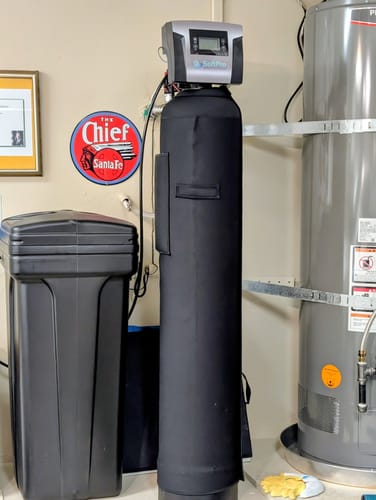
Choosing the right system comes down to two numbers: your iron concentration and your pH level. If your water tests below 0.3 PPM iron and sits above 6.5 pH, an AIO system's your match — low maintenance, no chemical costs, backwashing every 2-4 weeks. Drop below those thresholds, and chemical treatment becomes necessary.
| Condition | Recommended System |
|---|---|
| Iron < 0.3 PPM, pH > 6.5 | AIO Air Injection |
| Iron > 0.3 PPM or pH < 6.5 | Chemical Treatment |
| Extreme contamination, variable pH | Chemical Treatment |
We've seen homeowners misjudge this choice and inherit ongoing chemical expenses they didn't budget for. Know your numbers first — they'll tell you exactly which system earns its place in your home.
What AIO and Chemical Systems Demand for Daily Maintenance
Nobody wants to spend their mornings babysitting a water filter. With an AIO system, you won't have to. Daily management stays simple—just confirm it's performing normally and move on.
There's no chemical inventory to track, no oxidizing agents running low at the worst possible moment.
Chemical systems tell a different story. You're monitoring pH levels, checking oxidizer supplies, and staying alert for harmful byproducts that can sneak up when balancing gets off.
Miss a step, and your iron removal suffers.
The contrast is stark: AIO demands attention every few weeks, focusing on water clarity and pressure.
Chemical systems demand it daily. If your mornings are already full, that difference isn't just convenient—it's genuinely life-changing for how you manage your home's water quality.
Which System Costs Less Over Time: Chemical Purchases or Filter Upkeep?
Let's talk money, because that's where the real difference shows up.
Chemical systems quietly drain your wallet through ongoing oxidizing agent purchases, averaging $300–$600 annually. That's before factoring in pH balancing and constant monitoring. It adds up faster than most homeowners expect.
AIO filters flip that script. You're looking at $150–$400 yearly for upkeep, with media replacements only every 6–10 years. No chemical purchases. No routine monitoring costs. Just efficient, chemical-free operation that protects both your budget and the environment.
AIO filters cost just $150–$400 yearly — no chemicals, no constant monitoring, just clean water and savings.
Here's the number that matters most: over a decade, AIO systems can save you thousands compared to chemical alternatives. What initially looks like comparable pricing reveals itself over time as a significant financial advantage in AIO's favor.
AIO or Chemical Treatment: Which One Is Right for Your Water?
Now that we've laid out the cost comparison, the bigger question becomes: which system actually fits your water?
Start with proper water testing—it's non-negotiable. If your pH sits above 6.5 and you're dealing with moderate iron levels, an AIO system is likely your strongest match. It oxidizes iron naturally, skips the chemicals entirely, and demands minimal attention beyond backwashing every few weeks.
But if you're battling extreme iron contamination or iron bacteria, chemical treatment may be unavoidable. Just know you're signing up for ongoing monitoring, pH balancing, and recurring supply costs.
The right answer lives in your water report, not a preference. Test first, then decide. That single step keeps you from overspending on a system that never fully solves your problem.
Frequently Asked Questions
Do Air Injection Iron Filters Work?
Yes, they work! We've seen air injection iron filters successfully oxidize soluble iron into insoluble particles, removing it effectively without chemicals. You'll enjoy reliable performance, minimal monitoring, and cleaner water with far less hassle than traditional systems.
What Are Common Problems With Iron Filters?
We've seen iron filters struggle with frequent backwashing needs, sediment buildup, bacterial contamination, and rising manganese levels—all shortening filter life and demanding more maintenance than most homeowners anticipate when they're first getting started.
What Is the Cheapest Way to Remove Iron From Well Water?
We've found AIO air injection systems are your most affordable long-term solution—they eliminate recurring chemical costs, require minimal maintenance ($150–$400 annually), and effectively treat iron levels above 0.3 PPM without expensive oxidizing agents.
What Is the Best System to Remove Rust From Well Water?
We recommend AIO air injection systems as the best solution for removing rust from well water. They're chemical-free, cost-effective, and remove up to 30 PPM of iron with minimal maintenance required.






