


![SoftPro™ Chlorine+ Carbon Whole House Water Filter to Remove PFAS, Chlorine, Chloramine & Pesticides [City Water Filters Series]](http://www.softprowatersystems.com/cdn/shop/files/SoftPro_Whole_House_Carbon_Filter_with_Spin_Down_Water_Filter.webp?v=1783547361&width=140)


 855-683-8488


AIO Air Injection vs. Chemical Iron Filtration: How to Choose Based on Your Exact Water Chemistry

Choosing between AIO air injection and chemical iron filtration comes down to your exact water chemistry. AIO systems work best when iron levels stay at or below 8 PPM with a non-acidic pH, while chemical oxidation handles severe concentrations up to 30 PPM and highly acidic conditions. AIO systems are chemical-free with lower maintenance costs, but chemical systems tackle complex contamination. Test your water first, and we'll help you match every detail to the right system.
Key Takeaways
- AIO air injection works best for iron levels at or below 8 PPM with a non-acidic pH balance.
- Chemical oxidation handles severe iron concentrations around 30 PPM, especially when pH drops below 6.5.
- Low pH combined with high iron significantly reduces AIO air injection's effectiveness in treating water.
- Thorough water testing before system investment ensures the chosen filter matches your exact water chemistry needs.
- Budget-conscious homeowners with moderate iron levels benefit most from low-maintenance AIO air injection systems.
How Each Iron Filter System Actually Works

When it comes to removing iron from your water, the method matters more than you'd think. AIO air injection systems work by introducing oxygen directly into your water supply, forcing dissolved iron to precipitate into solid particles that filters can then capture.
The method you choose for iron removal matters — AIO air injection transforms dissolved iron into filterable solids using only oxygen.
It's a clean, chemical-free process that keeps operational costs low over time.
Chemical iron filtration takes a different approach. These systems introduce oxidizing agents like potassium permanganate, which chemically converts ferrous iron into filterable ferric iron.
The tradeoff? You'll need consistent chemical dosing and careful monitoring to maintain peak performance.
Both systems achieve iron removal, but through fundamentally different mechanisms. Understanding those differences lets you match the right solution to your water's specific chemistry and contamination levels.
Iron Concentration and pH: Which System Wins at Your Levels?
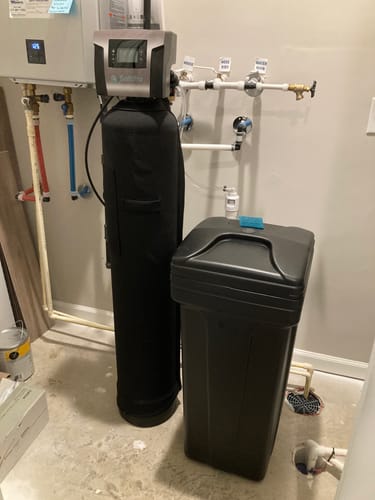
Knowing how each system works is only half the battle—the real question is which one actually fits your water.
If your iron levels sit at or below 8 PPM and your pH isn't severely acidic, an air injection system handles the job cleanly and without chemicals.
But push those iron levels toward 30 PPM or drop your pH below 6.5, and chemical oxidation becomes the stronger choice.
Here's where it gets precise: if you've got both high iron and low pH, air injection loses its edge fast—that's chemical oxidation's sweet spot.
Even at lower concentrations around 0.3 PPM with slightly acidic water, air injection still wins on cost and simplicity.
Test your water first. That single step makes the right choice obvious.
What Chemical Iron Filtration Costs You in Maintenance Over Time?
Chemical iron filtration's ongoing costs add up faster than most homeowners expect. Potassium permanganate replenishment alone can exceed $100 annually, and that's before factoring in professional servicing, replacement parts, and increased labor from monitoring chemical levels.
If your system gets overloaded or malfunctions, those costs spike quickly.
Here's what catches people off guard: chemical filters typically have shorter lifespans than air injection systems, meaning you'll replace components more frequently. That's a compounding long-term investment you need to calculate honestly.
There's also a hidden wildcard—the corrosive nature of treatment chemicals can stress your plumbing over time, creating unexpected repair bills.
When you add everything together, chemical filtration's true ownership cost often looks far less attractive than its initial price tag suggests.
When Chemical Iron Filters Threaten Septic Systems and Plumbing
If you rely on a septic system, chemical iron filtration introduces a risk most salespeople won't mention: potassium permanganate actively disrupts the bacterial colonies your septic tank depends on to break down waste.
Once those anaerobic bacteria are compromised, your entire waste management system struggles to function properly.
The damage doesn't stop there. Chemical byproducts accelerate corrosion inside your pipes and fixtures, quietly inflating your long-term repair costs.
Chemical byproducts don't just treat your water—they silently corrode your pipes, driving up repair costs you never anticipated.
We've seen homeowners spend considerably more fixing corroded plumbing than they ever anticipated when choosing a chemical system.
Air injection systems sidestep these problems entirely. By relying on natural oxidation rather than chemical dosing, they protect both your plumbing integrity and your septic environment—giving you effective iron removal without sacrificing the systems your household depends on daily.
Match Your Water Chemistry to the Right Iron Filter System
Before you invest in any iron filtration system, a thorough water test is non-negotiable—it tells you exactly what you're dealing with: clear water iron, oxidized iron, iron bacteria, or some combination of all three. Once you know your iron type and concentration, matching it to the right system becomes straightforward.
| Water Chemistry Factor | Recommended System |
|---|---|
| High clear water iron, low acidity | AIO Air Injection |
| Severe iron concentration, complex contaminants | Chemical Oxidation |
| Iron levels above 0.3 PPM | Either system, verified fit |
| Large household, high usage | Chemical Oxidation |
| Budget-conscious, lower maintenance | AIO Air Injection |
We also can't ignore flow rate—your filter must match your well's output, or you'll sacrifice pressure exactly when you need it most.
Frequently Asked Questions
What Is the Correct Order for Water Treatment?
We recommend starting with a sediment filter, then moving to iron filtration, followed by a water softener. If hydrogen sulfide's present, address that first. This sequence guarantees each system performs at its best!
Which Water Filtration Method Is the Best?
There's no single "best" method—it depends on your water chemistry. We recommend testing your water first; if iron levels are severe, chemical systems win, but for most homes, AIO's low maintenance makes it ideal.
What Is the Correct Order of Water Filters?
We'll start with a sediment filter, then move to an iron filter, followed by a water softener, and finish with a carbon filter to polish your water before it reaches your tap.
What Is the Best System to Remove Rust From Well Water?
The best system depends on your iron levels. If you're below 10 PPM, we recommend an air injection filter. Above that, you'll want a chemical oxidation system using potassium permanganate for ideal rust removal.






