


![SoftPro™ Chlorine+ Carbon Whole House Water Filter to Remove PFAS, Chlorine, Chloramine & Pesticides [City Water Filters Series]](http://www.softprowatersystems.com/cdn/shop/files/SoftPro_Whole_House_Carbon_Filter_with_Spin_Down_Water_Filter.webp?v=1783547361&width=140)


 855-683-8488


Air Injection Oxidation vs. Chlorine Feed: The Definitive Iron Removal Method Comparison

Both air injection and chlorine feed remove iron from water, but they're not interchangeable. Air injection works best when iron levels stay under 10 ppm, costs under £100 annually, and needs almost no maintenance. Chlorine feed handles higher concentrations, organic iron, and tricky water chemistry, though it'll cost you £300–£600 per year. Your water conditions determine everything. Stick with us, and we'll break down exactly which system wins for your situation.
Key Takeaways
- Air injection oxidation suits iron levels under 10 ppm, using no chemicals, while chlorine feed handles concentrations above 10 ppm reliably.
- Chlorine feed manages organic and colloidal iron forms that air injection cannot effectively oxidise.
- Annual maintenance costs differ significantly: air injection stays under £100, while chlorine feed ranges from £300–£600.
- Air injection requires under 2 hours of yearly labour; chlorine feed demands 6–12 hours, including monthly checks.
- Water pH matters: air injection performs best at pH 8.0 or above, while chlorine feed suits lower pH levels.
Air Injection vs. Chlorine Feed: How Each Method Removes Iron

When it comes to removing iron from water, the method you choose matters more than you might think.
Air injection systems work by introducing air directly into your water, oxidizing dissolved ferrous iron (Fe2+) into ferric iron (Fe3+)—solid particles your filtration media can capture and remove. It's a clean, straightforward process.
Air injection turns dissolved iron solid—then your filter does the rest.
Chlorine feed systems take a different approach. Here, injected chlorine chemically converts dissolved iron into a filterable form, typically requiring a contact tank to allow sufficient reaction time. This method handles what air injection can't—organic and colloidal iron forms that resist simpler oxidation.
Understanding these mechanisms isn't just technical trivia; it's the foundation for choosing the system that actually solves your specific iron problem.
Which System Handles Your Iron Level Better?
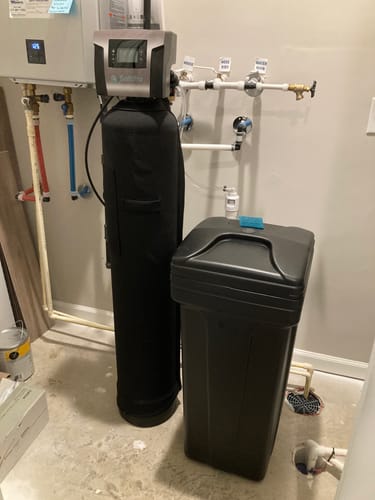
Knowing how each system works is one thing—knowing which one's right for your water is another. Your iron level is the deciding factor, and we've broken it down simply:
| Iron Level | Best System | Why |
|---|---|---|
| Under 10ppm | Air Injection | Chemical-free, low-cost, minimal maintenance |
| Above 10ppm | Chlorine Feed | Handles high concentrations reliably |
| Organic/Colloidal Iron | Chlorine Feed | Superior oxidising power breaks complex iron bonds |
Air injection loses effectiveness beyond 10ppm, while chlorine feed handles even the most demanding conditions. The trade-off? Chlorine systems cost £150–£400 annually in chemicals and demand 6–12 hours of maintenance yearly. Air injection? Under two hours. Match your system to your iron level, and you'll get maximum efficiency with minimum hassle.
What Chlorine Feed Removes That Air Injection Can't?
Chlorine feed doesn't just outperform air injection at high iron levels—it removes contaminants that air injection simply can't touch. While air injection struggles with ferric iron, chlorine eliminates both soluble ferrous and oxidized ferric iron completely, preventing stubborn staining before it starts.
Here's what else chlorine handles that air injection can't:
- Hydrogen sulfide — that rotten-egg odor air injection leaves behind
- Manganese — a staining and taste contaminant requiring chemical oxidation
- Organic-bound iron — often invisible to air injection systems
- Bacteria and viruses — chlorine disinfects; air injection doesn't
We also get adjustable dosing, letting us dial treatment intensity up or down as water quality shifts. Air injection offers no such flexibility.
For complex water chemistry, chlorine feed wins decisively.
Chlorine Feed vs. Air Injection: True Maintenance Costs Compared
Both systems work—but the maintenance costs tell very different stories.
Air injection keeps annual running costs under £100. Chlorine feed? Expect £300–£600. Here's where the gap widens:
- Chemical costs: Air injection has none; chlorine feed adds £150–£400 annually.
- Labour time: Air injection needs under 2 hours yearly; chlorine feed demands 6–12 hours.
- Routine tasks: Air injection automates backwashing every 2–3 days; chlorine feed requires monthly chemical replenishment plus dosing pump checks.
- Hidden costs: Chlorine feed needs additional filtration to remove residual chlorine—another expense air injection avoids entirely.
We see one tradeoff worth noting: air injection can temporarily cause cloudy water.
But for straightforward iron removal, the cost difference is difficult to ignore.
Which Iron Removal System Fits Your Water Conditions?
Choosing the right system comes down to what's actually in your water. If your iron levels stay under 10 ppm and your pH sits at 8.0 or above, air injection's your best bet—no chemicals, minimal maintenance, and a lifespan stretching 10–15 years.
Your water tells you what it needs—listen to it before choosing a system.
But if you're dealing with concentrations above 10 ppm, complex iron forms, or a lower pH, chlorine feed handles what air injection can't.
We'd also steer you toward chlorine if iron bacteria keep resurfacing; air injection's simply too vulnerable to bacterial contamination without added filtration.
Yes, chlorine systems demand more upkeep and replacement costs every 3–5 years, but for stubborn, complex water conditions, that trade-off makes sense.
Know your water first—then let those specifics drive the decision.
Frequently Asked Questions
What Is the Cheapest Way to Remove Iron From Well Water?
We recommend air injection systems as your most cost-effective solution. They'll run you £700–£1,500 upfront, with annual costs below £100—significantly cheaper than chemical alternatives, especially for iron concentrations under 10ppm.
Do Air Injection Iron Filters Work?
Yes, they work well! We've found they effectively oxidize dissolved iron up to 10 ppm, capturing it through filtration media. They'll last 10-15 years, though you'll want to backwash every 2-3 days to maintain peak performance.
Will Chlorine Get Rid of Iron?
Yes, chlorine removes iron effectively by oxidizing soluble ferrous iron into insoluble ferric iron, which we can then filter out. It's especially powerful for severe contamination exceeding 10ppm, where air injection falls short.
What Cannot Be Removed by Reverse Osmosis?
We've found that reverse osmosis can't fully remove chlorine, chloramines, certain VOCs, pesticides, and some bacterial or viral pathogens without additional filtration or disinfection steps integrated into your system.






