


![SoftPro™ Chlorine+ Carbon Whole House Water Filter to Remove PFAS, Chlorine, Chloramine & Pesticides [City Water Filters Series]](http://www.softprowatersystems.com/cdn/shop/files/SoftPro_Whole_House_Carbon_Filter_with_Spin_Down_Water_Filter.webp?v=1783547361&width=140)


 855-683-8488


Appliance Damage From Iron Water: Repair Bills That Justify a Filter

Iron water silently wrecks appliances from the inside out, and the repair bills add up fast. Water heaters, washing machines, dishwashers, and plumbing systems all take a serious hit, with cumulative costs exceeding $4,500 over time. Yet a quality iron filter costs just $400–$800 upfront. We're talking about a straightforward trade-off that most homeowners don't see coming until it's too late. Stick with us, and we'll show you exactly where the damage hits hardest.
Key Takeaways
- Iron water causes rust and scale buildup in appliances, leading to repair costs exceeding $1,500 for water heaters alone.
- Plumbing systems corroded by iron water can require repairs surpassing $3,000 over time.
- Cumulative appliance and plumbing repair costs from untreated iron water can exceed $4,500 total.
- A quality iron filter costs $400–$800 upfront, preventing thousands in future repair bills.
- Installing an iron filter reduces annual maintenance costs by 30–40%, making it a sound financial investment.
Which Appliances Suffer the Most Damage From Iron Water

Iron water doesn't discriminate—it'll work its way into nearly every water-using appliance in your home. But some appliances take the hardest hits.
Water heaters top the list, where iron buildup quietly destroys efficiency and triggers failures costing over $1,500.
Iron buildup in water heaters silently destroys efficiency—until you're staring down a $1,500 repair bill.
Washing machines aren't far behind—iron-rich water degrades their performance and shortens their lifespan, with repairs sometimes exceeding $2,000.
Dishwashers develop internal rust and scale that leads to frequent, costly breakdowns.
Even your plumbing system becomes a victim, with iron-driven clogs and corrosion generating repair bills surpassing $3,000.
What's striking is how these damages compound. Each appliance silently accumulates iron damage until one day, you're facing a repair bill that feels like it came out of nowhere—but didn't.
How Iron Accumulates and Destroys Appliances From the Inside
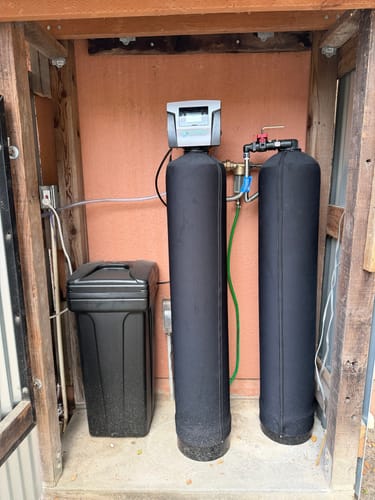
When iron enters your water supply, it doesn't just pass through—it starts a slow, destructive process that unfolds deep inside your appliances. It oxidizes, bonds with surfaces, and builds layers that quietly strangle performance.
| Stage | What's Happening Inside |
|---|---|
| Initial Contact | Iron deposits cling to internal components |
| Oxidation Begins | Rust forms, weakening metal surfaces |
| Scale Accumulates | Minerals restrict water flow and heat transfer |
| System Failure | Blockages and corrosion force breakdowns |
We're talking about sediment choking water heaters, rust seizing washing machine valves, and scale coating dishwasher pumps. Each cycle pushes iron deeper into components you can't see—until the repair bill arrives. That's when the damage becomes impossible to ignore.
The Repair Bills Homeowners Face From Iron Water Damage
The damage iron does is invisible—until it shows up on an invoice.
We're talking real numbers here: appliance damage alone can hit $1,500, plumbing corrosion repairs can exceed $3,000, and premature appliance replacements run $2,000 or more per unit. That's before counting the recurring maintenance calls—each incident averaging $100 to $500—that quietly drain your budget over months and years.
What makes iron damage so financially brutal is its compounding nature.
It's never one repair; it's a cascade. Your water heater weakens, your dishwasher follows, your pipes corrode—and suddenly you're managing a household infrastructure crisis instead of a simple water quality issue.
The cumulative cost tells a story most homeowners don't realize until they're deep in it: prevention through filtration was always the smarter investment.
The Full Cost of Ignoring Iron Water Damage Over Ten Years
Running those repair numbers through a single year is jarring enough—but stretch them across a decade, and the picture becomes genuinely alarming.
Iron water doesn't pause—it compounds, quietly draining your finances while you're focused elsewhere.
Iron water doesn't wait for a convenient time—it compounds silently, bleeding your finances while life keeps you distracted.
Here's what ten years of neglect actually costs:
- Appliance damage from rust and mineral buildup exceeds $1,500 early on
- Plumbing repairs from untreated contamination can surpass $3,000
- Utility bills climb steadily as appliances lose efficiency
- Cumulative repair costs can breach $4,500 without proper filtration
- Premature appliance failures add unexpected replacement expenses on top
We're not describing worst-case scenarios—we're describing predictable outcomes.
Every dollar spent ignoring iron water quietly builds toward a financial ceiling that a quality filter could've prevented entirely.
Why an Iron Filter Pays for Itself in Appliance Repairs Avoided
Spending $400–$800 on a quality iron filter stings upfront—we won't pretend otherwise. But consider what you're actually buying: protection against repair bills that dwarf that investment.
| Scenario | Without Filter | With Filter |
|---|---|---|
| Appliance damage | $1,500+ | Minimal |
| Plumbing failures | $4,500 | Prevented |
| Budget filter upkeep | $200–$600/year | $0 (10–15 yr lifespan) |
Those numbers tell a clear story. Untreated iron quietly destroys water heaters, dishwashers, and pipes—costing $2,000+ in premature replacements alone. Premium filtration systems slash annual maintenance costs by 30–40%, meaning fewer service calls and longer appliance lifespans. Budget filters seem cheaper until you're replacing them every six months. A quality iron filter isn't an expense—it's the smarter financial decision.
Frequently Asked Questions
Are Water Filters Really Necessary?
Yes, we think they're absolutely necessary! Untreated iron contamination quietly destroys your appliances, triggering repair bills exceeding $1,500. We've seen homeowners avoid over $4,500 in damage simply by investing in quality filtration upfront.
Will a Water Filter Remove Iron?
Yes, we can remove iron with the right filter! Premium systems strip out over 95% of iron contaminants, while budget options only manage 70-80%—a gap that'll cost you dearly in appliance repairs.
What Is the Cheapest Way to Remove Iron From Well Water?
We've found air injection systems and green sand filters are your most affordable options, running $800–$1,500 installed. DIY maintenance cuts long-term costs by 50%, making these budget-friendly solutions surprisingly powerful iron fighters.
What Are the Disadvantages of a Whole House Water Filter?
Whole house filters can hit us hard upfront—we're talking $1,500–$6,000 plus $500–$2,000 installation. Annual maintenance adds $300–$950 more, and budget systems only remove 70–80% of contaminants.






