


![SoftPro™ Chlorine+ Carbon Whole House Water Filter to Remove PFAS, Chlorine, Chloramine & Pesticides [City Water Filters Series]](http://www.softprowatersystems.com/cdn/shop/files/SoftPro_Whole_House_Carbon_Filter_with_Spin_Down_Water_Filter.webp?v=1783547361&width=140)


 855-683-8488


Can an Iron Filter Significantly Extend the Useful Life of Your Water Softener Resin Bed?

Yes, an iron filter can considerably extend the useful life of your water softener resin bed. Without one, iron coats your resin beads, causing them to fail in as little as 5-10 years instead of 20-plus. An iron filter intercepts dissolved iron before it ever reaches your resin, reducing regeneration cycles and mechanical wear. That means cleaner beads, longer-lasting resin, and lower maintenance costs. Stick with us, and we'll show you exactly how to protect your system.
Key Takeaways
- An iron filter intercepts dissolved iron before it reaches resin beads, preventing coating that blocks hardness mineral capture.
- Iron-fouled resin saturates faster, increasing regeneration cycles and accelerating mechanical wear that shortens resin lifespan.
- Adding an iron filter can extend resin lifespan beyond 10-15 years by reducing iron exposure significantly.
- Maintaining water iron concentration below 4 ppm preserves ideal resin conditions and slows degradation considerably.
- Choosing the correct iron filter requires knowing your water's iron content and verifying compatibility with your softener.
How Iron Destroys Your Water Softener Resin Bed

Iron is a silent saboteur in your water softener system. It coats resin beads, blocking their ability to capture hardness minerals, and the consequences compound quickly.
You'll notice regeneration cycles increasing as iron-fouled resin saturates faster, demanding more frequent brine flushes just to maintain baseline performance.
Iron-fouled resin saturates faster, driving up regeneration cycles and demanding more brine just to stay functional.
Here's what's really happening beneath the surface: iron buildup systematically degrades your resin bed, potentially slashing its lifespan from a healthy 20+ years down to just 5-10 years under poor conditions.
Eventually, you'll see rust-colored sediment in your treated water—a clear signal that your resin is failing.
Left unaddressed, iron contamination doesn't slow down. It accelerates until your resin bed reaches complete non-functionality, forcing either intensive cleaning or costly premature replacement.
Is Your Resin Already Damaged by Iron?
How do you know if your resin bed is already taking a hit from iron? Watch for these warning signs:
- Softer water turning hard again — iron-coated beads lose their ability to remove hardness minerals effectively.
- Rust-colored or discolored water — visible iron signals your resin's struggling to keep up.
- Regeneration cycles increasing — your softener working overtime often means resin degradation is underway.
- Resin fragments in the distributor — tiny beads breaking apart confirm severe iron damage has already occurred.
If you're seeing one or more of these signs, the damage isn't theoretical — it's happening right now.
Catching these symptoms early is the difference between a simple fix and a costly full resin replacement.
How an Iron Filter Shields Your Resin Bed
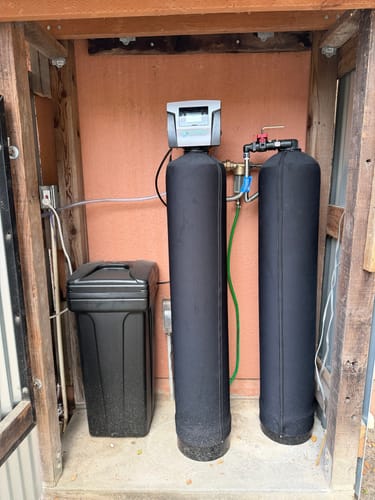
Adding an iron filter before your water softener is one of the smartest moves you can make for long-term resin health.
Think of it as a frontline defender — it intercepts dissolved iron before it ever reaches your resin beads, keeping ion exchange processes running at peak efficiency.
Without iron fouling the resin, you're looking at fewer regeneration cycles, less mechanical wear, and a resin bed that can actually reach — or exceed — that 10-15 year lifespan.
We also eliminate the foul odors and turbidity that silently degrade resin over time.
The downstream effect? Less manual cleaning, less backwashing, and dramatically reduced maintenance demands on your softener.
One upstream investment protects everything that follows. That's not just smart — it's strategic water treatment.
How Much Longer Does Resin Last With an Iron Filter?
When an iron filter enters the picture, resin lifespan doesn't just improve marginally — it can stretch several additional years beyond the standard 10-15 year window.
Think of it as compounding protection working silently in your system's favor.
Here's what drives that extended life:
- Lower iron exposure keeps resin beads cleaner and structurally intact longer
- Reduced regeneration frequency means less mechanical stress on the resin over time
- Regular backwashing of the iron filter prevents accumulation that would otherwise accelerate degradation
- Water quality consistency maintained below 4 ppm iron preserves ideal resin conditions year after year
The exact gain depends on your water's iron concentration and your maintenance discipline — but the trajectory is clear: an iron filter transforms resin longevity from good to exceptional.
Which Iron Filter Is Right for Your Well Water System?
Choosing the right iron filter isn't a one-size-fits-all decision — it starts with knowing exactly what's in your water. High iron concentrations call for a whole house filter, while lower levels may only need a sediment pre-filter. If manganese shows up alongside iron, you'll want a dedicated manganese-iron filter — standard options simply won't cut it.
Always verify that your filter's certified filtration rating meets or exceeds your detected iron levels. Don't overlook maintenance either — backwashing frequency and media replacement schedules vary greatly depending on your mineral content.
Finally, confirm compatibility with your existing softener. The right iron filter doesn't just protect your resin bed — it optimizes your entire system's performance, extending equipment life and keeping your water genuinely clean.
Frequently Asked Questions
How Long Does a Resin Bed Last in a Water Softener?
We've seen resin beds last 10 to 15 years under ideal conditions, but high iron content or poor maintenance can cut that lifespan short, sometimes dropping it below 10 years.
How Long Does an Iron Filter Last?
With proper maintenance, we're looking at 5 to 10 years of reliable performance from an iron filter. Regular backwashing and timely media replacement are your keys to maximizing that lifespan, especially in high-iron water conditions.
What Is the Lifespan of a Resin Filter?
We're looking at 10 to 15 years for a resin filter's lifespan, but if you're dealing with high iron content or hard water, you'll likely see replacement needs arise as early as five years.
How Much Does It Cost to Replace a Resin Bed in a Water Softener?
We're looking at $300–$700 for resin bed replacement, plus $100–$200 if you hire a pro. DIY saves money, with resin running $30–$50 per cubic foot, but requires solid plumbing skills.






