


![SoftPro™ Chlorine+ Carbon Whole House Water Filter to Remove PFAS, Chlorine, Chloramine & Pesticides [City Water Filters Series]](http://www.softprowatersystems.com/cdn/shop/files/SoftPro_Whole_House_Carbon_Filter_with_Spin_Down_Water_Filter.webp?v=1783547361&width=140)


 855-683-8488


Can You Install a Whole House Iron Filter Yourself? An Honest Assessment for DIY Homeowners

Installing a whole house iron filter yourself is absolutely doable, but it requires honest preparation. You'll need to assess your plumbing compatibility, gather the right tools, and understand the installation process before touching a single pipe. Skipping steps like water quality testing or proper media layering can cost you more than hiring a pro. If you want to get this right the first time, we've broken down everything you need to know.
Key Takeaways
- DIY installation is feasible for homeowners with basic plumbing skills, but complex or non-standard configurations may require a licensed plumber.
- Essential tools include pipe cutters, wrenches, Teflon tape, and connectors, which most experienced DIYers likely already own.
- Always shut off the main water supply before cutting into existing plumbing to prevent costly water damage.
- Skipping a water quality test is a critical mistake, as it determines the correct filter size and media type needed.
- Ongoing maintenance, including backwashing every 3 to 7 days, is necessary to sustain long-term system performance and water quality.
Is Your Plumbing Ready for a Whole House Iron Filter?

Before we plunge into installing a whole house iron filter, let's make sure our plumbing is actually ready for one. Not every system can handle the added load, and skipping this step leads to expensive mistakes.
Start by checking your pipe material, sizes, and well water flow rate — these determine compatibility.
Pipe material, size, and well water flow rate are the three non-negotiables that determine whether your system is filter-ready.
Next, consult a licensed plumber to confirm your main supply line can support the filter's demands. We'll also need to cut into existing plumbing, so honest plumbing skills are non-negotiable here.
Keep in mind that non-standard configurations may require custom installation approaches.
Finally, verify you've got adequate drainage for backwash lines, because most iron filters need dedicated drainage to function efficiently during maintenance cycles. Solid preparation now saves serious headaches later.
Tools, Materials, and Permits You Need Before Starting
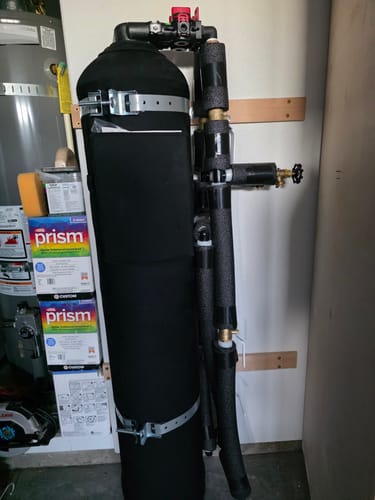
With our plumbing confirmed and ready, let's make sure we've got everything we need to actually do the job right.
| Tools | Materials |
|---|---|
| Pipe cutters, wrenches | Polyfill or Katalox Light |
| Plumbing tape, drill | 5-gallon bucket or tank |
| Connectors, tubing | Teflon tape for all threads |
Before touching a single pipe, verify component compatibility with your existing plumbing—mismatched parts create expensive headaches fast.
One step most DIYers skip? Checking local building codes. Some municipalities require permits for plumbing modifications or filtration system installations. It's worth a quick call to your local building department before starting.
Always wrap Teflon tape on every threaded connection. It's a small step that prevents leaks and protects the integrity of your entire system long-term.
How to Install a Whole House Iron Filter: Main Line to First Backwash
Now that we've got our tools and materials ready, it's time to get our hands dirty. First, shut off the main water supply, then cut the main line at your chosen installation point.
Install the bypass valve here — it's a small step that pays dividends during future maintenance.
Next, build your filtration foundation: add 2-3 inches of gravel to the tank bottom, then distribute your filter media according to manufacturer specs. Precision matters here.
Once everything's connected, slowly reopen the main supply valve, watching every connection for leaks as pressure returns.
Then run an initial backwash cycle for 15-20 minutes — this primes the media and clears any manufacturing residue.
You're now operating a fully functional iron filtration system.
Common Iron Filter Installation Mistakes and How to Avoid Them
Even the most well-intentioned DIYers can stumble into costly mistakes during iron filter installation, so let's break down the most common pitfalls and how to sidestep them.
Here are four critical mistakes we see repeatedly:
- Skipping water quality testing — Without knowing your iron levels, you'll likely choose the wrong filter size.
- Forgetting to shut off the main water supply — This single oversight causes severe water damage instantly.
- Improper Teflon tape application — Undertaped threaded connections leak; wrap thoroughly and consistently.
- Misreading bypass valve arrows — Installing it against water flow direction disrupts future maintenance entirely.
Finally, don't shortcut filter media layering.
Incorrect gravel placement directly compromises system performance, undermining everything you've worked to accomplish.
Backwash Frequency, Media Replacement, and Iron Filter Maintenance
Getting the installation right is only half the battle — keeping your iron filter running at peak performance is where long-term water quality is actually won or lost.
Backwash your system every 3 to 7 days, adjusting based on your household's usage and iron concentration. Skipping cycles lets iron accumulate, choking your media and degrading performance fast.
Skipping backwash cycles lets iron build up fast — and your media pays the price.
Speaking of media — if you're running Katalox Light, plan for replacement every 6 to 8 years.
Watch for the warning signs: discolored water returning, sluggish flow rates, or backwash cycles creeping in more frequently. Those signals mean your media's losing the fight.
We strongly recommend keeping a maintenance log.
Tracking backwash schedules and media condition removes guesswork and keeps your system performing exactly as intended.
Frequently Asked Questions
Can I Install a Whole House Filter Myself?
Yes, you can install a whole house iron filter yourself if you're comfortable cutting into your main water supply line, using pipe cutters and wrenches, and handling precise fittings to prevent leaks.
How Much Does It Cost to Install an Iron Filter?
DIY iron filter installation runs $100–$1,000+, while professional installation averages $2,200 nationally. Your total cost depends on system complexity, household water demand, iron levels, and local labor rates—so let's size it correctly from the start.
Do Water Filters Remove Giardia?
Yes, some water filters remove Giardia, but not all. We'll want filters certified to NSF/ANSI Standard 53 for cyst reduction. Microfiltration and ultrafiltration membranes effectively capture Giardia's 10-14 micron size, while activated carbon filters won't protect us.
How Long Does a Whole House Iron Filter Last?
A whole house iron filter's tank lasts 40–50 years, the valve 10–15 years, and the filtration media 6–8 years. Regular maintenance, like replacing seal kits and re-bedding media, keeps everything running efficiently throughout its lifespan.






