


![SoftPro™ Chlorine+ Carbon Whole House Water Filter to Remove PFAS, Chlorine, Chloramine & Pesticides [City Water Filters Series]](http://www.softprowatersystems.com/cdn/shop/files/SoftPro_Whole_House_Carbon_Filter_with_Spin_Down_Water_Filter.webp?v=1783547361&width=140)


 855-683-8488


Clogged Iron Filter Media: Signs, Root Causes, and Exactly How Regular Backwashing Prevents It

Clogged iron filter media happens when sediment, iron bacteria, or suspended solids overwhelm your system faster than you'd expect. You'll notice rusty stains, pressure drops, metallic taste, or slimy skin after washing — all warning signs the media's losing the battle. Regular backwashing every 4-6 weeks reverses water flow to dislodge trapped particles and restore efficiency before permanent damage sets in. Stick with us and we'll walk you through everything you need to know.
Key Takeaways
- Fine sediment, iron bacteria, and improper backwashing are the primary root causes of clogged iron filter media.
- Rusty stains, metallic taste, pressure drops, and iron levels above 0.3 ppm are key warning signs of clogged media.
- Regular backwashing every 4-6 weeks using reverse water flow for 10-30 minutes prevents sediment buildup and maintains efficiency.
- Neglecting backwashing compacts media, forms mudballs, and ultimately forces premature media replacement.
- Flow rates dropping over 30% or persistent pressure issues signal that backwashing alone can no longer restore media performance.
Why Iron Filter Media Gets Clogged in the First Place

There are 5 key reasons why iron filter media gets clogged, and understanding them can save you a lot of frustration down the line.
First, fine sediment particles adhere to the media, restricting flow and reducing effectiveness.
Fine sediment particles cling to filter media, quietly strangling flow rates and destroying filtration effectiveness over time.
Second, iron bacteria create slimy biological growth that demands immediate attention before it spirals out of control.
Third, excessive suspended solids overload the filter rapidly—making TSS monitoring non-negotiable.
Fourth, improper backwashing compacts the media and forms mudballs, which devastate filtration efficiency.
Fifth, using the wrong media size or type causes premature clogging because the filter simply can't handle the contaminants it's facing.
Each of these problems is preventable, and we'll show you exactly how to tackle them before they compromise your system.
Warning Signs Your Iron Filter Media Is Failing
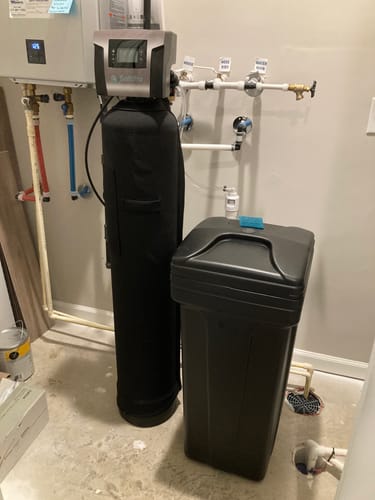
When your iron filter media starts failing, your water will tell you—if you know what to look for. Recognizing these signals early prevents costly damage and keeps your system performing at its best.
Watch for these critical warning signs:
- Rusty-brown stains and metallic taste — Iron is bypassing your media and reaching your fixtures directly.
- Pressure drops in showers and faucets — Clogged media restricts flow, signaling the filter needs immediate attention.
- Slimy skin sensation after washing — Iron bacteria are colonizing your media, indicating contamination or outright failure.
Additionally, discolored water during regeneration cycles and iron levels testing above 0.3 ppm confirm your media isn't doing its job.
These aren't coincidences—they're your system communicating a problem that demands action.
How to Backwash Iron Filter Media the Right Way
Once you've spotted those warning signs, the next move is knowing how to fix the problem before it gets worse—and backwashing is where we start. The process itself is straightforward: reverse the water flow through your system for 10-30 minutes, dislodging trapped particles and restoring peak filtration performance.
Here's what separates good maintenance from great maintenance—consistency. We recommend following your manufacturer's backwashing schedule, typically every 4-6 weeks, before compaction forces a costly media replacement.
Always switch to backwash mode before starting; skipping this step risks contamination. While running the cycle, monitor your pressure gauges and flow rates closely.
A persistent pressure drop after backwashing signals something deeper needs attention. Done correctly, regular backwashing dramatically extends media lifespan by eliminating sediment and biofilm accumulation.
How Often to Backwash Iron Filter Media
But timing isn't everything—watch for these key indicators:
- Pressure drops: Reduced flow signals trapped sediment building up
- Water quality changes: Discoloration or odors suggest iron bacteria accumulation
- Flow rate irregularities: Inconsistent output means your media's struggling
Each backwashing cycle runs 10-30 minutes, reversing flow to dislodge trapped particles and restore efficiency.
A 10-30 minute backwashing cycle reverses flow, dislodges trapped particles, and restores your system's full efficiency.
It's a small time investment that protects a significant one.
Here's what neglecting this schedule costs you: premature media replacement and declining system performance.
Following your manufacturer's recommended intervals keeps those expenses off the table and your water quality exactly where it should be.
Signs Your Iron Filter Media Needs Replacing, Not Backwashing
Sometimes backwashing just won't cut it—and knowing when to replace your iron filter media instead can save you from chasing a problem that's already past fixing.
Watch for these red flags:
- Compacted or slimy media — a visual sign that contaminant removal has already broken down
- Uneven bed height or channeling — the media's no longer working as a unified system
- Elevated pump-side pressure — indicates the media's oversaturated beyond recovery
- Rotten egg odor — biological growth has taken hold, signaling complete media failure
- Flow rates dropped more than 30% — at this point, backwashing won't restore performance
If you're seeing one or more of these signs, replacement isn't optional—it's overdue.
Continued backwashing only delays the inevitable while your water quality suffers.
Frequently Asked Questions
How Often Should I Backwash My Iron Filter?
We recommend backwashing your iron filter every 4-6 weeks. Each session runs 10-30 minutes, reversing water flow to flush trapped sediment. Sticking to this schedule protects your filter media and maintains ideal water pressure.
How to Check Iron Filter System for Clogging?
We'll check for weak water pressure, slow-filling sinks, rust stains on fixtures, and water discoloration. Testing iron levels above 0.3 ppm confirms clogging, while listening for gurgling noises reveals air injector or media compaction issues.
How to Backflush an Iron Filter?
To backflush your iron filter, we'll set the system to backwash mode, reversing water flow to dislodge trapped sediments. Run it for 10–30 minutes, then monitor pressure changes to confirm successful clearing.
What Causes a Clogged Filter?
Fine sediment particles, excessive TSS, inadequate backwashing, biological growth like iron bacteria, and using the wrong media size are the main culprits. Each one compounds the others, so we'll want to address them all systematically.






