


![SoftPro™ Chlorine+ Carbon Whole House Water Filter to Remove PFAS, Chlorine, Chloramine & Pesticides [City Water Filters Series]](http://www.softprowatersystems.com/cdn/shop/files/SoftPro_Whole_House_Carbon_Filter_with_Spin_Down_Water_Filter.webp?v=1783547361&width=140)


 855-683-8488


The 10-Year Cost of Ignoring Iron in Your Well Water

Ignoring iron in your well water can cost you far more than you'd expect. Over 10 years, appliance damage alone can exceed $1,500, plumbing repairs can surpass $3,000, and your total expenses can climb past $10,000. Iron buildup quietly reduces appliance efficiency, raises your utility bills by 20–30%, and can even drag down your property value. The full picture of what untreated iron does to your home — and your wallet — is worth understanding.
Key Takeaways
- Untreated iron can damage appliances, costing over $1,500 in repairs and replacements within a decade.
- Iron buildup reduces appliance efficiency, potentially increasing utility bills by 20–30% annually.
- Plumbing corrosion and blockages from iron contamination can lead to repair costs exceeding $3,000.
- Iron contamination may decrease property value, complicating future home sales or refinancing efforts.
- Total expenses from ignoring iron problems can surpass $10,000 over ten years.
What Untreated Iron Does to Your Well Water Home Over 10 Years

Untreated iron in your well water doesn't just stain your sinks — it quietly chips away at your home's infrastructure over time.
Within a decade, you're looking at appliance damage exceeding $1,500 from corrosion and reduced efficiency. Your plumbing isn't safe either — deteriorating pipes and fixtures can push repair costs past $3,000.
Meanwhile, iron buildup forces appliances to work harder, inflating your utility bills by 20-30%. That's real money leaving your wallet every month.
There's also a bigger picture to evaluate: iron contamination can meaningfully reduce your property value, complicating future sales or refinancing.
The good news? Investing in an iron removal system now can save you thousands over that same 10-year window. Prevention is simply smarter than damage control.
The Real Dollar Cost: Appliances, Plumbing, and Fixtures
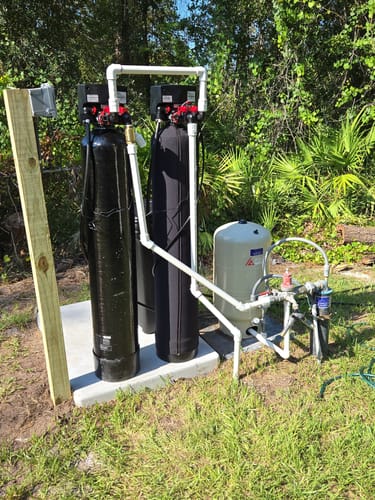
When iron goes unchecked in your well water, the financial damage adds up faster than most homeowners expect.
Unchecked iron in your well water doesn't just stain your sinks—it quietly drains your bank account.
Let's break down where your money actually goes:
- Appliances: Iron buildup drives inefficiency, pushing utility bills up 20-30% while repair and replacement costs exceed $1,500.
- Plumbing: Corrosion and blockages from untreated iron can send repair bills past $3,000.
- Property value: Unresolved iron issues erode resale value, costing thousands when it's time to sell.
Over a decade, these compounding costs can surpass $10,000 in total expenses.
That's not a worst-case scenario—that's what neglect actually costs.
Treating iron early isn't just about cleaner water; it's about protecting every dollar you've invested in your home.
Iron Filters vs. Water Softeners: Which Saves More Long-Term?
Choosing between an iron filter and a water softener comes down to one critical question: what does your water actually contain?
Water softeners carry lower upfront costs—$400 to $2,500—but they don't remove iron effectively.
Iron filters run $800 to $6,000 initially, yet they prevent appliance damage exceeding $1,500 and plumbing repairs surpassing $3,000. That changes the math considerably.
Consider annual maintenance: softeners cost $80–$200 yearly, while iron filters need media replacement every 5–20 years at $200–$500.
Neither figure is alarming on its own.
What's alarming is ignoring iron altogether. Untreated contamination compounds quietly, and repair bills eventually dwarf any equipment investment.
Over ten years, the iron filter's higher price tag often becomes the smarter, cheaper choice.
Where Iron Filter Pricing Goes Wrong and What You're Actually Paying For
Iron filters often win the long-term cost comparison on paper, but the sticker price you see rarely tells the whole story.
Manufacturers mark these systems up 400%, meaning you're paying $800–$6,000 for equipment that costs $100–$250 to produce. That gap alone should raise questions.
Here's what salespeople conveniently leave out:
- Installation, permits, and maintenance add $300–$800 annually
- Monthly chemical refills run $20–$40 per month
- Media replacement every 4–6 years costs $150–$400
These numbers compound fast over a decade. Retail pricing exploits buyers who don't know wholesale realities exist.
We recommend digging into every system's full ownership cost before committing. Knowing what you're actually buying—and what it truly costs—is where smart decisions start.
How to Fix Your Well Water Iron Problem Without Overpaying
Fixing your well water iron problem doesn't have to mean overpaying for a system that's been marked up 400% before it reaches your door. Most systems cost manufacturers between $100–$250 to build, yet retail pricing regularly exceeds $6,000. That gap exists because most buyers don't know what they're actually purchasing.
Start by testing your water to determine exact iron concentration, then size your filter to match your household's demand accurately. Undersized systems fail early and cost more.
Test your water first. Know your iron levels. Then size your filter to match demand—nothing more, nothing less.
Consider higher-quality technologies like Katalox Lite, which reduce maintenance frequency and long-term expenses considerably. Budget honestly—annual maintenance runs $300–$800, media replacements every 4–6 years add $150–$400, and monthly chemical refills average $20–$40.
Knowing these numbers before you buy puts the negotiating power back in your hands.
Frequently Asked Questions
What Is the Cheapest Way to Remove Iron From Well Water?
We'll save the most with a basic water softener, costing $400–$2,500 upfront. It's cheaper than iron filters, though we must test our water first to confirm it's the right solution.
Is Well Water With Iron in It Bad for You?
While iron itself isn't typically toxic, it's still bad news. It makes your water taste metallic, stains everything it touches, and harbors iron bacteria that create harmful contaminants we definitely don't want in our drinking water.
What Water Filter Gets Rid of Iron?
We recommend iron filtration systems, particularly Katalox Lite, which effectively removes iron while minimizing maintenance. These systems outperform standard filters, tackling multiple contaminants simultaneously—giving us cleaner, safer water with long-term reliability and efficiency.
What Is the Best System to Remove Rust From Well Water?
Iron filtration systems are our top recommendation for removing rust from well water. Advanced options like Katalox Lite outperform standard filters, efficiently tackling iron and contaminants while requiring less maintenance and delivering longer-lasting performance.






