


![SoftPro™ Chlorine+ Carbon Whole House Water Filter to Remove PFAS, Chlorine, Chloramine & Pesticides [City Water Filters Series]](http://www.softprowatersystems.com/cdn/shop/files/SoftPro_Whole_House_Carbon_Filter_with_Spin_Down_Water_Filter.webp?v=1783547361&width=140)


 855-683-8488


Diagnosing Iron Filter Failure in Your System: Is It the Media, the Settings, or the Sizing?

When your iron filter starts failing, we can usually trace it back to three culprits: exhausted media, incorrect settings, or an undersized system. Rusty water, metallic taste, or iron readings above 0.3 ppm are your clearest warning signs. Misconfigured backwash cycles and salt bridges can quietly undermine performance long before you notice. Pinpointing the exact cause makes all the difference between a quick fix and a costly replacement — and we've broken down exactly how to do that.
Key Takeaways
- Rusty water, metallic taste, or iron readings above 0.3 ppm indicate Katalox Light media exhaustion or contamination requiring replacement.
- Incorrect regeneration cycle programming or salt bridges in the brine tank can cause insufficient treatment and rising iron levels.
- Clogged injector assemblies restrict brine flow, reducing regeneration effectiveness and allowing iron concentrations to increase.
- Filters smaller than 2.5 cubic feet on a 5 GPM well cause iron breakthrough due to overwhelmed, undersized media.
- Sudden pressure drops, frequent regeneration cycles, and persistent iron levels signal the need for system resizing or reprogramming.
Why Is Your Iron Filter Failing?

When an iron filter starts failing, it's usually due to one of a handful of root causes that are worth knowing.
Iron filter failures almost always trace back to a few well-known culprits — and recognizing them early makes all the difference.
Incorrect programming settings can trigger insufficient regeneration cycles, letting iron slip through unchecked. Salt bridges in your brine tank block the brine draw that makes regeneration work, quietly undermining iron removal. A clogged injector assembly compounds the problem, cutting off brine flow and spiking iron concentrations in your treated water.
Watch for early warning signs like rusty water or pressure drops—these signal media saturation before it becomes a bigger headache.
And if your system's undersized for your household demand, it'll regenerate too frequently without ever fully recovering, keeping iron problems persistent. Identifying which cause you're dealing with is the first step toward a real fix.
Is Your Katalox Light Media Exhausted or Contaminated?
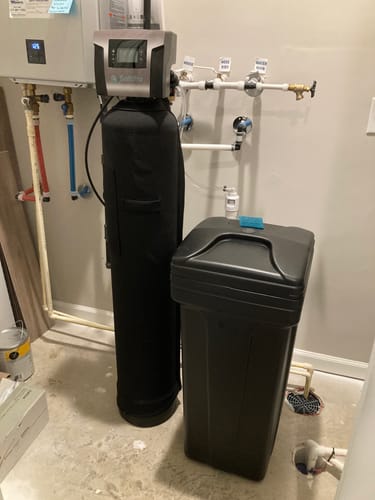
Even a well-maintained iron filter will eventually hit a wall if its Katalox Light media is exhausted or contaminated. Media typically lasts 6–8 years, but excessive iron or manganese levels can shorten that window fast.
Here's what we watch for:
- Rusty or discolored water — iron's bypassing the media entirely, signaling exhaustion.
- Metallic taste — a reliable sensory cue that filtration efficiency has dropped.
- Iron readings above 0.3 ppm — regular water testing confirms whether contamination has overwhelmed the media's capture capacity.
When we spot these signs, re-bedding isn't optional—it's necessary.
Periodic inspections let's catch deterioration early, protecting both water quality and system performance before the problem compounds.
Are Your Backwash Frequency and Cycle Timing Set Correctly?
Backwash frequency and cycle timing might seem like minor programming details, but getting them wrong accelerates media fouling and drives up iron concentrations in your treated water.
We recommend backwashing every 2–4 weeks, though your actual sweet spot depends on household water usage and incoming iron levels—don't treat that range as one-size-fits-all.
Backwash every 2–4 weeks—but your iron levels and water usage determine where in that range you actually land.
Watch for sudden pressure drops during flow; they're your system signaling that sediment accumulation is already restricting media.
That's a timing problem, not a media problem—and misdiagnosing it costs you unnecessarily.
Run regular water quality tests and adjust your cycle programming based on what those results reveal.
Systems that get dialed in through real data consistently outperform those running on factory defaults.
Precision here directly extends your filter's lifespan and performance.
Is Your Iron Filter Undersized for Your Water Demand?
Getting your backwash timing dialed in matters, but even a perfectly programmed filter will underperform if it's the wrong size for your home's water demand.
Sizing affects everything—treatment quality, regeneration efficiency, and long-term media health.
Here's what undersizing looks like in practice:
- Iron breakthrough – A filter smaller than 2.5 cubic feet on a 5 GPM well can't process demand fast enough, letting untreated water slip through.
- Incomplete regeneration cycles – Overwhelmed media doesn't fully cleanse between cycles, compounding performance degradation over time.
- Iron levels creeping above 0.3 ppm – That's your signal the system's losing the battle against your actual demand.
Match your filter's capacity to peak usage times and simultaneous fixture loads—that's where proper sizing truly pays off.
How to Fix Your Iron Filter Based on the Root Cause?
Once you've pinpointed the root cause, fixing your iron filter becomes a much more straightforward process—and the right fix depends entirely on what's actually broken.
If your media is saturated, replace it—clogged media kills pressure and performance. If your settings are off, reprogram your regeneration cycles to match your actual water usage so iron stops slipping through.
Struggling with poor oxidation or brine draw? Clean those injector assemblies and air injectors immediately. If pH sits outside 6.5–8.5, address that imbalance first, since no filter performs well in hostile water chemistry.
And if you're seeing frequent regeneration cycles or persistent pressure drops, stop patching the problem—upgrade to a properly sized system.
Every fix starts with an accurate diagnosis, so test your water regularly and let the data guide you.
Frequently Asked Questions
How Much Does It Cost to Replace Iron Filter Media?
We'll typically see media replacement costs ranging from $300 to $800, plus $200 to $500 for installation. Your total investment depends on system size, iron levels, and media type like Katalox Light or Birm.
How Often Should Iron Filter Media Be Changed?
We recommend changing your iron filter media every 6 to 8 years, though water quality and usage affect this timeline. Watch for persistent iron staining or reduced performance as early indicators it's time.
How to Check Iron Filter System for Clogging?
We'll check for clogging by watching for rusty water, testing pressure drops, and inspecting the injector for mineral buildup. Also, let's test iron levels—anything above 0.3 ppm demands immediate action.
How to Size an Iron Filter?
We'll size your iron filter by matching it to your well's flow rate—a 2.5 cubic foot system suits 5 GPM wells. Factor in iron concentration levels and peak household demand for peak performance.






