


![SoftPro™ Chlorine+ Carbon Whole House Water Filter to Remove PFAS, Chlorine, Chloramine & Pesticides [City Water Filters Series]](http://www.softprowatersystems.com/cdn/shop/files/SoftPro_Whole_House_Carbon_Filter_with_Spin_Down_Water_Filter.webp?v=1783547361&width=140)


 855-683-8488


DIY Iron Filter Installation Guide for Whole House Systems: Step-by-Step Instructions for Homeowners

Installing a whole-house iron filter yourself is a straightforward process that'll save you hundreds in contractor fees. We'll guide you through gathering the right tools, cutting into your main water line, adding filter media to the tank, and testing the system once it's up and running. We'll also cover year-round maintenance to keep your water clean and your filter performing at its best — so stick around.
Key Takeaways
- Shut off the main water supply before cutting into the line, using a pipe cutter for copper or a saw for PVC pipes.
- Add a 2-3 inch gravel layer at the tank's bottom, then evenly distribute manufacturer-recommended filter media throughout the tank.
- Install a bypass valve kit with flexible connectors, wrapping all threaded joints with Teflon tape for secure, leak-free connections.
- After installation, run the system 15-20 minutes, then test water clarity and iron content within 24 hours.
- Maintain performance by backwashing every 2-3 days, cleaning filter media every 6-12 months, and testing iron levels quarterly.
Tools and Materials You Need to Install an Iron Filter

Before we immerse ourselves in the installation process, let's make sure we've got everything we need. Skipping this step is how installations go sideways fast.
You'll need your iron filter system, a bypass valve kit, flexible connectors, and PVC or PEX pipe fittings. Grab 2-3 inches of gravel for the tank base, plus the manufacturer's recommended filter media—don't substitute here, it matters for performance.
Don't substitute the manufacturer's recommended filter media—your system's performance depends on using the right materials from the start.
For tools, stock up on pipe cutters suited to your pipe material, wrenches, screwdrivers, a tape measure, and Teflon tape for leak-proof connections.
Before touching a single pipe, verify every component is compatible with your existing plumbing. Incompatible parts don't just slow you down—they create expensive headaches.
Organize everything within arm's reach, and let's get to work.
How to Cut Into Your Main Water Line and Install the Bypass Valve
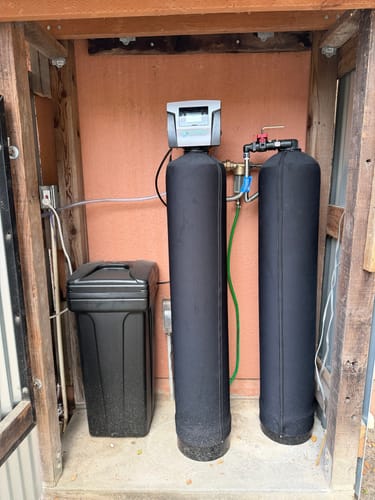
With the main water supply shut off, we're ready for the most critical step of this installation—cutting into your main water line.
First, mark your cutting points carefully, leaving enough room for the bypass valve to seat properly.
Now, match your tool to your pipe material: a pipe cutter for copper, a saw for PVC. A clean cut here prevents headaches later.
Once you've made your cuts, slide the bypass valve into position. This component is your best friend during future maintenance—it lets water continue flowing while you service the filter.
Finally, wrap all threaded joints with Teflon tape and tighten every connection firmly. Don't rush this part; a properly secured bypass valve means zero leaks and a system built to last.
How to Add Filter Media to Your Iron Filter Tank
Now that the bypass valve is locked in, it's time to load the filter tank with media—the heart of your iron removal system.
Here's how we do it right:
- Gravel base first. Pour a 2-3 inch layer of gravel at the bottom—this creates your filtration foundation.
- Add media precisely. Follow the manufacturer's specs exactly for media type and quantity; guesswork kills performance.
- Distribute evenly. Spread media uniformly throughout the tank for consistent, reliable iron removal.
Before adding anything, locate the central distributor tube and seal its top with tape—this prevents media from spilling inside it during loading.
Once everything's distributed, you've got a properly packed tank ready to tackle iron-heavy water with serious efficiency.
How to Test Your Iron Filter After Installation
Once the tank is packed and ready, it's time to put our new iron filter to the test. Run the system for 15–20 minutes, letting residual dust and media settle while we watch water clarity closely—cloudiness signals further rinsing is needed.
| Test | What to Look For |
|---|---|
| Water Clarity | Clear = effective filtration |
| Iron Content | Test within 24 hours post-installation |
| Pressure Gauge | Significant drops indicate clogs |
After that initial flush, we'll test iron levels using a reliable kit, confirming the system's actually pulling iron out effectively. Don't skip the pressure gauge check either—unexpected drops reveal hidden problems before they escalate. From here, schedule testing every three to six months to keep performance sharp and iron levels within acceptable limits.
How to Keep Your Iron Filter Running Year-Round
Getting the system tested and running smoothly is only half the battle—keeping it that way is where the real work begins. Consistent maintenance separates homeowners who get years of clean water from those constantly troubleshooting problems.
Consistent maintenance separates homeowners who enjoy years of clean water from those constantly troubleshooting problems.
Here's what we recommend staying on top of:
- Backwash every 2-3 days automatically to prevent mineral buildup and protect water quality.
- Clean filter media every 6-12 months and monitor your pressure gauge—dropping pressure signals it's time for maintenance.
- Test iron levels quarterly and check brine tank salt regularly, replenishing with manufacturer-recommended salt to keep regeneration cycles effective.
Think of this schedule as your system's heartbeat. Skip it, and performance quietly deteriorates. Follow it, and you'll enjoy consistently clean, iron-free water year-round.
Frequently Asked Questions
How to Install a Whole House Iron Filter?
We'll start by shutting off your main water supply, cutting the line, and installing a bypass valve. Next, we'll layer gravel and filter media, connect everything securely, flush the system, then test iron levels.
Can I Install a Whole House Filtration System Myself?
Yes, you can install a whole house filtration system yourself! We'll need basic plumbing skills, the ability to cut and connect pipes, and confidence shutting off the main water supply before starting.
What Is the Best Whole House Iron Filter for Well Water?
We recommend the Fleck 2510AIO with Katalox Light media. It tackles both clear and red water iron through dual-stage air injection and filtration, lasts 6-8 years, and runs $1,795–$2,195—outstanding long-term value.
How Much Does It Cost to Install an Iron Filter?
Installing an iron filter typically costs $1,300–$3,700, covering the system and professional installation. If you're handy and go DIY, you'll save $500–$1,500 in labor, keeping your total investment closer to the lower end.






