


![SoftPro™ Chlorine+ Carbon Whole House Water Filter to Remove PFAS, Chlorine, Chloramine & Pesticides [City Water Filters Series]](http://www.softprowatersystems.com/cdn/shop/files/SoftPro_Whole_House_Carbon_Filter_with_Spin_Down_Water_Filter.webp?v=1783547361&width=140)


 855-683-8488


Does an Iron Filter Kill Iron Bacteria in Well Water? What Every Well Owner Needs to Know

Iron filters are great at removing dissolved iron from your well water, but they won't kill iron bacteria. These organisms form protective biofilms that filtration simply can't penetrate. They're living colonies, not just a mineral problem, and treating them requires actual disinfection. Shock chlorination, combined with the right filtration setup, is what truly works. Stick with us, and we'll walk you through everything you need to protect your well.
Key Takeaways
- Iron filters effectively remove dissolved iron from well water but cannot kill living iron bacteria colonies already present.
- Iron bacteria form protective biofilms that shield them from filtration, allowing them to survive and continue multiplying.
- Shock chlorination using 200–500 ppm of chlorine is necessary to overwhelm and kill iron bacteria effectively.
- Combining an iron filter with shock chlorination and ongoing disinfection provides the most complete long-term treatment solution.
- Regular water testing and proper well maintenance help detect bacterial resurgence before it becomes a serious problem.
What Iron Bacteria Actually Is (And Why It's Not Just Dissolved Iron)

When most people hear "iron in well water," they picture rust-colored stains or that metallic taste in their morning coffee — and they're not wrong, but they're only seeing half the picture.
Dissolved iron is colorless, invisible until it hits oxygen and turns into those familiar rusty particles. Iron bacteria are something else entirely.
These microorganisms actually feed on dissolved iron and manganese, converting them into reddish-brown slime that coats pipes, clogs systems, and creates the perfect low-oxygen environment for other harmful microorganisms to flourish.
They're not just a cosmetic problem — they're a biological one. Understanding that distinction matters, because what eliminates dissolved iron won't necessarily eliminate living organisms colonizing your well system.
How to Tell If Iron Bacteria Is Living in Your Well
How do you know if iron bacteria have actually taken up residence in your well — not just iron, but living organisms? Watch for rust-colored stains on fixtures, orange or brown slime coating your toilet bowl, or odors resembling sewage or fuel oil. These aren't cosmetic annoyances — they're biological red flags.
Try this test: let well water sit in a clean container. If a rusty layer or gelatinous flakes form on the surface, or you notice a rainbow-colored, oily sheen, bacteria are likely present.
Rusty layers, gelatinous flakes, or an oily rainbow sheen in standing well water? Bacteria are likely your culprit.
Lift your toilet tank lid and look for sticky, slimy growth clinging to the walls.
If your water tastes metallic or musty, don't ignore it. That flavor shift often signals an active infestation worth confirming through proper testing.
Does an Iron Filter Kill Iron Bacteria?
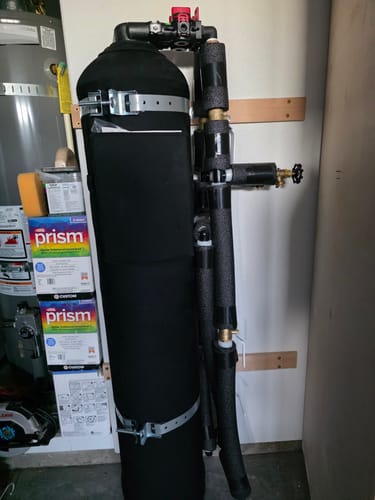
If you've already invested in an iron filter, it's tempting to assume your bacteria problem is handled — but that's not quite right. Iron filters remove dissolved iron; they don't kill bacteria. In fact, iron bacteria form protective biofilms that filtration simply can't penetrate.
| Factor | Iron Filter | Iron Filter + Chlorination |
|---|---|---|
| Removes dissolved iron | ✅ Yes | ✅ Yes |
| Kills iron bacteria | ❌ No | ✅ Yes |
| Penetrates biofilms | ❌ No | ✅ Yes |
| Prevents bacterial resurgence | ❌ No | ✅ With maintenance |
| Complete treatment solution | ❌ No | ✅ Yes |
We recommend combining your iron filter with shock chlorination to tackle both the iron content and bacterial growth simultaneously. Without ongoing disinfection and regular filter maintenance, iron bacteria will return.
Shock Chlorination and Disinfection Methods That Actually Work
Shock chlorination is the most reliable weapon against iron bacteria — and it works by overwhelming the problem at its source.
We're talking about introducing 200–500 ppm of chlorine directly into your well, creating conditions that iron bacteria simply can't survive.
But concentration alone isn't enough — you need contact time. Let that chlorine solution sit in your well and plumbing system for several hours to guarantee complete disinfection.
After treatment, flush everything thoroughly. Residual chlorine and dead bacteria left sitting in your pipes become tomorrow's clogging problem.
For long-term protection, consider a continuous chlorination system. It automatically feeds disinfectant into your water supply, preventing bacterial resurgence before it starts.
Then test regularly — because confirmation isn't optional if you want to stay ahead of the problem.
How to Prevent Iron Bacteria From Returning
Keeping iron bacteria out for good comes down to five core habits that work together as a system.
First, always use disinfected water when drilling, making repairs, or priming pumps—bacteria hitchhike in on untreated water.
Bacteria hitchhike in on untreated water—always use disinfected water when drilling, making repairs, or priming pumps.
Second, clean and disinfect your well, pump, and plumbing after every repair to destroy biofilms before they reestablish.
Third, keep your well casing watertight, properly capped, and at least one foot above ground to block surface water intrusion.
Fourth, never set equipment directly on the ground during repairs—elevate everything to eliminate a sneaky contamination pathway.
Fifth, test your water regularly so you catch any bacterial resurgence early.
These habits aren't optional extras; they're your defense system working in concert.
Frequently Asked Questions
How Do You Get Rid of Iron Bacteria in Well Water?
We'll tackle iron bacteria by physically scrubbing equipment, shock chlorinating with 200-500 ppm chlorine, and maintaining annual testing. For lasting results, we recommend professional whole-house filtration systems that oxidize and filter bacteria effectively.
Will an Iron Filter Get Rid of Iron Bacteria?
Unfortunately, an iron filter won't get rid of iron bacteria. While it removes iron particles, bacteria survive in protective slime layers, slipping right through filtration. We'll need shock chlorination and proper maintenance to truly eliminate them.
What Are Common Problems With Iron Filters?
Common problems we'll encounter with iron filters include clogging from bacterial biofilm, reduced water flow, pressure drops, shortened filter lifespan, and recontamination risks that undermine filtration effectiveness—making regular maintenance absolutely critical for well owners.
Will Shocking a Well Get Rid of Iron Bacteria?
Shocking your well with chlorine (200–500 ppm) will kill iron bacteria effectively, but here's the catch—it won't eliminate the biofilm they leave behind, so we recommend pairing it with physical removal and continuous chlorination.






