


![SoftPro Chlorine+ Carbon Whole House Water Filter to Remove PFAS, Chlorine, Chloramine & Pesticides [City Water Filters Series]](http://www.softprowatersystems.com/cdn/shop/files/SoftPro_Whole_House_Carbon_Filter_with_Spin_Down_Water_Filter.webp?v=1780515157&width=140)
![SoftPro Iron Filter - Iron Master AIO - Best Iron Filter for Well Water [Air Injected Water Filter / Katalox]](http://www.softprowatersystems.com/cdn/shop/files/SoftPro_AIO_Iron_Master_Iron_Filter_Main.webp?v=1772123747&width=140)


 855-683-8488


Does Your Iron Filter Actually Remove Manganese From Well Water? What the Specs Really Mean

Most iron filters aren't built to remove manganese, even when the specs make it seem like they can. Manganese behaves differently than iron — it needs higher pH levels, more dissolved oxygen, and longer contact time to oxidize properly. Standard filters simply aren't designed for that. The form of manganese in your water matters too. Stick with us, and we'll show you exactly what to look for and which solutions actually work.
Key Takeaways
- Most iron filters are designed for ferrous iron removal and lack the specific conditions needed to effectively oxidize and remove manganese.
- Manganese oxidation requires higher pH levels and adequate dissolved oxygen, conditions that standard iron filters typically don't provide.
- Dissolved and particulate manganese require different treatment strategies, meaning one filter type rarely handles both forms effectively.
- Moderate-to-high manganese levels above 1.0 mg/L require specialized media like manganese greensand or targeted oxidation before filtration.
- Testing manganese levels before and after filtration using an accredited lab is the only reliable way to confirm filter performance.
Why Most Iron Filters Fall Short on Manganese?

When we talk about iron filters, it's easy to assume they'll handle manganese just as well — but that's where most homeowners run into trouble.
Standard iron filters are engineered for ferrous iron, and manganese plays by completely different rules. It demands higher pH levels, sufficient oxygen, and longer contact time to oxidize properly. Most iron filters simply aren't built for that.
Here's what makes it trickier: manganese shifts between dissolved and insoluble forms, making it harder to trap consistently.
And if your iron levels aren't carefully managed, you're potentially creating conditions that invite bacterial growth — which only compounds the problem.
For manganese above 0.05 mg/L, specialized systems like manganese greensand filters aren't just recommended — they're often necessary.
How Water Chemistry Affects Manganese Removal?
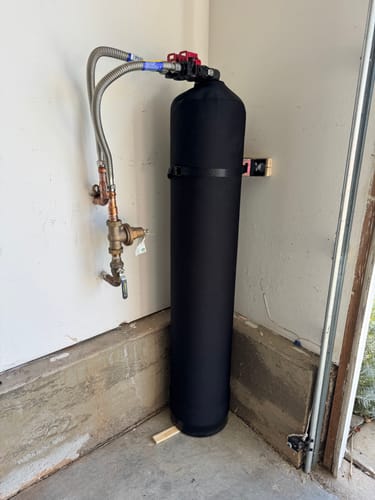
Getting manganese out of your water isn't just about having the right filter — it's about whether your water chemistry is even cooperating with the process.
pH is the biggest lever here: manganese needs a higher pH to oxidize than iron does, so if your water runs acidic, you're fighting an uphill battle before filtration even begins.
Here's where it gets interesting, though. Iron actually helps. When iron is present, it can facilitate manganese oxidation, fundamentally lending a hand to the removal process.
But dissolved oxygen matters too — without adequate oxidizers like chlorine or ozone, that dissolved manganous manganese never converts into its filterable manganic form.
And if your manganese exceeds 1.0 mg/L? Standard filtration alone won't cut it. You'll need targeted oxidation first.
Which Filter Type Actually Works at Your Manganese Level?
So now that we recognize water chemistry sets the stage, let's talk about what actually goes in the ground — because the right filter depends almost entirely on how much manganese you're dealing with and what form it's taken.
Here's how we break it down:
- Low-level dissolved manganese — Water softeners handle un-precipitated manganous manganese efficiently, but fail completely against insoluble forms.
- Moderate levels (3–10 mg/L) — Oxidizing filters like manganese greensand shine here, provided sufficient oxygen supports the oxidation process.
- Precipitated manganic manganese — Standard filtration removes it, no oxidation required.
The catch? pH matters enormously. Drop too low, and oxidation stalls regardless of your filter choice.
Test first, then decide — guessing costs you twice.
What Iron Filter Specs Miss About Manganese Removal?
Most iron filter spec sheets look impressive until you dig into what they're actually measuring — and what they're quietly leaving out.
They'll advertise iron removal in bold print, but manganese? That's where the fine print gets interesting.
Here's what most specs skip: ferrous iron and manganous manganese aren't interchangeable targets. Removing one doesn't guarantee removing the other. Manganese demands specific pH levels, oxygen availability, and mineral balance — conditions most standard iron filters never even attempt to create.
Then there's manganic manganese, the solid form.
Dissolved manganese and particulate manganese require completely different treatment strategies, yet most spec sheets treat them identically. Unless your system incorporates genuine oxidation processes or specialized media like manganese greensand or Birm, those specs are measuring the wrong problem entirely.
How to Test Whether Your Iron Filter Is Removing Manganese?
How do you actually know if your iron filter is pulling manganese out of your water — or just letting it pass through undetected? Testing removes the guesswork entirely.
Here's what we recommend:
- Test before and after filtration using a DEP-accredited lab, measuring both iron and manganese concentrations at each point.
- Identify the manganese form — soluble manganous manganese behaves differently than insoluble manganic manganese, and your filter may only capture one.
- Watch for physical signs — staining, metallic taste, or discoloration signal filtration failure even when specs suggest otherwise.
Don't test once and walk away. Water chemistry shifts seasonally, and contaminant loads change.
Periodic retesting tells us whether the filter's still performing — or quietly failing us.
Frequently Asked Questions
What Is the Best System to Remove Manganese From Well Water?
We've found that manganese greensand filters work best for high manganese levels, while Birm filters offer low-maintenance alternatives. Always test your water first to match the right system to your pH and manganese concentration.
Do Iron Manganese Filters Work?
Yes, they can work, but it depends on your water's pH and manganese type. We've found that dissolved manganese demands higher pH levels and often requires oxidation first for truly effective removal.
What Are the Symptoms of Too Much Manganese in Your Body?
Too much manganese can trigger tremors, muscle rigidity, mood swings, headaches, insomnia, and fatigue. We're also looking at serious cognitive decline—memory loss, attention deficits—and in children, it can derail developmental milestones entirely.
What if Well Water Is High in Manganese?
If your well water's high in manganese, we need to act fast. Let's test levels first, then consider oxidizing filters using manganese greensand or Birm—especially when concentrations exceed 3 mg/L.





