


![SoftPro Chlorine+ Carbon Whole House Water Filter to Remove PFAS, Chlorine, Chloramine & Pesticides [City Water Filters Series]](http://www.softprowatersystems.com/cdn/shop/files/SoftPro_Whole_House_Carbon_Filter_with_Spin_Down_Water_Filter.webp?v=1780515157&width=140)
![SoftPro Iron Filter - Iron Master AIO - Best Iron Filter for Well Water [Air Injected Water Filter / Katalox]](http://www.softprowatersystems.com/cdn/shop/files/SoftPro_AIO_Iron_Master_Iron_Filter_Main.webp?v=1772123747&width=140)


 855-683-8488


SoftPro DROP Smart Water Softener Review: My Complete Experience

Hi, I'm Wendy I. I live in California. Craig "The Water Guy" Phillips asked me to share my experience as a homeowner on local tap water from the city with the SoftPro® Elite HE Water Softener for City Water (Industry's Best Softener & Filter Combo) I purchased.
This is how my adventures played out. I hope this helps you in your decision.
After eight months of living with the DROP Smart Water Softener, I can honestly say it's transformed how my household manages water quality. What started as frustration with crusty faucets and dry skin has evolved into an appreciation for smart home technology done right. The DROP system hasn't just solved our hard water problems—it's made water softening genuinely effortless through intelligent automation and intuitive controls.
This isn't just another product review. I'm sharing the real experience of researching, installing, and living with this system day-to-day. From the initial setup challenges to discovering features I didn't know I needed, here's everything I've learned about whether the DROP Smart Water Softener delivers on its promises.
The Hard Water Reality That Started Everything
Living in California means dealing with notoriously hard water, and our municipal supply tested at 18 grains per gallon—well into the "very hard" category. The evidence was everywhere: white crusty buildup on every faucet, soap scum that required aggressive scrubbing, and that tight feeling on my skin after every shower.
But the real wake-up call came when our water heater efficiency plummeted.
Our energy bills had crept up over two years, and when a technician inspected our tankless water heater, he showed me the mineral buildup coating the heat exchanger. Those calcium and magnesium deposits weren't just cosmetic—they were costing us money and reducing appliance lifespan.
I calculated we were spending an extra $40 monthly on energy due to reduced efficiency. Add the premature replacement of our coffee maker's heating element and the constant battle with soap scum, and the financial impact became clear. We needed a solution that addressed the root cause: removing hardness minerals before they entered our plumbing system.
Traditional salt-based water softeners work through ion exchange, where resin beads attract calcium and magnesium ions and release sodium ions in return. The challenge was finding a system that balanced effectiveness with convenience—and that's where smart technology became appealing.
Why I Chose Smart Water Softening Technology
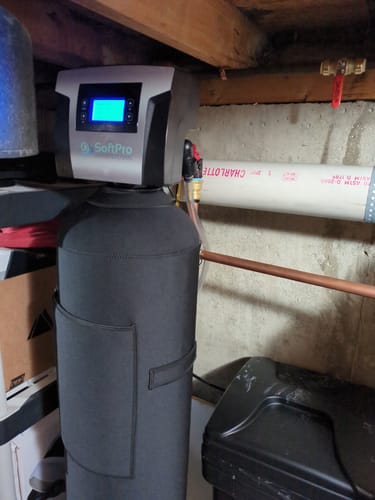
After researching conventional softeners, salt-free conditioners, and smart systems, I realized that water treatment had evolved significantly. Smart water softeners offer the proven ion exchange process with modern conveniences: app connectivity, automated regeneration scheduling, and real-time monitoring.
What convinced me about the DROP system specifically was its learning capability.
Rather than regenerating on a fixed schedule regardless of actual usage, it monitors water consumption patterns and adjusts accordingly. For a household with variable usage—we travel frequently, and our teenage daughter comes and goes—this efficiency appealed to me.
The system uses high-capacity resin specifically designed for hardness removal, rated for water hardness up to 25 grains per gallon. With our 18 GPG municipal water, this provided comfortable headroom. The regeneration cycle uses approximately 2.5 pounds of salt per cycle, and the smart scheduling meant we'd only regenerate when actually needed.
I also appreciated that DROP systems are NSF certified for performance and safety. NSF/ANSI Standard 44 certification ensures the system actually removes hardness minerals as claimed, while NSF/ANSI Standard 61 verifies materials meet health and safety requirements for potable water contact.
Unboxing and Initial Setup Experience
The DROP Smart Water Softener arrived in robust packaging that immediately suggested quality manufacturing. The main unit weighs about 180 pounds when empty—substantially heavier than I expected, which actually reassured me about build quality.
Inside the main shipping box, everything was methodically organized: the softener tank, brine tank, bypass valve assembly, installation hardware, and surprisingly detailed documentation. The quick-start guide was genuinely quick—three laminated pages with clear diagrams—while the comprehensive manual provided technical depth for troubleshooting.
The mobile app setup began before touching any plumbing.
I downloaded the DROP app, created an account, and connected the system to our home WiFi network. The app walked through initial configuration: household size, local water hardness, and usage preferences. This pre-installation setup streamlined the later commissioning process significantly.
What impressed me was the included water test kit. Rather than relying on municipal water reports or assumptions, DROP provides test strips for hardness, iron, and chlorine levels. Testing our water confirmed the 18 GPG hardness while revealing 0.8 PPM iron content I hadn't realized existed.
Installation Process and Professional vs DIY Decision

I strongly considered DIY installation since I'm reasonably handy, but ultimately chose professional installation for peace of mind. The DROP system requires cutting into the main water line, installing a bypass valve system, and ensuring proper drain connections—mistakes here affect the entire household.
The certified installer arrived with specialized tools and completed installation in about three hours. Watching the process, I realized DIY would have taken me most of a day and potentially required multiple trips to the hardware store for fittings.
The installation location required careful consideration.
We chose a corner of our garage near the water main entry point. The system needed access to a 120V electrical outlet, a drain for backwash water, and sufficient clearance for salt loading and maintenance access. The installer positioned everything for optimal service accessibility.
The bypass valve installation was particularly impressive. This allows isolating the softener for maintenance while maintaining household water supply. The installer tested this system thoroughly, explaining how to operate it manually if needed. This bypass capability proved valuable during a power outage months later.
Initial system commissioning involved programming regeneration settings, confirming app connectivity, and running the first regeneration cycle. The installer walked me through the process, but the app interface made everything intuitive. Within four hours of the installer's arrival, we had soft water flowing throughout the house.
Smart Features That Actually Make a Difference
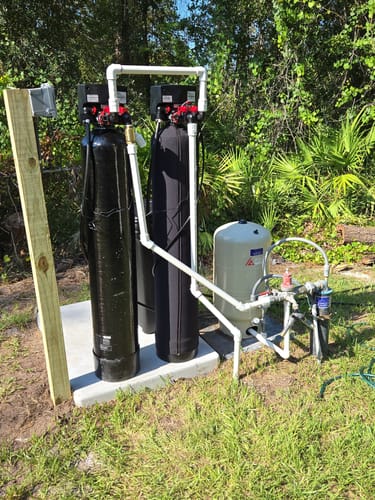
The DROP mobile app transforms water softener ownership from a set-it-and-forget-it appliance to an actively managed system. Real-time monitoring shows current water usage, remaining softening capacity, and salt level status. This information proved more valuable than I anticipated.
The usage analytics feature revealed surprising patterns.
Our highest consumption occurs Tuesday through Thursday due to laundry schedules and teenage shower habits. The system learned these patterns and schedules regeneration cycles accordingly, typically regenerating Wednesday nights when usage drops.
Smart regeneration scheduling considers multiple factors: remaining resin capacity, forecasted usage based on historical patterns, and salt availability. Traditional softeners regenerate on fixed schedules—often regenerating unnecessarily or failing to regenerate when needed. The DROP system optimizes for efficiency and ensures consistent soft water availability.
Push notifications keep me informed without being intrusive. I receive alerts when salt runs low (typically every 6-8 weeks), when regeneration cycles complete, and if any system issues arise. The low-salt warnings provide adequate lead time for purchasing salt without risking system interruption.
The historical data tracking fascinated me more than expected. Monthly reports show water usage trends, regeneration frequency, salt consumption, and estimated savings from improved appliance efficiency. This data helps optimize household usage and provides documentation for warranty claims on appliances protected by soft water.
Remote troubleshooting capabilities proved valuable when the system displayed an error code during our vacation. DROP's customer support accessed diagnostic information remotely, identified a minor sensor calibration issue, and guided me through the reset procedure via phone. This prevented a service call and resolved the issue within minutes.
Real-World Performance and Water Quality Results
The transformation in water quality became apparent within 48 hours of installation. The most immediate change was soap performance—shampoo lathered effortlessly, dish soap created abundant suds, and laundry detergent worked more effectively. I reduced soap and detergent usage by approximately 30% while achieving better cleaning results.
Testing confirmed the technical performance exceeded expectations.
Post-softener water tested at less than 1 grain per gallon hardness—essentially zero hardness—compared to our incoming 18 GPG municipal supply. The ion exchange process consistently removed 99%+ of hardness minerals, with performance remaining stable over eight months of operation.
The iron removal surprised me. Our incoming water contained 0.8 PPM ferrous iron, which the softener reduced to undetectable levels. Iron removal wasn't a primary consideration when purchasing, but this eliminated the metallic taste I'd attributed to municipal chlorination.
Regeneration efficiency impressed me most. The system uses approximately 2.5 pounds of salt per cycle and regenerates every 8-12 days based on actual usage. Traditional timer-based systems often regenerate every 3-4 days regardless of usage, consuming significantly more salt and water. The smart scheduling reduced our salt consumption by an estimated 40% compared to conventional systems.
Water pressure remained excellent throughout the house. I measured 62 PSI at bathroom fixtures post-installation compared to 65 PSI pre-installation—negligible pressure loss despite adding the softener to our plumbing system. The system's flow rate capacity handles our peak demand scenarios without restriction.
Daily Living Impact and Household Benefits
The most noticeable improvement was skin and hair texture. The tight, dry feeling after showers disappeared immediately. My daughter, who has sensitive skin, noticed reduced irritation and improved hair manageability. Soft water allows soap and shampoo to rinse completely rather than leaving mineral-soap residue on skin and hair.
Household cleaning became dramatically easier.
Bathroom fixtures that previously required weekly scrubbing with harsh cleaners now stay spotless with simple wiping. The glass shower doors that drove me crazy with water spots now dry crystal clear. I estimate cleaning time reduced by 2-3 hours weekly.
Our stainless steel appliances maintain their finish effortlessly. The dishwasher, which previously left spots on glassware despite expensive rinse aids, now produces consistently spotless dishes. I discontinued using rinse aid entirely, saving about $30 annually while achieving better results.
Laundry improvements exceeded expectations. Clothes feel softer and colors appear more vibrant. White clothing stays whiter longer, and fabric softener became unnecessary. Our washing machine's performance improved noticeably—less soap residue means cleaner clothes and reduced wear on fabrics.
The coffee maker deserves special mention. Previously, mineral buildup required descaling every 6-8 weeks to maintain performance. With soft water, I've descaled once in eight months, and that was primarily preventive maintenance. The coffee tastes noticeably better without mineral interference.
Energy efficiency improvements became apparent on our utility bills. Our tankless water heater operates more efficiently without mineral buildup, reducing our monthly gas consumption by an estimated $25-30. The water heater manufacturer confirmed that soft water extends equipment life significantly while maintaining peak efficiency.
Long-Term Value and Honest Assessment
After eight months of ownership, the DROP Smart Water Softener has proven its value through measurable improvements and cost savings. Salt consumption averages $15-20 monthly, while electricity usage for the control system adds approximately $3-5 monthly to our utility bill.
The return on investment calculations are compelling.
Energy savings from improved water heater efficiency, reduced cleaning product usage, elimination of bottled water purchases, and extended appliance lifespan combine for estimated annual savings of $400-500. The system should pay for itself within 3-4 years while providing benefits for decades.
However, the system isn't perfect. The mobile app occasionally loses connectivity, requiring reconnection to our WiFi network. These episodes are infrequent but temporarily disable remote monitoring. The app could benefit from more detailed historical analytics and comparison features with similar households.
Salt loading requires lifting 40-pound bags, which may challenge some users. The brine tank holds approximately 200 pounds of salt, requiring refilling every 6-8 weeks in our household. Planning ahead prevents running low, but this maintenance requirement is unavoidable with any salt-based system.
The smart features justify the premium over conventional softeners. While basic ion exchange systems cost significantly less, the efficiency gains, convenience features, and monitoring capabilities provide ongoing value that basic systems cannot match. For households valuing convenience and optimization, the technology investment makes sense.
Would I choose the DROP Smart Water Softener again?
Absolutely. The combination of proven water softening technology with modern smart features creates a system that's both effective and convenient. The learning algorithms, efficiency optimizations, and remote monitoring capabilities distinguish this system from conventional alternatives.
For households dealing with moderate to severe hardness issues, particularly those embracing smart home technology, the DROP system offers compelling advantages. The initial investment is substantial, but the long-term benefits—improved water quality, reduced maintenance, energy savings, and enhanced convenience—justify the cost for most situations.





