


![SoftPro™ Chlorine+ Carbon Whole House Water Filter to Remove PFAS, Chlorine, Chloramine & Pesticides [City Water Filters Series]](http://www.softprowatersystems.com/cdn/shop/files/SoftPro_Whole_House_Carbon_Filter_with_Spin_Down_Water_Filter.webp?v=1783547361&width=140)


 855-683-8488


EPA Iron in Drinking Water Standard: What the 0.3 PPM Limit Means for Your Well Water

The EPA's iron standard for drinking water is set at 0.3 PPM — but here's what surprises most well owners: it's not actually a health limit. It's an aesthetic standard, meaning it targets taste, staining, and discoloration rather than safety risks. Iron can even cause noticeable problems at just 0.05 PPM. If you rely on a private well, understanding what this limit really means — and where your water stands — can save you from bigger headaches down the line.
Key Takeaways
- The EPA's secondary drinking water standard for iron is 0.3 PPM, targeting aesthetic concerns like discoloration, staining, and metallic taste.
- This standard is not legally enforceable but serves as a benchmark for acceptable iron levels in drinking water.
- Iron issues can appear at levels as low as 0.05 PPM, well below the 0.3 PPM limit.
- Iron in well water originates from iron-rich soil, corroding pipes, and geological formations beneath your property.
- Testing near the wellhead using accredited labs ensures accurate iron level readings for your well water.
What Is the EPA's 0.3 PPM Iron Standard?

The EPA sets its secondary drinking water standard for iron at 0.3 parts per million (PPM) — but what does that number actually mean for the water coming out of your tap?
Unlike primary standards, which protect against health risks, this one's classified as a secondary standard, meaning it targets aesthetic concerns: discoloration, staining, and metallic taste.
It's not legally enforceable, but it serves as a practical benchmark for water quality management.
Here's what's striking — iron can cause noticeable taste and color problems at levels as low as 0.05 PPM, well below the 0.3 PPM threshold.
How Does Iron Get Into Well Water?
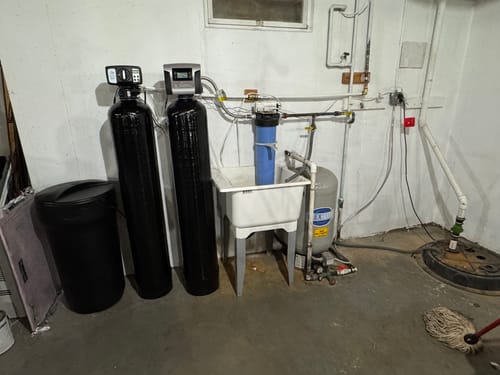
When iron shows up in our well water, it's rarely a coincidence — it traces back to specific, identifiable sources. The most common? Iron-rich rocks and soil naturally leaching minerals into groundwater over time.
If your property sits above certain geological formations, you're already at higher risk.
Corroding pipes compound the problem considerably. Older plumbing systems release iron directly into your supply, and if your water's pH drops below 6.5, that leaching accelerates — chemistry working against you.
Even municipal systems aren't immune. Distribution infrastructure can introduce low-level iron contamination despite oxidation and filtration efforts at the treatment stage.
Understanding these entry points matters because each source demands a different remediation strategy. Knowing where your iron originates is the first step toward solving it.
Is Iron in Well Water Actually Dangerous?
Once we recognize how iron gets into our well water, the next logical question is whether it's actually hurting us — and the answer might surprise you. The EPA classifies iron as a secondary contaminant, meaning it's an aesthetic concern, not a health threat.
Here's the nuance worth knowing: our bodies absorb iron primarily from food, so elevated levels in drinking water contribute minimally to our dietary intake.
Our bodies absorb iron primarily from food — making elevated levels in drinking water a minor dietary concern at best.
That said, iron isn't entirely harmless in your system — it creates real problems downstream. It corrodes plumbing, damages appliances, encourages iron bacteria growth, and produces foul odors.
Even at just 0.3 PPM, it'll stain your fixtures, discolor your laundry, and ruin your morning coffee. Low health risk doesn't mean low consequence.
What Are the Signs Your Well Water Has Too Much Iron?
Spotting iron in your well water doesn't require a lab test — your home is already running one. Watch for these telling signs:
- Reddish-brown stains on sinks, tubs, and laundry that no scrubbing fully removes
- Metallic-tasting water that ruins your morning coffee or tea
- Slimy biofilm coating your pipes and fixtures, signaling iron bacteria growth and foul odors
- Darkened vegetables when cooked, revealing iron concentrations corrupting your meals
Each symptom reflects a specific iron problem — staining suggests concentrations above 0.3 PPM, while biofilm points to bacterial iron, which demands a completely different treatment approach.
Recognizing which signs you're experiencing isn't just useful — it's the foundation of solving the right problem with the right solution.
How Do You Test Your Well Water for Iron?
Testing your well water for iron starts at the source — collect your samples close to the wellhead and follow the certified lab's specific instructions to the letter. This matters because improper collection skews results and leads to ineffective treatment decisions.
Yes, self-testing kits exist, but accredited laboratories deliver the accuracy you need to truly understand your water's iron concentrations. We also recommend testing pH, alkalinity, and hardness alongside iron — these parameters reveal the full chemistry picture and reveal the right treatment options.
If you're seeing yellow, red, or brown discoloration, don't wait. Test immediately. Reach out to your local health department or water authority for accredited lab recommendations in your area.
Precision testing today prevents costly problems tomorrow.
Frequently Asked Questions
What Is the Acceptable Iron Level in Well Water Ppm?
We recommend keeping your well water's iron level below 0.3 PPM. Above that threshold, you'll likely notice metallic tastes, staining, and potential iron bacteria growth that compromises your plumbing system's integrity.
What Is a Good Iron Level in Well Water?
We'd recommend keeping iron levels below 0.05 PPM for truly ideal water quality. While the EPA's limit is 0.3 PPM, staying under 0.05 PPM prevents metallic flavors and discoloration that affect your water's taste and appearance.
What Is the EPA Limit for Iron in Water?
The EPA sets iron's secondary maximum contaminant level at 0.3 PPM. We're talking aesthetics here, not health—but exceeding it means you'll likely notice metallic tastes, staining, and discoloration in your water and fixtures.
Is 3 Ppm Iron in Water Bad?
Yes, 3 PPM of iron in your water is bad. It's 10 times the EPA's 0.3 PPM limit, meaning you'll likely experience metallic taste, staining, and iron bacteria growth in your plumbing.






