


![SoftPro™ Chlorine+ Carbon Whole House Water Filter to Remove PFAS, Chlorine, Chloramine & Pesticides [City Water Filters Series]](http://www.softprowatersystems.com/cdn/shop/files/SoftPro_Whole_House_Carbon_Filter_with_Spin_Down_Water_Filter.webp?v=1783547361&width=140)


 855-683-8488


Ferrous Iron vs. Iron Bacteria in Well Water: Two Completely Different Problems, Two Different Solutions

Ferrous iron and iron bacteria both wreak havoc on well water, but they're completely different problems requiring completely different fixes. Ferrous iron is a dissolved mineral that oxidizes into rust stains, while iron bacteria are living microorganisms that form slimy biofilms and clog your pipes. Treating one like the other wastes time and money while the real problem gets worse. Stick with us, and we'll walk you through exactly what's happening in your water and how to fix it.
Key Takeaways
- Ferrous iron is a dissolved mineral, while iron bacteria are living microorganisms—requiring completely different treatment approaches for each problem.
- Ferrous iron is effectively removed through aeration and filtration, while iron bacteria require shock chlorination and specialized biofilm-capturing filters.
- Iron bacteria produce slimy biofilms that clog pipes, whereas ferrous iron causes reddish-brown stains through oxidation.
- Misidentifying the problem leads to wasted resources and ineffective treatment, allowing bacteria or iron levels to worsen over time.
- Eliminating iron bacteria requires addressing ferrous iron too, since dissolved iron serves as the primary food source for bacteria.
Ferrous Iron vs. Iron Bacteria: Key Differences in Well Water

Although they both involve iron, ferrous iron and iron bacteria are entirely different problems that call for entirely different solutions.
Ferrous iron is a dissolved mineral — colorless, tasteless to the eye, but responsible for metallic-tasting water and stubborn rust stains once it oxidizes into ferric iron upon oxygen exposure.
Iron bacteria, however, are living microorganisms that feed on iron-rich environments, producing slimy biofilms, foul odors, and clogged plumbing.
One's a chemistry problem; the other's a biological one. That distinction matters enormously because the treatments aren't interchangeable.
Aeration or chlorination can tackle ferrous iron effectively, but iron bacteria demand continuous feed chlorination or specialized filtration.
Misidentifying the problem means wasting time and money — so let's make sure we get this right from the start.
What Each One Actually Does to Your Plumbing and Home
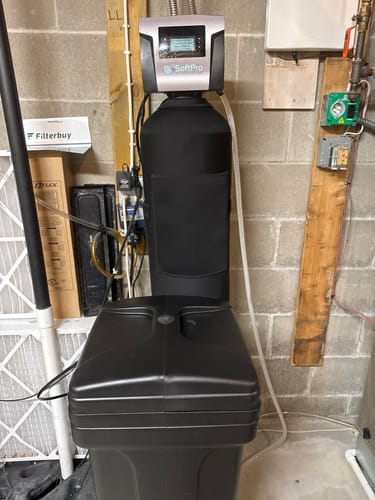
Once iron — whether dissolved or alive — gets into your plumbing, it doesn't just sit quietly. It works against you in distinct, damaging ways.
Here's what each one actually does:
- Ferrous iron dissolves invisibly in water, then oxidizes into ferric iron — leaving reddish-brown stains on fixtures, laundry, and anything it touches.
- Iron bacteria produce a thick, slimy biofilm that coats and clogs pipes while generating foul odors you can't ignore.
- Ferric iron accumulation creates progressive blockages, quietly strangling water flow over time.
- Both threats accelerate wear on appliances and plumbing, shortening their lifespan and driving up maintenance costs.
Understanding what each one does tells us exactly why they demand completely different solutions.
Why You Can't Treat Iron Bacteria Like Ferrous Iron
Treating iron bacteria the same way we treat ferrous iron is like using a fire extinguisher to fix a leaky pipe — the logic doesn't hold, and the problem only gets worse.
Ferrous iron responds beautifully to aeration, sediment filters, and water softeners. Iron bacteria? They laugh at those methods. Their biofilm actively undermines traditional iron removal systems, causing recurring clogs and stubborn odors that keep returning.
What iron bacteria actually need is shock chlorination, ongoing maintenance, and sometimes structural changes to your well itself. The chemistry is different, the biology is different, and consequently, the solution must be different.
Misidentifying the problem doesn't just waste money — it guarantees failure while the bacteria continue colonizing your plumbing unchecked.
The Right Way to Remove Ferrous Iron From Well Water
Removing ferrous iron from well water comes down to one straightforward principle: oxidize it, then filter it out.
Ferrous iron removal isn't complicated — oxidize it, filter it out, and you're done.
Converting dissolved Fe²⁺ into Fe³⁺ makes it filterable—something aeration or chlorination handles effectively.
Here's what a solid treatment approach looks like:
- Test first — levels above 0.3 mg/L demand immediate action to prevent staining and taste issues.
- Oxidize — use aeration or chlorination to convert ferrous iron into filterable ferric iron.
- Filter — install sediment or backwashing iron filters to capture oxidized particles before they reach your plumbing.
- Maintain consistently — monitor regularly, because neglected systems allow ferrous iron to creep back in.
Water softeners with iron-removal features can supplement this process, but they shouldn't carry the load alone.
How to Eliminate Iron Bacteria From Your Well for Good
Knocking out ferrous iron is only half the battle—if iron bacteria have moved in, filtration alone won't cut it. These microorganisms build stubborn biofilms that standard filters can't fully disrupt.
That's why continuous chlorination is your most powerful weapon—it maintains a steady disinfectant level that breaks down bacterial colonies over time.
Pair that with specialized iron bacteria filters designed to capture biofilm and microorganisms, and you've got a genuinely effective one-two punch.
But here's what most people miss: regular water testing is non-negotiable. Without it, you're flying blind.
You also need to address the ferrous iron itself—bacteria thrive where dissolved iron is high. Cut off their food source, maintain proper well hygiene, and you'll keep them gone for good.
Frequently Asked Questions
What Is the Difference Between Iron and Iron Bacteria in Water?
Iron's a dissolved mineral that stains and clogs pipes, while iron bacteria are living microorganisms that form slimy biofilms, causing foul odors and discoloration. They're distinct problems requiring completely different treatment solutions.
How to Get Rid of Iron Bacteria in Well Water Naturally?
We can naturally eliminate iron bacteria by shock-chlorinating your well, continuously feeding hydrogen peroxide, or installing UV filtration systems. Let's also remove biofilm buildup regularly and limit organic matter near your well to prevent regrowth.
Will Shocking a Well Get Rid of Iron Bacteria?
Yes, shocking your well with chlorine will kill iron bacteria and destroy their biofilm. However, we'll still need to flush the system thoroughly afterward and test regularly to prevent their return.
What Is the Best Water Treatment for Iron Bacteria?
We've found that continuous feed chlorination's your best bet for iron bacteria—it kills the bacteria and eliminates odors and slime. Pair it with oxidizing or UV filters for even stronger, more thorough results.






