


![SoftPro™ Chlorine+ Carbon Whole House Water Filter to Remove PFAS, Chlorine, Chloramine & Pesticides [City Water Filters Series]](http://www.softprowatersystems.com/cdn/shop/files/SoftPro_Whole_House_Carbon_Filter_with_Spin_Down_Water_Filter.webp?v=1783547361&width=140)


 855-683-8488


Ferrous vs. Ferric Iron Water Test: Understanding the Critical Difference Between Clear and Red Water

Ferrous iron (Fe²⁺) is dissolved and invisible, making your water look crystal clear at the tap. Ferric iron (Fe³⁺) is oxidized ferrous iron that forms reddish-brown particles you can actually see. Each type behaves differently inside your plumbing and requires a completely different filtration solution. Testing for the right type isn't just helpful — it's essential for protecting your home. Stick with us, and we'll walk you through everything you need to know.
Key Takeaways
- Ferrous iron (Fe²⁺) remains dissolved and invisible in water, while ferric iron (Fe³⁺) appears as visible reddish-brown particles.
- Crystal-clear water that turns reddish-brown after sitting indicates ferrous iron oxidizing upon oxygen exposure.
- Reddish-orange stains on fixtures signal ferric iron already present in your water supply.
- Sediment filters only capture ferric iron; ferrous iron requires an oxidizing filter to convert and remove it.
- A simple home test involves letting a clear water sample sit undisturbed for several hours to observe discoloration.
What's the Difference Between Ferrous and Ferric Iron in Water?

When it comes to iron in your water supply, not all iron is created equal — and knowing the difference can save you a lot of headaches. There are two primary forms you'll encounter: ferrous iron (Fe²⁺) and ferric iron (Fe³⁺).
Ferrous iron dissolves completely in water, making it invisible to the naked eye. It's sneaky — your water looks perfectly clear, yet the iron is there.
Once it contacts oxygen, typically inside your plumbing, it oxidizes into ferric iron, which appears as those familiar reddish-brown particles clouding your water.
Here's why this matters: ferrous iron slips right through sediment filters, while ferric iron gets captured.
Understanding which form you're dealing with determines exactly which filtration approach will actually work.
The Right Filter for Each Type of Iron in Well Water
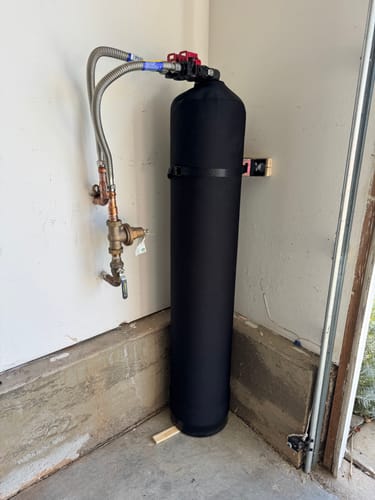
Now that we recognize which type of iron we're dealing with, we can match it to the right filter — because using the wrong one is like trying to catch fish with the wrong net.
| Iron Type | Filter Option | Effectiveness |
|---|---|---|
| Ferric (red) | Sediment Filter | Captures particles ✅ |
| Ferrous (clear) | Sediment Filter | Passes right through ❌ |
| Both types | Backwashing Oxidizing Filter | Converts & captures ✅✅ |
| Both types | Terminox® Filter | No salt/chemicals needed ✅✅ |
| Unknown type | Professional Water Test | Essential first step ⚠ |
Sediment filters handle visible ferric iron well — but ferrous iron slips through invisibly. That's why backwashing filters using oxidizing minerals are our strongest recommendation. They convert ferrous into ferric iron first, then capture it. The Terminox® takes this further, requiring zero salt or chemicals. Test your water first — knowing your iron type isn't optional, it's everything.
Which Signs Tell You What Type of Iron You Have?
Before spending a dime on filtration, let's look at what your water is already telling you.
Your water leaves clues everywhere — you just need to know how to read them:
- Crystal-clear water from the tap that turns reddish-brown after sitting out signals ferrous iron oxidizing before your eyes.
- Reddish-orange stains on laundry, fixtures, and plumbing point directly to ferric iron already in particle form.
- Slimy red or orange buildup inside fixtures warns of bacterial iron — a separate beast requiring chemical treatment.
A metallic taste often accompanies both iron types, but ferrous iron stays invisible until air triggers oxidation.
Don't guess — test. Levels above 0.3 mg/L demand action, and misidentifying your iron type means choosing the wrong solution entirely.
How Iron Transforms From Clear to Rust-Colored in Your Pipes
Here's the story: ferrous iron enters your pipes completely dissolved and invisible. Your water looks crystal clear. No red flags — literally.
But the moment that water contacts oxygen, chemistry takes over. Ferrous iron oxidizes into ferric iron, and suddenly you've got reddish-brown particles forming where none existed before.
This transformation happens fast — inside pipes, pressure tanks, and fixtures. Those particles don't stay suspended either. They settle, accumulate, and eventually clog filters and infrastructure.
That's why clear water from your tap can still carry a serious iron problem you won't see until it's already causing damage.
How to Test Your Well Water for Iron at Home
Testing your well water for iron at home starts with the simplest tool you already own — a clear glass.
Here's what we recommend doing right now:
- Collect a water sample and let it sit undisturbed for several hours.
- Watch for reddish-brown discoloration, which signals ferric iron lurking in your supply.
- If it stays clear, suspect ferrous iron — it oxidizes into ferric iron once exposed to air.
Clear water isn't always safe water.
That's the critical distinction mastery-level homeowners understand.
Since iron levels fluctuate considerably over time, we'd also suggest using a professional testing kit to measure exact concentrations.
Anything exceeding 0.3 mg/L affects your drinking water quality and demands immediate attention.
Frequently Asked Questions
What Is the Difference Between Ferric and Ferrous Iron in Water?
We'll find ferrous iron (Fe²⁺) dissolves invisibly in clear water, while ferric iron (Fe³⁺) oxidizes into reddish, cloudy particles. Both stain fixtures and laundry, but ferric's insolubility makes it especially problematic.
How to Tell if Iron Is Ferric or Ferrous?
We can tell by looking at the water's color. If it's clear, it's ferrous iron. If it's reddish-brown or orange, it's ferric iron — already oxidized and visible to the naked eye.
Does Iron Change the Color of Water?
Yes, iron changes your water's color! Ferrous iron keeps it clear, but once it oxidizes into ferric iron, you'll notice that telltale reddish-brown cloudiness that signals iron's unwelcome presence in your water supply.
How to Differentiate Ferrous and Ferric?
We can differentiate them by observing water clarity: ferrous iron keeps water clear but causes taste issues, while ferric iron turns water reddish-brown with visible particles. Let a glass of water sit to confirm.






