


![SoftPro™ Chlorine+ Carbon Whole House Water Filter to Remove PFAS, Chlorine, Chloramine & Pesticides [City Water Filters Series]](http://www.softprowatersystems.com/cdn/shop/files/SoftPro_Whole_House_Carbon_Filter_with_Spin_Down_Water_Filter.webp?v=1783547361&width=140)


 855-683-8488


Greensand vs. AIO Regeneration: Which Iron Filter Method Is Truly Easier for Homeowners?

When comparing greensand and AIO regeneration, AIO systems are generally easier for most homeowners to manage. Greensand filters require regular potassium permanganate handling, frequent backwash cycles, and careful pH monitoring between 6.5–7.5. AIO systems skip the chemicals entirely, using air injection to oxidize iron automatically. They also handle higher iron concentrations, up to 30 PPM, and adapt better to challenging water chemistry. Stick with us, and we'll break down exactly which system fits your situation best.
Key Takeaways
- AIO systems eliminate chemical regeneration entirely, requiring only periodic backwashing, making them significantly simpler for homeowners to maintain long-term.
- Greensand filters depend on potassium permanganate for regeneration, adding chemical handling complexity that many homeowners may find burdensome.
- AIO systems backwash only when flow rates drop, whereas greensand requires backwash cycles every four hours.
- Greensand filters have a shorter lifespan of around five years, increasing replacement frequency compared to AIO alternatives.
- AIO systems use an air compressor, adding mechanical complexity, but avoid the chemical management demands of greensand systems.
How Greensand and AIO Regeneration Work

When it comes to removing iron, manganese, and hydrogen sulfide from well water, greensand filters and AIO systems take very different approaches.
Greensand filters use manganese oxide-coated glauconite to oxidize contaminants, but they require periodic regeneration with potassium permanganate—either through a 75-minute intermittent soak-and-backwash cycle or a faster 15-minute continuous process.
AIO systems work differently. They inject oxygen directly into the water, converting dissolved iron into solid particles that filtration can then capture.
AIO systems skip the chemicals entirely—injecting oxygen to convert dissolved iron into filterable solids.
There's no chemical regeneration involved—just regular backwashing. These systems handle iron concentrations up to 30 PPM efficiently, making them a compelling option for homeowners who'd rather spend less time managing chemicals and more time trusting their system to simply work.
Where Greensand Excels: and Where It Falls Short
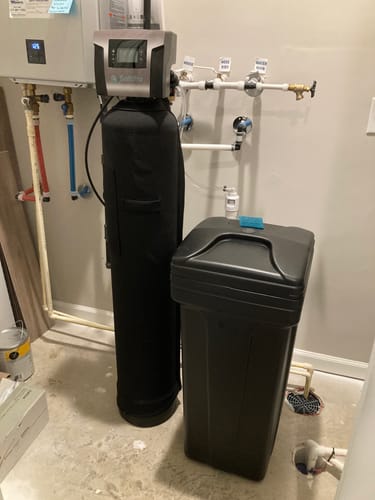
Greensand has a specific sweet spot, and understanding it helps you decide whether it's the right fit for your water situation. It excels at targeting iron, manganese, and hydrogen sulfide, but only when conditions align.
Where greensand performs best:
- Handles iron, manganese, and hydrogen sulfide simultaneously
- Operates effectively between pH 6.5–7.5
- Requires less backwash water than many competing systems
- Suits applications where chemical regeneration is manageable
However, greensand isn't without trade-offs. Its lifespan averages around five years, shorter than manganese oxide filters, which can exceed a decade.
Regeneration demands potassium permanganate, adding chemical handling complexity. For homeowners wanting minimal chemical involvement, that requirement alone can make AIO systems feel like the smarter, simpler long-term choice.
Why AIO Takes More Work to Maintain
AIO systems deliver cleaner water without chemicals, but that simplicity at the chemical level comes with a trade-off in mechanical complexity.
You're now managing an air compressor, monitoring pressure and flow rates, and checking injector components regularly. That's a meaningfully heavier maintenance load than Greensand requires.
Backwashing cycles can hit every few days when iron levels run high, demanding consistent attention. Unlike Greensand's straightforward chemical regeneration, AIO may also need supplemental chemical treatments to stay effective, adding another layer of oversight.
For homeowners who want a set-it-and-forget-it system, AIO's mechanical dependencies can feel burdensome.
If you're committed to mastering your water treatment setup and don't mind the hands-on involvement, AIO rewards that effort—but you should go in with clear expectations about what that maintenance actually looks like.
Greensand vs. AIO: Head-to-Head Maintenance Comparison
Now that we've laid out what AIO maintenance actually demands, let's put both systems side by side so you can see exactly where each one costs you time, money, and effort.
Here's where the differences get sharp:
Here's where the differences get sharp — and where your maintenance costs, chemical bills, and daily effort hang in the balance.
- Regeneration frequency: Greensand requires potassium permanganate regeneration every 75 minutes per cycle; AIO uses no chemical regenerants whatsoever.
- Backwashing demands: Greensand can trigger backwash cycles every 4 hours; AIO only backwashes when flow rates drop.
- Chemical costs: Greensand's ongoing permanganate purchases add up; AIO eliminates that expense entirely.
- Installation constraints: Greensand mandates 24–30 inches of bed depth; AIO offers more flexible spatial requirements.
The pattern's clear — AIO consistently reduces chemical dependency and maintenance frequency, while greensand trades simplicity for more hands-on upkeep.
Which Handles High Iron and Low pH Better: Greensand or AIO?
When iron levels climb high or your water's pH dips low, which system actually holds up? Let's cut straight to it: AIO wins this matchup convincingly.
Greensand performs reliably within a pH range of 6.5 to 7.5, but once conditions drop below that threshold, its efficiency deteriorates noticeably.
AIO systems, however, leverage air injection for oxidation, allowing them to handle pH environments that would cripple greensand performance.
On iron concentration, AIO handles up to 30 PPM—a capacity that outpaces what greensand comfortably manages.
If your water tests reveal aggressively high iron alongside low pH, greensand simply isn't built for those combined conditions.
AIO's design inherently adapts better to challenging water chemistry, making it the smarter, more resilient choice for homeowners facing extreme iron and pH scenarios.
Frequently Asked Questions
How Long Does Greensand Filter Media Last?
Greensand filter media typically lasts around 5 years, but we've seen that high iron levels and improper regeneration can shorten that lifespan considerably. Proper backwashing and pH maintenance between 6.5–7.5 are essential to maximizing it.
What Is the Easiest Way to Remove Iron From Water?
For homeowners wanting simplicity, we recommend AIO systems—they're your easiest iron removal solution. They oxidize iron using injected air, handle up to 30 PPM, and don't require chemical regenerants, making maintenance straightforward and hassle-free.
Does Greensand Remove Iron?
Yes, greensand removes iron effectively! Its manganese dioxide coating oxidizes soluble ferrous iron, converting it to a filterable form. We can count on it handling up to 15 PPM, making it a powerful solution.
What Is the Best Water Filtration System for a Whole House?
The best whole house water filtration system depends on your specific water profile. If you're battling iron and manganese, we'd recommend greensand or AIO systems—each excels differently based on your contaminant levels and maintenance preferences.






