


![SoftPro™ Chlorine+ Carbon Whole House Water Filter to Remove PFAS, Chlorine, Chloramine & Pesticides [City Water Filters Series]](http://www.softprowatersystems.com/cdn/shop/files/SoftPro_Whole_House_Carbon_Filter_with_Spin_Down_Water_Filter.webp?v=1783547361&width=140)


 855-683-8488


The Hidden Risks of Buying a Too-Small Iron Filter for Your Well Water System

Buying a too-small iron filter for your well water system starts a chain reaction you won't see coming. Unfiltered iron slips through during peak demand, staining fixtures, corroding pipes, and destroying appliances faster than you'd expect. Frequent regeneration cycles wear the filter down prematurely, while repair bills quietly stack up into thousands. Recognizing the warning signs early makes all the difference — and what we're about to uncover could save your plumbing and your wallet.
Key Takeaways
- An undersized iron filter allows unfiltered iron to bypass the system during peak demand, causing rust stains and metallic-tasting water.
- Frequent regeneration cycles from an overwhelmed filter accelerate wear, leading to premature system failure and costly repairs.
- Unfiltered iron causes pipe corrosion, appliance degradation, and reduced water pressure throughout your entire plumbing system.
- Financial consequences include thousands in appliance replacements, rust removal services, and emergency plumbing repairs annually.
- Proper sizing requires thorough water testing and measuring peak flow rates, ideally 10 gallons per minute for larger households.
Why Too-Small Iron Filters Fail Well Water Systems

When a well water iron filter's too small for the job, it doesn't just underperform — it fails in ways that ripple through your entire home.
Think of it like a garden hose trying to fight a house fire. The system can't handle peak flow rates, so during high-demand moments, unfiltered iron slips right through.
A garden hose can't fight a house fire — and an undersized iron filter can't handle your peak demand.
Skip the iron concentration test, and you've compounded the problem — your filter's now wrestling an iron load it was never built for.
The result? Rust stains, metallic-tasting water, and a filter regenerating so frequently it wears itself out prematurely.
Meanwhile, your pressure drops, your appliances suffer, and repair bills quietly climb.
Sizing matters more than most homeowners realize — and underestimating it costs dearly.
The Real Cost of Undersized Iron Filtration Per Year
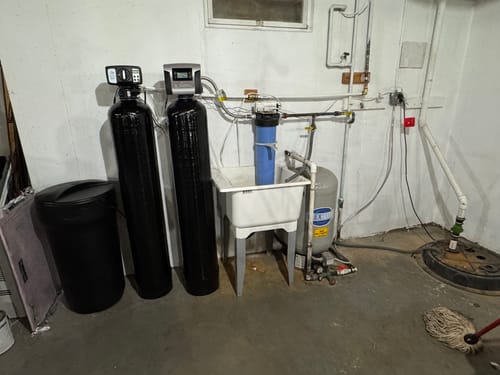
The costs add up faster than most people expect.
When your iron filter's undersized, you're not just dealing with one expense—you’re managing a cascade of financial hits that compound over time.
Here's what undersized iron filtration actually costs you:
- Frequent regeneration cycles averaging hundreds of dollars annually
- Appliance repairs and replacements from iron damage, totaling thousands over time
- Rust stain removal on fixtures and laundry requiring expensive restoration services
- Pressure-boosting system installations to compensate for a struggling filter's reduced flow
- Emergency plumbing repairs from persistent iron contamination reaching thousands yearly
Each line item seems manageable alone, but together they reveal an uncomfortable truth—buying too small doesn't save money.
It quietly drains your wallet year after year.
Warning Signs Your Iron Filter Is Too Small
Catching a struggling iron filter early can save you from years of compounding damage—but only if you know what to look for.
We've seen homeowners ignore subtle warning signs until the problem became expensive and unavoidable.
Watch for these red flags: rust stains appearing on fixtures and laundry signal your filter's failing during peak demand. A metallic taste means iron's bypassing filtration entirely—not a minor inconvenience, but a system failure.
Dropping water pressure throughout your home suggests the filter's overwhelmed, gasping to keep up. Frequent regeneration cycles and climbing maintenance bills confirm you're running an undersized system hard. Persistent rusty odors seal the verdict.
These signs rarely appear all at once—they creep in gradually, which is exactly why so many homeowners miss them until serious damage is done.
What an Undersized Iron Filter Does to Your Pipes and Appliances
Undersized iron filters don't just fail quietly—they set off a chain reaction that tears through your pipes and appliances from the inside out.
When your filter can't keep up, iron bypasses the system, corroding everything downstream.
Here's what's silently happening:
- Pipe corrosion accelerates as residual iron eats through plumbing materials
- Rust stains appear on fixtures when overwhelmed filters let iron escape
- Appliances degrade faster from constant corrosive iron exposure
- Water pressure drops, straining your entire plumbing system
- Energy costs climb as frequent regenerations stress appliances unnecessarily
The financial damage compounds quickly—shorter pipe lifespans, expensive appliance replacements, and skyrocketing maintenance bills.
An undersized filter isn't saving you money upfront; it's guaranteeing you'll spend far more later.
How to Size an Iron Filter Correctly the First Time
Sizing an iron filter correctly starts with knowing exactly what's in your water—and that means more than just eyeballing rust stains on your sink.
You'll need thorough water tests measuring ferrous, ferric, organic, and colloidal iron—plus manganese and hydrogen sulfide. Each type demands a different treatment approach, and missing one means your filter's already fighting a losing battle.
Next, calculate your peak flow rate. Larger households typically need systems handling 10 gallons per minute or more. An undersized filter buckles under high demand, letting iron slip through unaddressed.
Here's what most people overlook: iron concentrations fluctuate. Testing once isn't enough. Regular monitoring catches those spikes before they overwhelm your system.
Get the sizing right the first time, and you'll protect your plumbing, extend appliance lifespans, and slash maintenance costs.
Frequently Asked Questions
What Is the Best Filter to Remove Iron From Well Water?
We've found that the best iron filter depends on your water's iron levels. For moderate levels, standard filters work, but for over 3 ppm, you'll need oxidation filters or air injection systems.
What Are Common Problems With Iron Filters?
We've seen undersized iron filters fail in predictable ways: frequent regenerations, rust stains on fixtures, metallic-tasting water, dropping pressure, and accelerated appliance wear—all signs your system's overwhelmed and quietly destroying your plumbing.
How Big of an Iron Filter Do I Need?
We'll need to match your filter size to your peak flow rate and total iron load. Test your water's iron levels and calculate your household's daily usage—those two factors together determine the right size for you.
What Are the Symptoms of Too Much Iron in Well Water?
We're talking rust stains on fixtures and laundry, a metallic taste in your drinking water, reduced water pressure, and skyrocketing maintenance costs — all telltale signs your iron filter's losing the battle.






