


![SoftPro™ Chlorine+ Carbon Whole House Water Filter to Remove PFAS, Chlorine, Chloramine & Pesticides [City Water Filters Series]](http://www.softprowatersystems.com/cdn/shop/files/SoftPro_Whole_House_Carbon_Filter_with_Spin_Down_Water_Filter.webp?v=1783547361&width=140)


 855-683-8488


High Manganese Levels in Well Water: Iron Filter Capacity, Limitations, and What to Do Next

When manganese levels in your well water climb too high, your iron filter can't keep up—and that's when problems start. Iron filters handle dissolved and oxidized iron well, but manganese needs higher pH levels and proper oxidation to be removed effectively. High concentrations create black particulates that clog filters fast. Knowing your exact manganese levels and what form it's in helps you pick the right solution, and there's a lot more to uncover here.
Key Takeaways
- Iron filters can remove manganese, but only up to certain concentrations; high levels produce black particulates that clog filters quickly.
- Manganese above 0.3 mg/L poses serious health risks, especially for children, requiring prompt and effective treatment.
- Dissolved manganese must be oxidized before filtration; without oxidation, standard iron filters cannot capture it effectively.
- Greensand filters handle manganese up to 10 mg/L, while Katalox filters manage up to 15 mg/L with proper maintenance.
- Concentrations exceeding 10 mg/L require advanced methods like chlorination or hydrogen peroxide oxidation for effective manganese removal.
Why Iron Filters Struggle With High Manganese Levels

While iron filters do a solid job tackling dissolved and oxidized iron, they're simply not built to handle high manganese levels.
Here's why: manganese requires a higher pH for effective removal than iron does, meaning a filter optimized for iron treatment already starts at a disadvantage with manganese.
When manganese stays in its dissolved, manganous form, it needs oxidation before filtration can even work. Without that step, it slips right through.
And when concentrations climb too high, oxidized manganese produces black particulates that clog your filter, restrict water flow, and drag down overall system efficiency.
Iron's presence can help capture some manganese, but there's a threshold. Beyond it, a standard iron filter simply can't carry the load.
What Your Water Test Results Mean for Treatment
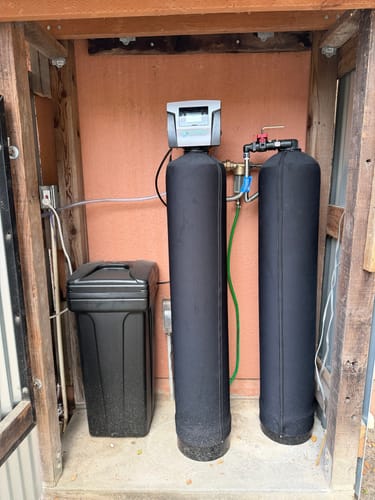
Once you've got your water test results in hand, everything starts to come into focus. Manganese levels above 0.05 mg/L signal aesthetic problems—staining, metallic taste—while anything exceeding 0.3 mg/L raises genuine health concerns, especially for children.
But the concentration isn't the only number that matters. The form of manganese present is equally critical. Dissolved manganese requires oxidation before it's removable, so your treatment approach changes depending on what the certified lab results reveal.
If your levels demand intervention, oxidizing or greensand filters are your primary tools—but they only perform effectively at the right pH. Adjust accordingly.
Then commit to regular monitoring and maintenance, because water chemistry shifts over time, and your system needs to keep pace with those changes.
Which Filters Remove Both Iron and Manganese?
Knowing your manganese levels and form is only half the battle—you also need the right filter to act on that information. Different systems target different conditions, so matching the filter to your water chemistry matters enormously.
| Filter Type | Best For | Key Requirement |
|---|---|---|
| Manganese Greensand | Dissolved & oxidized iron/manganese | Oxidation + regeneration |
| Birm | Low-to-moderate iron/manganese | Adequate dissolved oxygen |
| Filox | High concentrations | Regular backwashing |
Water softeners handle un-precipitated manganese but need pairing with other treatments. Aeration combined with chlorine or hydrogen peroxide tackles higher concentrations before filtration. Each system has a ceiling—push past it and performance drops fast. Knowing where your numbers land tells you exactly which solution earns its place in your treatment train.
Where Greensand and Katalox Filters Hit Their Limits
Greensand and Katalox filters both punch well above their weight, but they're not limitless. Greensand handles manganese up to 10 mg/L, while Katalox pushes that ceiling to 15 mg/L. Beyond those thresholds, you're looking at accelerated clogging and shortened filter life.
pH is another critical factor. Both systems depend on elevated pH for effective manganese oxidation. Drop below 7, and removal efficiency declines noticeably.
Maintenance adds complexity too. Greensand requires potassium permanganate regeneration—a chemical that's tricky to handle safely, making it less practical for residential settings.
Katalox demands consistent backwashing to stay effective.
When manganese levels are severe or persistent, a single filter won't cut it. Combining treatment methods or exploring alternative systems becomes the smarter, more sustainable path forward.
How to Choose the Right Treatment for High Manganese
Choosing the right manganese treatment starts with understanding what you're actually dealing with—specifically, whether the manganese is dissolved or already oxidized, and how concentrated it is. That distinction drives everything.
For moderate levels between 3 and 10 mg/L, oxidizing filters like manganese greensand combine oxidation and filtration efficiently.
But you'll also want to check your pH—manganese removal works best above 7.0, so low pH can quietly undermine an otherwise solid system.
Once concentrations exceed 10 mg/L, you're beyond what most oxidizing filters handle reliably.
Chlorination followed by filtration, or advanced oxidation methods, become necessary.
And regardless of which system you choose, consistent maintenance—backwashing and replenishing treatment chemicals—keeps performance from degrading over time.
The right choice only stays right if you maintain it.
Frequently Asked Questions
How to Get Rid of High Manganese in Well Water?
We recommend using oxidizing or greensand filters for manganese levels above 0.05 mg/L. For concentrations exceeding 10 mg/L, we'll need chlorine or hydrogen peroxide oxidation paired with filtration for effective removal.
Will an Iron Filter Remove Manganese?
Yes, an iron filter can remove manganese, but it's most effective when manganese is already oxidized. We'll need pre-treatment methods like chlorine or potassium permanganate for dissolved manganese to guarantee maximal filtration performance.
How to Reduce Iron and Manganese in Water?
We'll tackle iron and manganese by first testing our water, then selecting oxidizing filters for higher concentrations or water softeners for lower levels, while maintaining regular backwashing and monitoring pH consistently.
Does Hydrogen Peroxide Remove Manganese?
Yes, hydrogen peroxide removes manganese by oxidizing it into a solid form that's easy to filter out. We recommend ensuring adequate contact time and pairing it with proper filtration for the best results.






