


![SoftPro™ Chlorine+ Carbon Whole House Water Filter to Remove PFAS, Chlorine, Chloramine & Pesticides [City Water Filters Series]](http://www.softprowatersystems.com/cdn/shop/files/SoftPro_Whole_House_Carbon_Filter_with_Spin_Down_Water_Filter.webp?v=1783547361&width=140)


 855-683-8488


How Activated Carbon Iron Filter Water Treatment Works — And Why It's the Missing Piece in Most Systems

Most water systems miss dissolved ferrous iron entirely — it's invisible and tasteless until the damage is done. Activated carbon iron filters work differently. They use adsorption to capture iron at a molecular level, pulling contaminants onto a massive carbon surface like a magnet. They also eliminate chlorine, VOCs, and heavy metals simultaneously. It's a smarter, more thorough approach — and understanding exactly how it works changes everything about how you'll protect your water.
Key Takeaways
- Activated carbon filters use adsorption to capture dissolved ferrous iron at a molecular level, unlike standard filters that miss this invisible form.
- Most water systems only target particulate ferric iron, leaving dissolved ferrous iron untreated and causing rust stains and plumbing corrosion.
- Beyond iron removal, activated carbon simultaneously eliminates chlorine, VOCs, heavy metals, and chloramine for comprehensive water treatment.
- Carbon filters remove organic material that feeds iron bacteria, preventing foul odors and pipe-clogging bacterial growth.
- Longer water contact time with carbon media improves contaminant binding, making these systems more effective than conventional iron filters.
Why Most Water Systems Fail to Catch Iron Contamination

When it comes to iron contamination, most water treatment systems are fundamentally flying blind.
They're built to catch sediment and broad contaminants—but dissolved ferrous iron? It slips right through.
Here's why that matters: iron exists in two distinct forms.
Iron doesn't play by one set of rules. It shapeshifts—and most treatment systems only know how to fight one form.
Ferrous iron is fully dissolved, invisible to the naked eye, and nearly undetectable without proper testing.
Ferric iron is particulate—visible, rust-colored, easier to trap.
Most systems can't distinguish between them, let alone treat both effectively.
The result? Rust stains in your toilets, sinks, and laundry.
Worse, untreated iron gradually corrodes plumbing infrastructure, turning a manageable water quality issue into a costly structural problem.
Standard sediment filters and reverse osmosis systems simply weren't designed for this fight.
What Iron Does to Your Water Quality and Household Plumbing
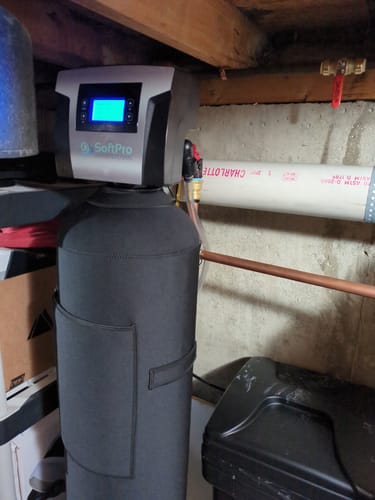
Iron's impact on your home runs deeper than the occasional rust stain in your toilet bowl. We're talking about a slow, compounding problem that quietly degrades your water quality, fixtures, and plumbing infrastructure simultaneously.
| Iron Effect | Consequence |
|---|---|
| Metallic taste | Reduced water palatability |
| Staining on surfaces | Costly cleaning and replacement |
| Iron bacteria growth | Foul odors and clogged pipes |
| Pipe deposit accumulation | Reduced water flow and pressure |
| Levels above 0.3 mg/L | Treatment typically required |
Once iron bacteria colonize your plumbing, they create biofilms that trap debris and accelerate corrosion. At concentrations above 1 mg/L, you're not just dealing with aesthetics — you're facing legitimate infrastructure damage that compounds over time.
How Activated Carbon Iron Filters Remove Iron and Other Contaminants
So now that we've seen what iron does to your plumbing and water quality, the obvious question is: what actually stops it?
Activated carbon iron filters work through adsorption — a process where dissolved iron, manganese, and other contaminants are magnetically drawn to the carbon's massive surface area as water passes through.
Think of it like a microscopic trap: millions of pores capturing what ordinary filters miss.
But iron isn't the only target. These filters simultaneously eliminate VOCs, heavy metals, and chlorine — making them genuinely multi-functional rather than single-purpose solutions.
The secret weapon? Contact time.
The longer water interacts with the carbon, the more thoroughly contaminants bind to it.
That's what separates an effective system from one that merely looks good on paper.
Activated Carbon vs. Standard Iron Filters: Key Differences
Standard iron filters do one thing well — pull iron out of your water — but activated carbon filters play an entirely different game.
While standard filters rely on oxidation or basic filtration, activated carbon uses adsorption across a surface area exceeding 1,000 m²/g, capturing contaminants at a molecular level.
Here's what that difference means for you: activated carbon doesn't just target iron. It strips out chlorine, heavy metals, VOCs, and chloramine — the culprits behind bad taste and odor that standard filters completely ignore.
It even starves bacteria by removing the organic material they feed on.
Standard filters solve one problem. Activated carbon solves many.
That's not a minor upgrade — it's a fundamentally smarter approach to whole-water quality.
How to Choose the Right Activated Carbon Iron Filter
Now that we recognize activated carbon does more heavy lifting than a standard iron filter, the next question is which one actually belongs in your home.
Start with iron concentration — groundwater ranges from 0.3 mg/L to over 5 mg/L, so your filter must match your specific load.
Next, prioritize dual-function systems that tackle both taste and sediment simultaneously.
Don't skip certification — NSF/ANSI-verified filters confirm real performance, not marketing claims.
Flow rate matters too; look for systems handling 10–24 m³/h to meet actual household demand without pressure drops.
Finally, think long-term: quality filters use easily replaceable components and need only annual maintenance.
Each factor compounds the next — get one wrong, and the whole system underperforms.
Frequently Asked Questions
What Are the Disadvantages of an Activated Carbon Filter?
Activated carbon filters can't remove minerals, viruses, or bacteria, and they'll saturate over time, releasing contaminants back into your water. We're also looking at reduced flow rates and costly, frequent replacements.
How Does Activated Carbon Work to Filter Water?
Activated carbon filters water through adsorption — contaminants cling to the carbon's massive surface area via van der Waals forces. The longer water contacts the carbon, the more impurities, VOCs, and chlorine we'll capture.
How Does an Iron Water Filter Work?
We oxidize dissolved iron first, converting it from liquid to solid particles. Then we trap those particles through filtration media, leaving you with clearer, cleaner water that won't stain your fixtures or laundry.
Do Carbon Water Filters Actually Work?
Yes, carbon water filters truly work—they'll trap chlorine, VOCs, and pesticides through adsorption, reducing chlorine by up to 99%. We're talking measurable results that transform your water's taste, smell, and safety.






