


![SoftPro™ Chlorine+ Carbon Whole House Water Filter to Remove PFAS, Chlorine, Chloramine & Pesticides [City Water Filters Series]](http://www.softprowatersystems.com/cdn/shop/files/SoftPro_Whole_House_Carbon_Filter_with_Spin_Down_Water_Filter.webp?v=1783547361&width=140)


 855-683-8488


How Your Iron Filter Size Directly Affects Household Water Pressure — And How to Optimize It

Your iron filter's size directly controls your home's water pressure — get it wrong, and you can drop flow rates from 60 liters per minute down to just 20–25. An undersized filter creates a bottleneck that drags pressure down 20–30% during peak demand, hitting every fixture at once. The fix involves matching filter capacity to your household size, placement after the pressure tank, and regular backwashing — and we're breaking down exactly how to get each one right.
Key Takeaways
- An undersized iron filter creates a bottleneck, dropping flow rates by 20–30% during peak demand and reducing pressure across all fixtures.
- Correct filter sizing maintains flow rates of 20–25 liters per minute, ensuring adequate pressure throughout your home.
- Match filter capacity to household size: small homes need 30 L/min, medium need 45 L/min, and large homes need 60+ L/min.
- Install your iron filter after the pressure tank to preserve system pressure and prevent backflow damage.
- Backwash your filter at least weekly to flush iron buildup, maintaining consistent water pressure and extending system lifespan.
Why Iron Filter Size Controls Your Home's Water Pressure

When it comes to your home's water pressure, the size of your iron filter matters more than most people realize. Choose the right size, and you'll enjoy steady flow rates of 20–25 liters per minute.
Choose wrong, and you're looking at flow dropping to as low as 7–15% of normal capacity — a frustrating reality during peak usage when multiple fixtures compete simultaneously.
Here's what most homeowners miss: iron filters need a minimum of 30–40 PSI to effectively remove contaminants like iron and manganese. Fall below that threshold, and performance suffers across the board.
Pairing appropriately sized filters with larger diameter pipes eliminates bottlenecks before they start. Size isn't just a technical detail — it's the foundation of a high-performing water system.
How Undersized Iron Filters Strangle Flow Rates
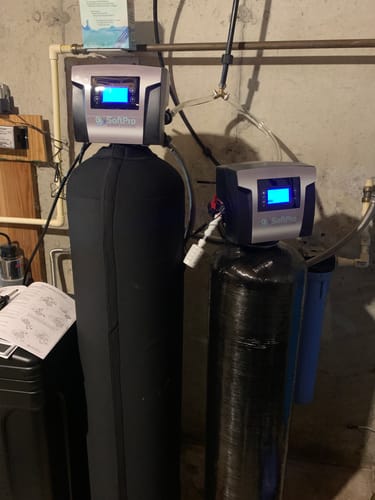
Undersized iron filters choke your water supply fast — dropping flow rates from a healthy 60 liters per minute down to a sluggish 20–25.
That's not a minor inconvenience; it's a system-wide stranglehold affecting every fixture simultaneously.
Here's what's actually happening inside your plumbing:
- Bottleneck effect: Undersized filters create pressure drops of 20–30% during peak demand — exactly when you need performance most.
- Backpressure buildup: Air injection and venturi systems amplify resistance, compounding flow restrictions markedly.
- Multi-fixture collapse: Pressure loss cascades across your entire home when multiple outlets run simultaneously.
- Maintenance won't save you: Even perfectly backwashed undersized filters can't overcome poor sizing — correct specification must happen upfront.
The fix isn't maintenance.
It's proper sizing from day one.
How to Choose the Right Iron Filter Size for Your Home
Knowing what breaks a system is only half the battle — here's how we actually fix it with the right sizing from the start. Match your filter to actual household demand, not guesswork.
| Household Size | Iron Level | Recommended Flow Rate |
|---|---|---|
| Small (1-2 people) | Low | 30 L/min |
| Medium (3-4 people) | Moderate | 45 L/min |
| Large (5+ people) | Elevated | 60+ L/min |
High-demand homes need filters supporting at least 60 liters per minute to avoid that 20-30% pressure drop we've discussed. Install your filter after the pressure tank and use larger pipe connections to maintain flow integrity. Plan for backwashing cycles and budget for media replacement every 3-5 years — sustained efficiency depends on it.
Where to Install Your Iron Filter for Maximum Pressure
Placement makes or breaks your iron filter's performance — and we've found that installing it after the pressure tank is the single most effective way to protect your water pressure.
Pre-tank installation invites backflow risks and system damage you simply don't want.
Here's what smart placement requires:
- Post-tank positioning preserves system pressure and prevents backflow from compromising filtration efficiency
- Drain access nearby enables proper backwashing, keeping your filter performing at peak capacity
- Pipe size, flow rate, and water pressure must align with your filter's specs for ideal operation
- Captive-air pressure tanks paired with correctly positioned filters actively reduce iron sludge accumulation
Get the location right, and your entire system rewards you with consistent pressure and cleaner water.
How Often to Backwash Your Iron Filter to Hold Pressure
Everything about your iron filter's pressure performance comes down to one maintenance habit: backwashing. Skip it, and you'll watch pressure drop steadily as contaminants clog your filtration media.
Stay consistent, and your system performs exactly as designed.
We recommend backwashing at least once weekly as your baseline. However, if your water carries high iron concentrations, you may need to backwash every few days.
Don't guess — let your pressure gauges tell the story. Compare readings before and after each backwashing cycle to confirm you're restoring full filtration effectiveness.
Think of backwashing as resetting your filter's performance clock. Each cycle flushes accumulated iron buildup, prevents pressure loss during peak demand, and extends your system's lifespan.
Master this habit, and consistent household pressure becomes predictable rather than problematic.
Frequently Asked Questions
What Happens if Your Water Pressure Does a House Is 160 Psi?
If your home's water pressure hits 160 PSI, we're talking serious trouble — it'll wear out pipes, damage fixtures, and wreck your iron filter's media fast, demanding a pressure regulator immediately.
Can a Whole House Filter Cause Low Water Pressure?
Yes, a whole house iron filter can cause low water pressure. We're seeing this happen when the filter's undersized, the media's clogged, or air injection components create extra resistance throughout your system.
How to Regain Water Pressure in House?
We'll regain your water pressure by properly sizing your iron filter, scheduling regular backwashing, installing pressure gauges, upgrading pipe diameters, and positioning the filter after your pressure tank for ideal flow.
How Do You Size an Iron Filter?
We'll size an iron filter by measuring your peak water demand in GPM and testing iron concentration levels. Higher iron content demands larger systems, while matching filter capacity to pressure tanks optimizes flow performance.






