


![SoftPro™ Chlorine+ Carbon Whole House Water Filter to Remove PFAS, Chlorine, Chloramine & Pesticides [City Water Filters Series]](http://www.softprowatersystems.com/cdn/shop/files/SoftPro_Whole_House_Carbon_Filter_with_Spin_Down_Water_Filter.webp?v=1783547361&width=140)


 855-683-8488


How Iron Filters Remove Hydrogen Sulfide and Eliminate That Rotten Egg Smell Permanently

That rotten egg smell in your water comes from hydrogen sulfide gas, and it's more common than you'd think. Iron filters tackle it by using oxidation to convert the gas into solid sulfur particles, which get trapped and flushed out of your system entirely. The result is water that smells clean, tastes better, and stops damaging your pipes. Stick with us and we'll show you exactly how to make that fix permanent.
Key Takeaways
- Iron filters use oxidation to convert hydrogen sulfide gas into solid sulfur particles, which are then trapped and removed from water entirely.
- The rotten egg smell in water is caused by hydrogen sulfide gas, detectable at concentrations as low as 0.5 mg/L.
- For hydrogen sulfide levels over 1 ppm, manganese dioxide filters provide more effective removal than standard activated carbon filters.
- Multi-stage whole-house filtration systems handle complex water issues, ensuring thorough hydrogen sulfide elimination for permanent odor control.
- Regular maintenance, including media replacement and backwashing, sustains filter efficiency and ensures long-term hydrogen sulfide removal performance.
What Causes That Rotten Egg Smell in Your Water?

That unmistakable rotten egg smell coming from your tap is hydrogen sulfide gas — and it's not just unpleasant, it's a warning sign.
That rotten egg smell from your tap isn't just unpleasant — it's hydrogen sulfide gas, and it's warning you.
Sulfur-reducing bacteria thrive in low-oxygen environments like groundwater and wells, producing this gas as they break down organic matter in stagnant conditions.
Here's what makes it particularly problematic: your nose detects hydrogen sulfide at concentrations as low as 0.5 mg/L. At higher levels, it becomes toxic and flammable.
Meanwhile, dissolved in your water, it's quietly corroding your pipes and leaving greasy yellow or black stains from metallic sulfides.
Notice the smell intensifying from your hot water? That's hydrogen sulfide reacting inside your water heater.
The bacteria have colonized your system — and that changes everything about how we need to treat it.
How Iron Filters Remove Hydrogen Sulfide From Your Water
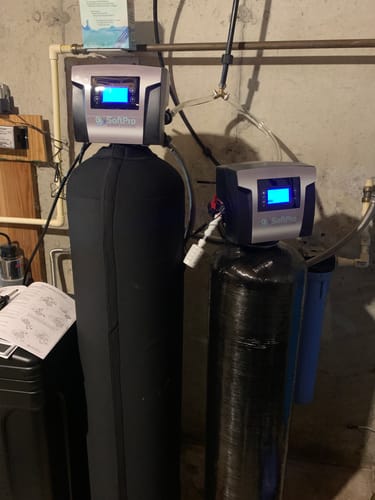
Iron filters tackle hydrogen sulfide through a straightforward chemical reaction: oxidation. When water passes through the filter, oxygen reacts with dissolved hydrogen sulfide gas, converting it into solid sulfur particles. Those particles can't stay suspended — they get trapped and filtered out entirely.
What makes this process so effective is that we're not just masking the problem. We're physically transforming the contaminant into something removable.
Many advanced systems add multiple filtration stages, which means even stubborn hydrogen sulfide concentrations don't stand a chance.
The result? Your water loses that rotten egg smell completely, and the taste improves dramatically.
Iron filters also pull excess iron from your water simultaneously, solving two common problems in one system. It's efficient, reliable, and built for long-term results.
What an Iron Filter Actually Does to Your Pipes, Appliances, and Skin
Cleaner water sounds great in theory, but what does it actually mean for everything the water touches? Once iron and hydrogen sulfide are oxidized and filtered out, the downstream effects are significant.
| Area | Problem Solved | Real Benefit |
|---|---|---|
| Pipes | Corrosion and scaling | Extended plumbing lifespan |
| Appliances | Rust and mineral build-up | Reduced maintenance costs |
| Skin | Irritating iron and sulfur | Healthier bathing experience |
Your sinks stay stain-free, your laundry avoids those stubborn reddish-brown marks, and your water heater isn't fighting dissolved metals anymore. We're talking about real, measurable protection. Your skin also stops absorbing those irritating compounds every shower. Filtered water doesn't just taste better—it actively preserves what it touches.
Which Iron Filter Is Right for Your Hydrogen Sulfide Levels?
Choosing the right filter comes down to one thing: how much hydrogen sulfide is actually in your water.
Test your levels first—everything depends on that number. Then match your solution accordingly:
Know your hydrogen sulfide levels before anything else—that single number determines every filtration decision that follows.
- ~1 ppm or lower – Activated carbon filters handle mild odors cost-effectively, though you'll need regular media replacements.
- Over 1 ppm – Manganese dioxide filters oxidize hydrogen sulfide into removable solid particles, making them far more effective at higher concentrations.
- Complex water issues – Whole-house systems combining oxidation and multi-stage filtration eliminate both iron and hydrogen sulfide simultaneously.
We also recommend prioritizing systems with automatic backwashing—it dramatically reduces maintenance while keeping performance consistent.
The right match between your water's chemistry and your filter's capability is what delivers permanent results.
How to Maintain Your Iron Filter So It Keeps Removing Sulfur
Once you've matched the right filter to your water chemistry, keeping it running well is where the real payoff lives. Neglect the maintenance, and that rotten egg smell creeps back fast.
Here's what we recommend tracking:
| Task | Frequency | Purpose |
|---|---|---|
| Check/replace filter media | Per manufacturer specs | Sustain peak hydrogen sulfide removal |
| Monitor pressure & flow rates | Monthly | Catch problems before they escalate |
| Clean filter housing | Quarterly | Prevent clogs and buildup |
Beyond the table, we also inspect for cracks, leaks, and backwash regularly to clear debris. Chemical filters need bleach added on schedule to keep sulfur compounds and bacteria controlled.
Stay consistent, and your filter rewards you with permanently odor-free water.
Frequently Asked Questions
Will an Iron Filter Remove Sulfur Smell?
Yes, an iron filter will remove that rotten egg sulfur smell! It oxidizes hydrogen sulfide gas into solid particles, filtering them out completely. We've seen it transform water quality, delivering fresh, odor-free results you'll love permanently.
What Filter Gets Rid of Rotten Egg Smell?
We recommend iron filters or manganese dioxide filters to eliminate that rotten egg smell. They oxidize hydrogen sulfide, converting it into solid particles that get captured, leaving your water fresh and odor-free permanently.
What Neutralizes Rotten Egg Smell?
We neutralize rotten egg smell using activated carbon, manganese dioxide filters, or aeration methods. Each tackles hydrogen sulfide differently—adsorbing, oxidizing, or releasing the gas—permanently restoring your water's freshness and eliminating that unpleasant odor for good.
Does Iron Cause Rotten Egg Smell?
Iron doesn't directly cause that rotten egg smell—hydrogen sulfide does. But when iron's present alongside sulfur bacteria, it intensifies the odor problem, making your water smell far worse than it otherwise would.






