


![SoftPro™ Chlorine+ Carbon Whole House Water Filter to Remove PFAS, Chlorine, Chloramine & Pesticides [City Water Filters Series]](http://www.softprowatersystems.com/cdn/shop/files/SoftPro_Whole_House_Carbon_Filter_with_Spin_Down_Water_Filter.webp?v=1783547361&width=140)


 855-683-8488


How Long Can You Skip Iron Filter Backwash Before Serious Problems Start? The Honest Answer

Skipping your iron filter backwash for more than 2-4 weeks is where minor neglect crosses into serious, costly damage territory. If your water has iron levels above 5 ppm, that window shrinks dramatically to just 1-3 days. We've seen sediment suffocate filter media, pressure drop below 30 psi, and rust stains appear faster than most homeowners expect. The good news? Understanding exactly what's happening inside your filter changes everything about how you maintain it.
Key Takeaways
- Skipping iron filter backwash for 2-4 weeks causes contaminant buildup, decreased efficiency, and can transform simple maintenance into costly repairs.
- Iron levels above 5 ppm cause rapid media clogging within days, requiring backwashing every 1-3 days to maintain functionality.
- A significant pressure drop below 30 psi signals blockage issues, indicating backwashing is critically overdue.
- Neglecting backwash cycles causes iron and sediment accumulation, reducing flow, declining pressure, and promoting bacteria growth and odors.
- High-iron environments above 5 ppm can cut filter media lifespan from 6-8 years down to just 3 years.
How Long You Can Actually Skip Iron Filter Backwash

How long can we actually get away with skipping iron filter backwash before things go sideways? Honestly, not long.
Within just 2-4 weeks of neglect, contaminants begin accumulating, filter efficiency drops, and water pressure starts suffering. That's a remarkably short window.
In high-iron environments, the timeline shrinks even further. Weekly backwashing becomes necessary, and skipping even a few cycles can initiate media damage that's expensive to reverse.
Here's our early warning system: watch the pressure gauge. A significant drop signals that backwashing is overdue and the system's integrity is already compromised.
The bottom line? We're not talking months of wiggle room. We're talking weeks before neglect transforms a simple maintenance task into a costly repair situation we'd rather avoid entirely.
What Iron and Sediment Buildup Does to Your Filter's Efficiency
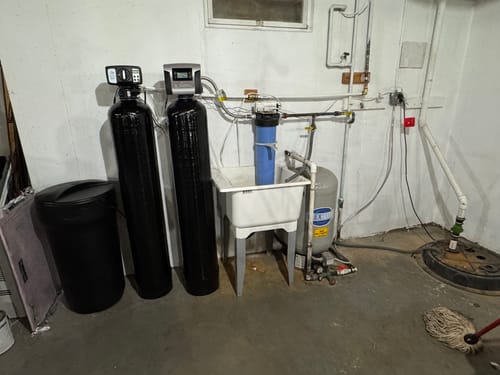
When iron and sediment start piling up inside your filter, 3 specific problems emerge almost simultaneously: flow drops, pressure weakens, and filtration quality tanks.
When iron and sediment build up, three problems hit fast: flow drops, pressure fades, and water quality suffers.
Iron particles clog your injector assembly first, forcing your system to work harder while delivering less. Meanwhile, sediment smothers your filtration media, making clean, clear water increasingly difficult to produce.
Here's what stings most: once iron levels exceed 5 ppm, your filter media's lifespan shrinks from 6-8 years down to roughly 3. You're fundamentally cutting your investment in half through neglect.
The compounding effect accelerates quickly. Reduced flow creates stagnant pockets where bacteria thrive and sulfur odors develop.
What started as a minor maintenance skip transforms into a costly, system-threatening situation that demands expensive intervention.
Why High Iron Water Shrinks Your Safe Skip Window
Iron concentration is the single biggest factor that determines how long you can safely skip a backwash cycle — and high iron water shrinks that window fast. When iron levels climb above 5 ppm, your filter media clogs within days, not weeks. We're talking backwash intervals of every one to three days just to keep things functional.
Skip those cycles, and you'll face reduced flow, dropping pressure, staining, and foul odors — all signs your system is losing the battle.
Worse, neglected backwashing in high-iron environments doesn't just hurt performance now; it accelerates wear on your media and components, cutting their lifespan to as little as three years.
High iron water demands respect. The safe skip window isn't flexible — it's tight, and it shrinks faster than most homeowners expect.
Pressure Drops, Rust Stains, and Other Signs Your Iron Filter Is Failing
Knowing your skip window is shrinking is one thing — recognizing when it's already too late is another. Your filter sends clear distress signals when it's failing.
Watch for pressure drops below 30 psi — that's your system screaming "blockage." Notice rust stains creeping across your sinks, bathtubs, or laundry? That's iron breaking through a filter that's stopped doing its job.
Pressure drops and rust stains aren't quirks — they're your filter waving a white flag.
Catch a rotten egg smell? Sulfur bacteria have moved in. These aren't minor inconveniences — they're warnings that your system is deteriorating fast. Irregular regeneration cycles follow, efficiency collapses, and suddenly you're not facing a backwash conversation anymore.
You're facing repair bills or a full system replacement. The signs are always there. The question is whether you're paying attention.
The Iron Filter Backwash Schedule That Prevents Costly Repairs
Once you've seen the warning signs, the fix is straightforward — build a backwash schedule and stick to it.
For most homes, that means backwashing every 2-4 weeks. But if your iron levels exceed 5 ppm, you'll need to bump that up dramatically — sometimes every 1-3 days.
We've watched homeowners stretch those intervals, thinking they're saving time. They're not.
Skipped cycles trigger pressure drops, contamination, and repairs that dwarf the effort a proper schedule requires.
Here's the payoff for doing it right: filtration media lasts 15-20 years with consistent maintenance.
Neglect it, and you're replacing components years ahead of schedule.
Test your water regularly.
Let those results drive your frequency.
That single habit keeps your system running efficiently and your repair bills predictably low.
Frequently Asked Questions
How Often Should an Iron Filter Backwash?
We recommend backwashing your iron filter every 2-4 weeks, but if your iron levels exceed 5 ppm, you'll need to increase that to every 1-3 days to prevent costly clogs and pressure loss.
What Happens if You Don't Backwash?
If you skip backwashing, you'll face clogged filters, dropping water pressure, and iron buildup that destroys your filtration media. Eventually, you're looking at compromised water quality, costly repairs, or complete system failure.
How Long Should a Backwash Cycle Be?
We recommend running your backwash cycle for 10 to 15 minutes. That window gives your system enough time to fully flush accumulated iron and debris, ensuring you're restoring peak filter performance every single cycle.
What Comes First, Rinse or Backwash?
Backwash always comes first. We dislodge and flush out trapped contaminants before rinsing. Then we rinse immediately after to clear residual debris and resettle the media, ensuring your filter returns to peak performance.






