


![SoftPro™ Chlorine+ Carbon Whole House Water Filter to Remove PFAS, Chlorine, Chloramine & Pesticides [City Water Filters Series]](http://www.softprowatersystems.com/cdn/shop/files/SoftPro_Whole_House_Carbon_Filter_with_Spin_Down_Water_Filter.webp?v=1783547361&width=140)


 855-683-8488


How Much Iron in Drinking Water Is Safe? EPA Standards Fully Explained for Well Owners

The EPA sets iron's safe limit at 0.3 mg/L for drinking water, but here's what surprises most well owners — that standard is purely aesthetic, not a health threshold. Iron can actually affect your water's taste at just 0.05 mg/L, well below the legal limit. It can stain fixtures, feed bacterial growth, and quietly damage your plumbing over time. Stick with us and we'll break down exactly what these numbers mean for your well.
Key Takeaways
- The EPA sets the iron limit at 0.3 mg/L, but this standard addresses aesthetic concerns like taste and staining, not direct health risks.
- Iron affects water flavor at levels as low as 0.05 mg/L, well below the EPA's established limit.
- Iron is classified as a secondary contaminant, meaning elevated levels pose nuisance conditions rather than immediate health threats.
- Well owners should test water every five years, including iron bacteria, pH, and alkalinity, for a complete chemistry profile.
- Treatment options include oxidation filtration, water softeners, and reverse osmosis systems, depending on iron type and concentration.
How Iron Gets Into Your Well Water

When you turn on your tap and notice that telltale rusty tint or metallic smell, iron is likely the culprit — but where's it actually coming from? Iron enters your well through several pathways worth understanding.
First, groundwater naturally dissolves iron as it moves through iron-rich soils and rock formations, typically accumulating under 10 mg/L.
Second, if your plumbing includes aging iron pipes, corrosion quietly releases iron directly into your water supply.
Shallow wells face even greater exposure, drawing from less-filtered groundwater closer to the surface.
Finally, municipal distribution issues can occasionally push iron contamination into private wells.
Knowing these entry points isn't just interesting — it's essential for diagnosing your specific situation and choosing the right treatment strategy.
What the Epa's 0.3 Mg/L Iron Standard Actually Means
Even more telling? Iron affects flavor at just 0.05 mg/L — six times below the official limit.
So your water can technically "pass" EPA standards while tasting noticeably metallic.
Beyond taste, elevated iron fuels bacterial growth and biofilm buildup in your plumbing.
For well owners, understanding what this standard doesn't protect against is just as important as knowing what it does.
Is Iron in Your Well Water Dangerous to Your Health?
So how dangerous is iron in your well water, really? The short answer: for most people, it's not a direct health threat. The EPA classifies iron as a secondary contaminant, meaning its standards target aesthetic concerns—metallic taste, staining, discoloration—rather than toxicity.
That said, we shouldn't dismiss elevated iron entirely. High concentrations encourage iron bacteria growth, which compromises plumbing integrity and indirectly affects water quality.
There's also evidence that prolonged skin exposure to high-iron water—through soap residue buildup—can cause irritation and accelerated skin aging.
The critical threshold is 0.3 mg/L. Above that, you're dealing with nuisance conditions that can escalate into bigger problems.
How Do You Test Your Well Water for Iron?
Knowing iron is a problem worth addressing is one thing—confirming how much of it's actually in your water is another.
Here's how to get accurate answers:
- Collect samples near your well's source point for reliable results.
- Send samples to a certified lab—health departments and accredited laboratories offer inorganic chemical tests built for this.
- Test beyond iron alone—include iron bacteria, pH, and alkalinity to understand your water's full chemistry profile.
- Repeat every five years—private well owners should treat this as routine maintenance, not a one-time check.
Levels above 0.3 mg/L are considered objectionable, and discoloration—yellow, red, or brown—often signals you're already there.
Don't guess; test.
What Are Your Best Options for Treating Iron in Well Water?
Once you've confirmed iron is in your well water, the next step is choosing the right fix—and the good news is you have solid options.
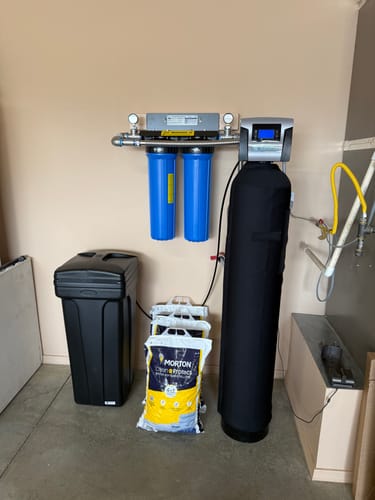
For dissolved ferrous iron, oxidation followed by filtration is your most reliable whole-house approach—it neutralizes iron before it can stain your fixtures or cloud your water.
Water softeners and oxidizing filters tackle widespread issues throughout the home effectively. If your concern is specifically drinking water, a point-of-use reverse osmosis system installed in your kitchen delivers targeted iron reduction right at the tap.
But here's what matters most: iron comes in different forms, and your water's chemistry shapes everything.
Working with a water treatment professional guarantees you're matching the right solution to your specific problem—not just guessing.
Frequently Asked Questions
What Is a Safe Iron Level in Drinking Water?
We recommend keeping iron levels below 0.3 mg/L, as the EPA suggests. However, problems can emerge at just 0.05 mg/L, so we'd encourage testing your well water regularly to stay ahead of potential issues.
Is It Safe to Drink Water With a Lot of Iron in It?
While iron isn't typically a direct health hazard, we don't recommend drinking water with high iron levels. It promotes iron bacteria growth, causes plumbing issues, and delivers an unpleasant metallic taste you'll definitely notice.
How Much Is Too Much Iron in Your Water?
We recommend keeping iron below 0.3 ppm—that's the EPA's threshold. But you'll notice problems starting at just 0.05 ppm, where discoloration and metallic tastes begin affecting your water's quality.
How to Tell if Your Water Has Iron in It?
We can spot iron in our water by watching for yellow, brown, or red discoloration, noticing metallic tastes, seeing reddish stains on fixtures, or detecting plumbing clogs caused by iron bacteria growth.






