


![SoftPro™ Chlorine+ Carbon Whole House Water Filter to Remove PFAS, Chlorine, Chloramine & Pesticides [City Water Filters Series]](http://www.softprowatersystems.com/cdn/shop/files/SoftPro_Whole_House_Carbon_Filter_with_Spin_Down_Water_Filter.webp?v=1783547361&width=140)


 855-683-8488


How Often Should Your Iron Filter Control Valve Actually Initiate a Backwash Cycle?

Your iron filter's control valve should initiate a backwash cycle every 2-7 days, but the exact frequency depends on your iron levels, filter media type, and household demand. Heavy iron contamination above 5 ppm needs backwashing every 2-3 days, while lower concentrations may only need weekly cycles. Getting this wrong leads to rust stains, pressure drops, and sulfur odors. Stick around, because there's a lot more to unpack about dialing in your system correctly.
Key Takeaways
- Heavy iron contamination above 5 ppm requires backwash cycles every 2-3 days to prevent media fouling and maintain filtration performance.
- Moderate iron levels between 1-5 ppm allow backwashing every 3-5 days without compromising water quality or filter efficiency.
- Low iron concentrations only require weekly backwashing, reducing water waste and minimizing wear on the control valve.
- Multiple simultaneous contaminants demand increased backwash frequency of every 1-2 days to prevent system fouling and rusty water.
- Schedule backwash cycles during off-peak household hours to avoid disrupting water demand and ensure thorough media cleaning.
How Iron Concentration Sets Your Backwash Frequency

Iron concentration is the single biggest factor that dictates how often we need to backwash our filters.
Here's how the math breaks down:
When iron exceeds 5 ppm, we're backwashing every 2-3 days—there's simply no negotiating with heavy contamination. At moderate levels between 1-5 ppm, we can stretch that cycle to every 3-5 days. Low iron concentrations? Once weekly handles it comfortably.
Heavy iron contamination demands backwashing every 2-3 days—moderate levels every 3-5, and low concentrations just once weekly.
But here's where it gets critical: multiple contaminants change everything. When we're dealing with iron plus other pollutants, that frequency jumps to every 1-2 days.
The real payoff isn't just cleaner water—it's longevity. Monitoring water chemistry and adjusting our backwash schedule accordingly greatly extends filter media lifespan, protecting our investment while maintaining peak filtration performance.
Which Filter Media Type Requires the Most Frequent Backwashing?
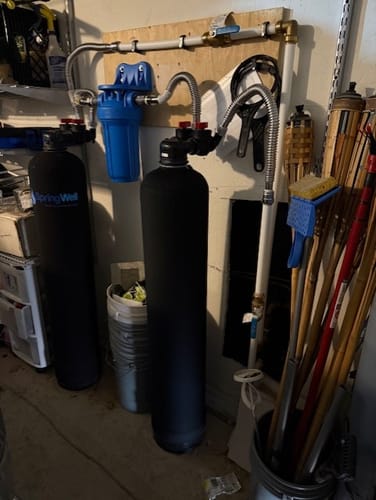
Beyond iron concentration, the type of filter media we're running plays an equally significant role in determining how often we need to backwash.
Catalytic media and Birm both demand the most aggressive backwash requirements—10-12 GPM per square foot—making them the highest-maintenance options we'll encounter. That's a meaningful operational consideration.
Green sand operates more forgivingly at 8-10 GPM per square foot, requiring less frequent backwashing than its catalytic counterpart.
If we're running catalytic media against high iron concentrations—particularly above 5 ppm—we're likely initiating backwash cycles every 2-3 days just to prevent fouling and maintain performance.
Understanding these media-specific requirements isn't optional; it's how we protect our system investment and consistently deliver clean water without guessing.
What Flow Rate Does Your Iron Filter Actually Need to Backwash Properly?
How much flow does it actually take to clean an iron filter effectively? For catalytic media, you'll need 10-12 gallons per minute (GPM) per square foot, while green sand requires a slightly lower 8-10 GPM per square foot.
These aren't arbitrary numbers—hitting the right flow rate is what actually lifts and separates trapped contaminants from the media bed.
The right flow rate isn't optional—it's what actually dislodges and flushes trapped contaminants from the media bed.
Here's something many people overlook: water temperature matters. Colder water causes media to expand, which can shift your required flow rate.
If you're not compensating for that, you're potentially under-cleaning your filter.
Your well pump must also match these requirements. If it can't deliver sufficient flow during backwash, you'll experience fouling over time.
Watch your pressure gauges—they'll tell you when something's off.
How Peak Household Demand Disrupts Your Backwash Schedule
Meeting those flow rate requirements is only half the battle—your backwash schedule also has to work around when your household actually uses water.
Most of us underestimate peak demand, and that mistake costs us. When multiple fixtures run simultaneously, your system needs 5–10 GPM just to keep up. If a backwash cycle initiates during that window, flow drops, media cleaning suffers, and iron builds up faster than the system can handle.
High iron levels already demand backwashing every 1–3 days. Miss that window because peak demand disrupted the cycle, and you're looking at fouled media and rusty water.
Test your flow during actual peak hours, then schedule backwashing around those patterns—not against them.
Warning Signs Your Iron Filter Isn't Backwashing Often Enough
There are 5 warning signs your iron filter isn't backwashing often enough, and catching them early saves you from fouled media and full system failure.
First, notice any rotten egg or sulfur odors—that's your filter failing to flush contaminants.
Second, rust stains or iron bleeding on fixtures tell you regeneration cycles aren't keeping pace with demand.
Third, declining water pressure throughout your home signals clogged media choking your flow.
Fourth, irregular or infrequent regeneration cycles mean your schedule has drifted dangerously off-target.
Fifth, inconsistent pressure gauge readings confirm media fouling before it becomes catastrophic.
We recommend monitoring these indicators consistently.
Each warning compounds the next, so addressing one early prevents a chain reaction that ultimately demands full media replacement.
Frequently Asked Questions
How Often Should an Iron Filter Backwash?
We recommend backwashing your iron filter every 1-5 days. If your iron levels exceed 5 ppm, you'll want to backwash every 2-3 days to prevent clogging and keep your filtration running efficiently.
How Often Should You Do a Backwash?
We recommend backwashing every 1-5 days, depending on your iron levels. High iron above 5 ppm? Backwash every 2-3 days. Moderate levels of 1-5 ppm? Every 3-5 days keeps your filter performing efficiently.
How Long Should a Backwash Cycle Be?
We recommend running your backwash cycle for 10-15 minutes to thoroughly clean your filter media. This window gives contaminants enough time to fully flush out, keeping your iron filter performing at peak efficiency.
What Is the Recommended Backwash Rate?
We recommend a backwash rate of 10-12 GPM per square foot for catalytic media, while green sand requires 8-10 GPM per square foot—hitting these targets guarantees we're thoroughly cleaning the media every cycle.






