


![SoftPro™ Chlorine+ Carbon Whole House Water Filter to Remove PFAS, Chlorine, Chloramine & Pesticides [City Water Filters Series]](http://www.softprowatersystems.com/cdn/shop/files/SoftPro_Whole_House_Carbon_Filter_with_Spin_Down_Water_Filter.webp?v=1783547361&width=140)


 855-683-8488


How Often to Replace Iron Filter Media — Real Costs and Timelines Broken Down by System Type

Iron filter media typically lasts 3–10 years, but that range shifts fast depending on your system type, iron levels, and daily water use. Above 0.3 mg/L of iron, media exhausts noticeably quicker. Replacement costs run anywhere from $200 to $900+, covering media, labor, and hidden fees. Knowing your warning signs early — staining, odors, pressure drops — saves you real money. We'll break it all down by system so you can plan smarter.
Key Takeaways
- Iron filter media typically lasts longer with moderate iron levels; concentrations above 0.3 mg/L accelerate exhaustion and require earlier replacement.
- Backwashing frequency, ranging from every 1–3 days, directly influences how often media needs full replacement.
- Red staining, low pressure, or rotten egg smells signal media failure, requiring immediate inspection and likely replacement.
- Media replacement costs range from $200–$500, with professional labor adding $150–$500, potentially totaling $900 or more.
- Annual professional inspections combined with routine monitoring help identify the optimal replacement schedule for your specific system type.
Why Iron Filter Media Wears Out

Even the best iron filter media doesn't last forever. Over time, suspended solids and biological matter accumulate inside the media bed, creating clogs that choke filtration efficiency.
Even the best iron filter media has a limit — eventually, clogs win and efficiency loses.
Think of it like a sponge that's absorbed everything it can — at some point, it simply can't do its job anymore.
Iron concentration plays a massive role here. Water testing above 0.3 mg/L accelerates media exhaustion considerably faster than lower-iron supplies.
Add high daily water consumption to that equation, and you're compounding the wear rate further.
Your media type matters too. AIO and catalytic carbon systems each respond differently to specific water chemistry, meaning identical conditions can produce very different lifespans.
Understanding these variables puts you in control of your system's performance and your replacement budget.
Warning Signs Your Iron Filter Media Is Failing
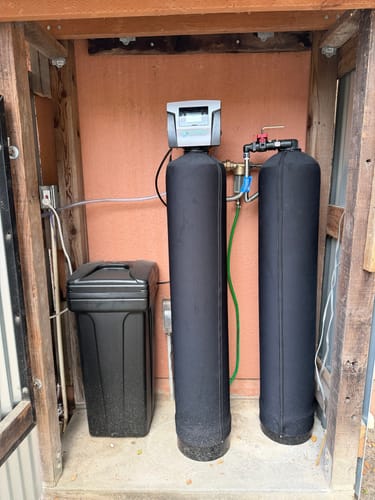
Catching media failure early can save you from costly damage and frustrating water quality problems. Watch for these five red flags:
| Warning Sign | What It Means | Action Required |
|---|---|---|
| Red staining on fixtures | Iron media is exhausted | Replace media immediately |
| Rotten egg smell | Filter failing to trap contaminants | Schedule media replacement |
| Consistently low water pressure | Media is clogged | Inspect and replace media |
| Regeneration cycle off schedule | Malfunctioning media | Evaluate and replace media |
| Iron levels exceeding 0.3 mg/L | Media is likely failing | Test and replace media |
We recommend testing your water monthly. If iron readings climb past 0.3 mg/L or regeneration isn't happening every 2–3 days, don't wait — act fast.
How Often You Actually Need to Replace It by System Type
Here's what actually drives the difference: backwashing frequency and iron concentration.
If you're backwashing every 1–3 days and keeping iron levels moderate, you'll consistently hit the longer end of any replacement range.
We recommend tracking your system type against your water's iron concentration — that combination tells you more than any general timeline.
Annual professional inspections sharpen that estimate further, catching exhaustion early before it costs you more.
Iron Filter Media Replacement Costs: Media, Labor, and Hidden Fees
Replacement costs catch most homeowners off guard — not because they're outrageous, but because they're layered. The media itself runs $200–$500 depending on type and quality. That's just the starting point.
Labor adds another $150–$500 for professional servicing. Then come the hidden fees most people never anticipate — installation permits alone can tack on $50–$200. Suddenly, a straightforward swap becomes a $900+ project.
Here's how we protect ourselves from that surprise: preventative maintenance visits ($100–$150 each) catch deteriorating media early, before emergency replacements become necessary.
We also want to factor in backwashing costs — roughly $15–$40 monthly in added utility bills.
Knowing these layers upfront lets us budget accurately, avoid sticker shock, and make smarter decisions about system longevity versus replacement timing.
DIY vs. Professional Replacement: Which Makes Financial Sense?
Now that we grasp what replacement costs look like, where exactly can we cut them ourselves — and where does professional help actually pay off?
DIY wins on routine tasks. Swapping sediment filters yourself drops costs from $50 to around $20 per change. Carbon cartridge replacements shift from $150+ annually to a manageable $60–$80.
DIY filter swaps cut costs significantly — sediment filters drop to $20, carbon cartridges to $60–$80 annually.
Backwashing and minor adjustments? Easily self-managed, trimming $100–$150 in annual servicing fees to under $50.
Media replacement is where it gets nuanced. Professional costs run $150–$500, but DIY savings depend heavily on your materials knowledge and comfort level.
Frequently Asked Questions
How Often Should I Replace Iron Filter Media?
We recommend replacing your iron filter media every 5–20 years, but don't wait for failure. Watch for red staining, low pressure, or rotten egg smells—they're your system's early warning signals.
How Much Does It Cost to Replace Iron Filter Media?
We're looking at $200–$600 for media itself, every 5–20 years. If you're hiring a pro, add $150–$500 for installation. DIY saves you 30–50%, making it the smarter, cost-effective choice.
What Is the Life Expectancy of an Iron Filter?
We'd expect your iron filter media to last 6–8 years on average, though quality media can push 20 years with proper backwashing and maintenance—high iron levels above 0.3 mg/L will shorten that lifespan considerably.
How Often Should an Iron Filter Regenerate?
We recommend regenerating your iron filter every 1–3 days, depending on your water's iron concentration. Higher iron levels demand more frequent cycles, while consistent monitoring helps us fine-tune timing for peak filtration efficiency.






