


![SoftPro™ Chlorine+ Carbon Whole House Water Filter to Remove PFAS, Chlorine, Chloramine & Pesticides [City Water Filters Series]](http://www.softprowatersystems.com/cdn/shop/files/SoftPro_Whole_House_Carbon_Filter_with_Spin_Down_Water_Filter.webp?v=1783547361&width=140)


 855-683-8488


How to Choose the Absolute Best Iron Filter and Water Softener Combination System for Your Well

Choosing the best iron filter and water softener combo starts with testing your well water first. You'll want to know your iron levels, manganese, and hardness before buying anything. We recommend professional testing ($50–$150) or a DIY kit ($25–$40) to eliminate guesswork. Iron filters should come before softeners in your setup, protecting the resin bed from damage. Stick around, and we'll walk you through everything you need to make a confident, informed decision.
Key Takeaways
- Test your well water before purchasing; professional tests cost $50–$150, while DIY kits range from $25–$40, ensuring accurate system selection.
- Iron filters should always precede water softeners in sequencing, protecting the resin bed from high iron concentrations that degrade softener efficiency.
- Choose systems with a minimum flow rate of 20 GPM and media lifespan of at least 5 years for reliable performance.
- Match your system to your water chemistry by identifying iron type—ferrous or ferric—since each requires different treatment approaches.
- Prioritize smart features like metered regeneration and automatic backwashing to optimize system performance and reduce long-term maintenance costs.
Test Your Well Water Before Choosing a Combo System

Before we spend a single dollar on a combination iron filter and water softener system, we need to know exactly what's in our well water. Testing isn't optional—it's the foundation of every smart purchasing decision we'll make.
Before spending a single dollar, test your well water first. Every smart purchasing decision starts there.
Here's what we're looking for: iron levels above 0.3 mg/L, manganese exceeding 0.05 mg/L, and hardness surpassing 7 grains. Each threshold signals a specific treatment need. Miss one, and we've bought the wrong system.
We have two testing routes. A professional test runs $50–$150 and delivers thorough results. DIY kits cost $25–$40 and handle the basics. Either way, we're buying critical intelligence—not just water data.
Without these numbers, we're guessing. With them, we're choosing with precision.
Why Well Water Needs Both an Iron Filter and Softener
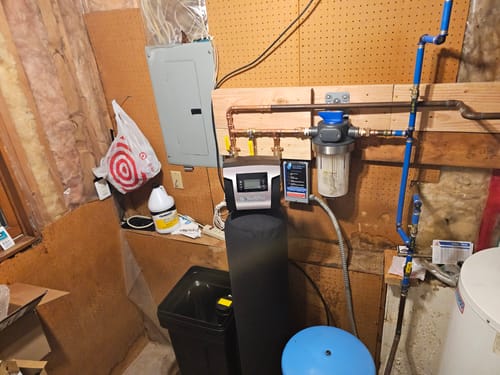
Once we comprehend what's lurking in our well water, the next question becomes: why can't one system handle everything? The honest answer is that iron and hardness are two distinct problems requiring specialized solutions.
Iron filters tackle ferrous and ferric iron—up to 10 PPM or more—preventing metallic taste, fixture staining, and bacterial growth.
Water softeners address hardness above 7 GPG, eliminating scale buildup that destroys appliances and plumbing.
Here's the critical piece: high iron concentrations actually sabotage a softener's resin bed, crippling its effectiveness over time. That's why sequencing matters—filter the iron first, then soften.
Together, these systems protect our investment, extend appliance lifespan, and deliver water that's genuinely clean, clear, and pleasant for drinking, cooking, and daily household use.
How Iron Filter and Water Softener Combos Actually Work
Understanding the mechanics behind these systems helps us make smarter purchasing decisions. These two technologies work as a tag team, each handling what the other can't.
Here's how it unfolds: water enters the iron filter first, where oxidation converts dissolved ferrous iron into solid particles. Filtration then captures those particles before they cause staining or damage.
Next, the softened water flows into the water softener, where ion exchange swaps calcium and magnesium for sodium, eliminating hardness.
Sequencing matters enormously. Iron entering the softener first would foul the resin bed, destroying its effectiveness. Most combo systems handle iron concentrations between 3-7 PPM while simultaneously tackling hardness.
We'd also recommend regular water testing, because knowing your exact iron levels and hardness guarantees the system performs precisely as intended.
Flow Rate, Media Life, and Features That Determine Real Value
When shopping for a combo system, three factors separate genuinely valuable units from expensive disappointments: flow rate, media lifespan, and smart features. We've seen families invest thousands only to discover their system couldn't keep up during morning routines. Don't let that be your story.
| Factor | Minimum Standard | Ideal Target |
|---|---|---|
| Flow Rate | 20 GPM | 23+ GPM |
| Media Lifespan | 5 years | 10+ years |
| Iron Removal | 3 PPM threshold | Combo system required |
Systems hitting 20–23 GPM maintain pressure during peak demand. Higher-quality media stretches replacement cycles beyond a decade, cutting long-term costs considerably. Meanwhile, metered regeneration slashes salt waste, and automatic backwashing with maintenance alerts keeps performance consistent without constant babysitting. These aren't luxuries—they're the difference between a system that protects your home and one that frustrates you daily.
How to Match a Combo System to Your Iron Level and Water Chemistry
Getting the right combo system starts with knowing exactly what's in your water. Test for iron levels first — anything between 3-7 PPM demands serious iron reduction muscle, often paired with softening capabilities.
Next, identify your iron type. Ferrous iron stays dissolved and clear; ferric iron shows up as visible rust. Dissolved iron responds best to oxidation-based filtration, so your system needs to match that chemistry.
Not all iron is the same — match your filtration chemistry to the type you're actually fighting.
Don't overlook acidity. Acidic water fights against iron filtration and corrodes your plumbing over time, so neutralization capability isn't optional — it's essential.
If hardness exceeds 7 GPG, build softening into your combination system to protect pipes from scale.
Finally, confirm your system handles peak household demand, targeting at least 20-23 GPM so performance never drops when you need it most.
Frequently Asked Questions
What Is the Best Water Filtration System for Well Water With Iron?
We recommend the Fleck Iron Pro—it's our top pick for tackling iron levels up to 10 PPM while softening hard water simultaneously, giving you clean, stain-free water with one powerful, dual-action system.
What Is the Best Whole House Water Softener System for Well Water?
We recommend a salt-based system with 32,000-80,000 grain capacity and metered regeneration. It'll handle hardness above 10 GPG while reducing iron up to 7 PPM, protecting your plumbing and keeping maintenance costs manageable long-term.
What Are Common Problems With Iron Filters?
We've seen iron filters struggle with iron bacteria buildup, clogging, and reduced efficiency. Improper sizing leads to poor iron removal, while neglected media replacement every 5–10 years quietly destroys your system's performance over time.
Should I Get an Iron Filter or Water Softener?
If your well water has both high iron and hardness, you'll need both systems. We recommend combining an iron filter with a water softener to tackle metallic taste, staining, and scale buildup simultaneously.






