


![SoftPro™ Chlorine+ Carbon Whole House Water Filter to Remove PFAS, Chlorine, Chloramine & Pesticides [City Water Filters Series]](http://www.softprowatersystems.com/cdn/shop/files/SoftPro_Whole_House_Carbon_Filter_with_Spin_Down_Water_Filter.webp?v=1783547361&width=140)
![SoftPro™ Iron Filter - Iron Master AIO [Air Injected Water Filter / Katalox]](http://www.softprowatersystems.com/cdn/shop/files/SoftPro_AIO_Iron_Master_Iron_Filter_Main.webp?v=1783547787&width=140)


 855-683-8488


How to Properly Combine the SoftPro Iron Master and Elite Water Softener for the Best Results

To properly combine the SoftPro Iron Master and Elite Water Softener, always install the Iron Master first in the water supply line. It pre-treats iron levels before water reaches the softener, protecting the resin bed from damage. Iron above 1 ppm can foul that resin fast, cutting your system's lifespan short. Connect the outlet from the Iron Master directly to the Elite Softener's inlet, then configure both units using your local water test results. Keep exploring to get every detail right.
Key Takeaways
- Always install the Iron Master before the Elite Softener, connecting its outlet directly to the softener's inlet to prevent resin bed damage.
- Set the Iron Master's control panel for iron levels above 3 ppm using local water test results for accurate configuration.
- Program the Elite Softener's regeneration cycle based on actual water usage and hardness data from local water tests.
- Inspect salt levels monthly, check filter media every 6-12 months, and conduct regular water tests to maintain system efficiency.
- Watch for reddish-brown stains, metallic taste, or reduced water pressure as early warning signs of system malfunction.
Why the Iron Master Must Come Before the Elite Water Softener

When combining the Iron Master and Elite Water Softener, the order of installation isn't just a recommendation—it's essential.
Here's why: iron levels above 1 ppm wreak havoc on a softener's resin bed, causing fouling that degrades its ability to remove hardness effectively.
Water softeners simply aren't designed to handle elevated iron concentrations or water with a pH above 7—that's the Iron Master's job.
How to Connect the Iron Master and Elite Softener Together
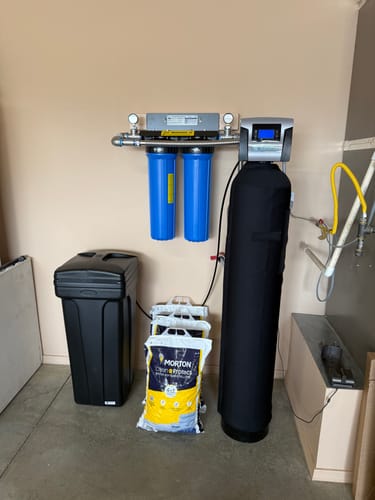
Now that we realize why the Iron Master needs to go first, let's walk through exactly how to connect the two units together.
Start by running your water supply line into the Iron Master's inlet. From there, connect the outlet directly to the Elite softener's inlet — this sequencing guarantees iron gets captured before it ever touches the resin bed.
Next, secure your drain lines using flexible tubing and tighten each connection with a hose clamp. Don't skip this step — loose drain lines fail under pressure, and that's a mess nobody wants.
Once everything's connected, run water through both systems and watch for clarity and consistent flow. Any blockages or cloudiness signals a connection issue worth addressing immediately.
How to Configure Both Units After Installation
With both units connected, it's time to dial in the settings so they actually do their job. Start with the Iron Master's control panel—set it to handle iron levels above 3 ppm if that matches your water test results.
Get that dialed in first, since it protects the Elite Softener's resin bed downstream.
Next, program the Elite Softener's regeneration cycle around your actual water usage and hardness readings. Don't guess—use local water test data.
From there, keep both units performing by checking the brine tank's salt levels regularly and swapping out the Iron Master's filters every 6 to 12 months.
Pull out both owner's manuals and calibrate each unit to your specific water quality. Precision here pays off in long-term performance.
How to Check Salt Levels and Filter Performance Each Month
Monthly maintenance doesn't have to feel like a chore if we break it down into a quick routine.
First, check the brine tank—we want to see salt sitting at least a couple of inches above the water line. Anything less, and we're risking poor softening performance.
Next, let's talk filter media. Every 6 to 12 months, inspect it for wear or clogging, since blockages quietly sabotage iron and hardness removal before we even notice.
Speaking of iron, test our water monthly. If levels creep above 1 ppm, something's off with the Iron Master or softener.
Finally, track our regeneration cycle efficiency against actual water usage, and document any quality changes. Patterns tell us when it's time to act.
Signs Your Iron Master or Elite Softener Needs Attention
Keeping tabs on salt levels and filter performance each month puts us ahead of most problems—but sometimes our systems still send us distress signals we need to catch early. Reddish-brown stains on sinks, toilets, or laundry tell us the Iron Master isn't pulling its weight. A metallic taste in our water confirms the same.
If we're noticing reduced water pressure or flow, the Elite Softener's resin bed may be fouling or developing clogs. Salt bridges forming in the brine tank quietly kill efficiency before we realize anything's wrong.
We should also listen—banging or hissing sounds from either system aren't normal and demand immediate investigation. Catching these signs early keeps small issues from escalating into costly repairs or full system failures.
Frequently Asked Questions
What Goes First, Softener or Iron Filter?
The iron filter goes first! We always install the SoftPro Iron Master before the Elite Water Softener to protect the resin bed from iron fouling, ensuring both systems last longer and perform at their best.
What Hardness Number Should I Set My Water Softener?
Set your softener about 4 gpg above your total hardness level. We'd recommend testing your water first—if it's above 3.5 gpg, you'll need softening, with ideal settings typically ranging between 10–15 gpg.
What Is the Correct Order of Water Treatment?
We recommend installing the Iron Master first, then the Elite Water Softener. This sequence guarantees iron's removed before softening, protecting the resin bed from fouling and maximizing both systems' efficiency and longevity.
What Is the Best Water Softener Brand According to Consumer Reports?
According to Consumer Reports, WaterBoss and Fleck consistently top the rankings. We'd especially highlight the Fleck 5600 series for its dual softening and iron filtration capabilities, making it an outstanding all-in-one solution we highly recommend.





