


![SoftPro™ Chlorine+ Carbon Whole House Water Filter to Remove PFAS, Chlorine, Chloramine & Pesticides [City Water Filters Series]](http://www.softprowatersystems.com/cdn/shop/files/SoftPro_Whole_House_Carbon_Filter_with_Spin_Down_Water_Filter.webp?v=1783547361&width=140)


 855-683-8488


How to Finally Eliminate Sulfur Smell That Your Current Iron Filter Cannot Handle Alone

Iron filters are built to tackle iron and manganese — but hydrogen sulfide, that stubborn rotten egg smell, slips right through them. Sulfur odor comes from bacteria thriving in low-oxygen water, and oxidation alone won't stop it. To truly eliminate it, you'll need to pair your iron filter with an aeration system or catalytic carbon filter. The right combination makes all the difference, and we'll show you exactly how to get there.
Key Takeaways
- Iron filters only target iron and manganese, leaving hydrogen sulfide gas—the source of rotten egg smell—completely untreated.
- Air injection systems oxidize hydrogen sulfide before filtration, converting dissolved gas into solid particles that filters can effectively capture.
- Catalytic carbon filters neutralize sulfur odors while simultaneously addressing iron staining for comprehensive whole-house water treatment.
- Sulfur-reducing bacteria thrive in stagnant, low-oxygen environments like water heaters, often worsening odors beyond what iron filters handle.
- Whole-house systems combining air injection and catalytic carbon cost $1,500–$4,000, providing a lasting solution for both iron and sulfur.
Why Your Iron Filter Falls Short on Sulfur Smell

If you've ever wondered why your water still smells like rotten eggs after installing an iron filter, here's the truth: iron filters aren't built to tackle sulfur.
They're engineered specifically for iron and manganese removal, leaving hydrogen sulfide gas—the actual culprit behind that offensive odor—completely untouched.
Here's where it gets interesting. The oxidization process most iron filters use works beautifully on iron compounds but fails against sulfur's different chemical makeup.
The two simply don't respond the same way.
There's another layer to this problem: iron bacteria thriving in your water can actually intensify sulfur odors, and traditional iron filtration won't eliminate them.
Solving this requires pairing your iron filter with targeted solutions like air injection systems or catalytic carbon filters.
What Actually Causes That Rotten Egg Odor in Well Water?
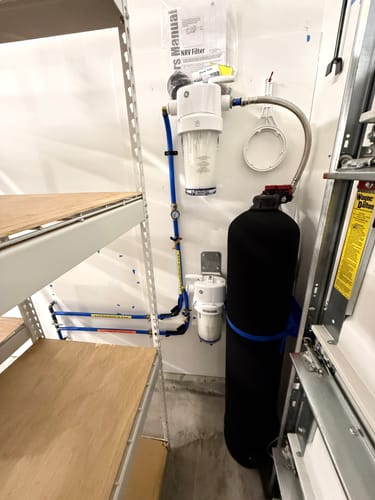
Now that we realize iron filters can't touch sulfur, let's look at what's actually creating that smell in the first place. The culprit is hydrogen sulfide gas, produced by sulfur-reducing bacteria thriving in oxygen-depleted environments — exactly what your well water creates naturally.
Here's where it gets interesting: these bacteria love water heaters, particularly when the anode rod is magnesium. They colonize stagnant water and generate hydrogen sulfide as a metabolic byproduct.
That's why the smell intensifies after power outages — disrupted heating cycles give bacteria time to multiply unchecked.
What makes this especially frustrating is the detection threshold. You'll smell hydrogen sulfide at concentrations as low as 0.5 parts per million.
That's an incredibly small amount causing an enormous daily nuisance.
The Best Filtration Systems for Removing Iron and Sulfur Together
Tackling iron and sulfur together doesn't require two separate systems — the right whole-house filtration setup handles both simultaneously.
Air injection systems oxidize both contaminants before filtration, converting dissolved iron and hydrogen sulfide into solid particles that filters easily capture.
If you prefer low-maintenance operation, catalytic carbon filters chemically neutralize sulfur odors while simultaneously addressing iron staining — no moving parts, no fuss.
Oxidizing media filters like Pro-OX and Greensand take a different approach, using reactive media to eliminate both culprits through controlled oxidation.
Aeration systems offer yet another dual-action solution worth exploring.
Since every well's water chemistry differs, we'd strongly recommend consulting a water treatment professional who can identify which combination of these technologies delivers maximum effectiveness for your specific situation.
How to Run Your Iron Filter Alongside an Aeration or Carbon System
Knowing which systems work best is one thing — getting them to work together is where the real results happen.
When we run an aeration system alongside our iron filter, we're introducing air into the water, oxidizing hydrogen sulfide before it ever reaches the filter. That means solid particles form from dissolved gases, making them far easier to capture.
The iron filter then handles what's left. For residual odors that still sneak through, we install catalytic carbon downstream — it adsorbs those stubborn sulfur compounds with precision.
The critical detail most people overlook? Equipment compatibility. Matching size and flow rate across every unit guarantees seamless integration and peak performance.
Done right, this combination doesn't just reduce the rotten egg smell — it eliminates it.
What Iron and Sulfur Filter Installation Actually Costs
Getting a handle on installation costs is the first step toward making a smart investment. Most whole-house iron and sulfur filter systems run between $1,500 and $4,000, with labor accounting for 30-50% of that total—so choosing experienced installers matters more than you'd think.
If your water has particularly stubborn iron or sulfur concentrations, you might need additional equipment like water softeners or catalytic filters, pushing costs up by $500 to $2,000. It's not an unexpected expense once you understand what's driving it.
Budget another $100 to $300 annually for maintenance, covering parts replacement and system checks. That ongoing investment keeps your system performing at peak efficiency—protecting both your water quality and your initial installation investment for years ahead.
Frequently Asked Questions
Will an Iron Filter Remove Sulfur Smell?
Iron filters won't fully remove sulfur smells on their own. We'll need specialized systems like air injection or catalytic carbon filters to effectively oxidize and eliminate those stubborn hydrogen sulfide odors completely.
What Neutralizes Sulphur Smell?
We've found that chlorine injection, aeration filters, and catalytic carbon filters effectively neutralize sulfur smell by converting hydrogen sulfide into non-odorous compounds. Combining these methods guarantees you'll tackle even the most persistent sulfur odors completely.
What Kind of Filter Gets Rid of Sulfur Smell?
We recommend aeration filtration systems, catalytic carbon filters, air injection systems, or whole-house hydrogen sulfide reduction systems. Each oxidizes and captures sulfur compounds effectively, neutralizing that stubborn rotten egg smell your standard iron filter can't fully eliminate.
Does Vinegar Get Rid of Sulfur Smell?
Vinegar can temporarily neutralize sulfur odors, but it won't eliminate the root cause. We recommend pairing it with catalytic carbon filters or aeration for a lasting solution that truly masters your water quality challenges.






