


![SoftPro™ Chlorine+ Carbon Whole House Water Filter to Remove PFAS, Chlorine, Chloramine & Pesticides [City Water Filters Series]](http://www.softprowatersystems.com/cdn/shop/files/SoftPro_Whole_House_Carbon_Filter_with_Spin_Down_Water_Filter.webp?v=1783547361&width=140)


 855-683-8488


How to Permanently Fix Low Water Pressure Caused by Your Whole House Iron Filter System

Low water pressure from your whole house iron filter usually comes down to a few fixable problems: iron buildup clogging the media, a filter that's too small for your household's peak demand, or neglected backwashing. We can restore strong pressure by testing the system in bypass mode, cleaning or replacing saturated media, and scheduling consistent maintenance. Stick with us and we'll walk you through every step to permanently reclaim the water flow your home deserves.
Key Takeaways
- Bypass the filter and measure pressure before and after to confirm the iron filter is causing the pressure drop.
- Backwash the filter regularly to clear iron and mineral buildup that restricts water flow through saturated media.
- Replace filter media every 6–12 months to prevent sediment accumulation from causing long-term pressure loss.
- Upgrade to a properly sized or high-flow system if your current filter cannot meet peak household water demand.
- Install an automatic backwashing system to consistently remove sediment buildup without relying on manual maintenance routines.
Why Your Iron Filter Is Killing Your Water Pressure

Sometimes the very system designed to protect your water quality ends up working against you. Your iron filter is the culprit more often than you'd think, and here's why: when the filter media gets saturated with iron solids and debris, it creates backpressure that chokes your entire home's water flow.
Think of it like a clogged artery. The harder your water pushes through fouled media, the weaker the pressure becomes at every tap and fixture downstream.
An undersized filter compounds the problem dramatically during peak usage — morning showers, laundry cycles, dishwashers running simultaneously.
The fix starts with understanding the root cause. Neglected maintenance, overloaded media, and improper sizing aren't just inconveniences — they're pressure killers.
Let's show you exactly how to reclaim your flow.
How to Test If Your Iron Filter Is the Real Pressure Problem
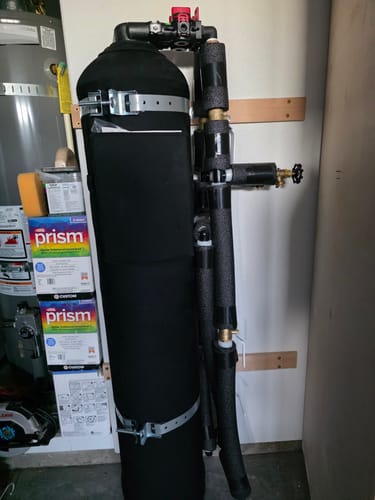
Before you tear apart your plumbing or call a plumber, let's confirm the iron filter is actually the problem. Start by bypassing the system completely, then check your faucet pressure. If it improves immediately, you've found your culprit.
Next, grab a pressure gauge and measure before and after the filter. A significant drop between those two readings tells the whole story. You're looking for data, not guesswork.
Grab a pressure gauge and measure before and after the filter. Significant drops don't lie.
Also watch for discolored water or sediment coming through — those signs signal the filter media isn't working properly, which compounds your pressure issues.
Finally, consider whether your filter is adequately sized for your household's peak demand. An undersized system will always struggle, no matter how well you maintain it.
Iron Buildup, Clogged Media, and Poor Sizing: Common Iron Filter Pressure Fixes
When an iron filter starts robbing your home of water pressure, the cause almost always comes down to three culprits: iron buildup, clogged media, or a system that was never the right size to begin with.
Iron and mineral accumulation inside the filter media restricts flow over time. The fix? Consistent backwashing restores proper flow rates before the problem compounds.
If backwashing doesn't recover your pressure, test your iron levels and inspect your cartridges. Saturated media can't do its job, and pushing water through it only punishes your whole system.
Sizing matters most. An undersized filter simply can't meet peak household demand.
If maintenance doesn't resolve the pressure loss, have a professional evaluate whether your system's design actually matches your water quality and usage needs.
Maintenance Steps That Keep Your Iron Filter Pressure Strong
Knowing what breaks your iron filter's pressure is only half the battle—keeping it strong is where the real work happens.
We've found that consistent habits separate struggling systems from high-performing ones.
Here's what we recommend building into your routine:
- Replace filters every 6–12 months to prevent sediment-driven pressure loss
- Clean aerators and showerheads periodically to restore flow throughout your home
- Test pressure with the system in bypass mode monthly—sudden improvement signals clogging
- Check pressure gauges monthly to catch drops before they escalate
- Schedule professional assessments to troubleshoot inefficiencies you might miss
Each step compounds. Skip one, and you're chasing problems reactively.
Follow them consistently, and your system runs lean, efficient, and pressure-strong year-round.
When Your Iron Filter Needs an Upgrade or Backwashing System
Even the best-maintained iron filter has an expiration date—and missing the signs means trading a simple upgrade for a full-blown pressure crisis.
Most systems last 10 to 15 years before efficiency drops noticeably. When your pressure drop exceeds 10 PSI despite regular maintenance, that's your filter telling you it's done fighting.
Here's where smart homeowners win: installing an automatic backwashing system.
Instead of manually cleaning the filter weekly or monthly, it handles everything at preset intervals—removing accumulated sediment before it chokes your pressure. No guesswork, no forgotten cycles.
If backwashing isn't enough, upgrading to a high-flow system with improved filtration media is the real solution.
Better flow rates, stronger performance, and water pressure that actually holds up under daily demand.
Frequently Asked Questions
Can a Whole House Filter Cause Low Water Pressure?
Yes, your whole house iron filter can absolutely cause low water pressure. When it clogs with sediment or has too fine a micron rating, it restricts flow, leaving you with frustratingly weak pressure throughout your home.
Is There Any Way to Increase Water Pressure to My Whole House?
Yes, we can boost your home's water pressure! We'll want to contemplate installing a pressure booster pump, upgrading to a high-flow iron filter, adding a pressure tank, or maintaining filters regularly to prevent clogs.
What Is the Most Common Cause of Low Water Pressure in a Residential Home?
The most common cause of low water pressure in your home is clogged sediment filters. They restrict water flow considerably, and we recommend replacing them every 6–12 months to maintain ideal pressure throughout your system.
How Much Does a Plumber Charge to Replace a Water Pressure Regulator?
We'll typically pay $150 to $300 for labor, plus $50 to $150 for the regulator itself. Clarify upfront whether your plumber charges a flat rate or hourly, as accessibility can impact your final cost.






