


![SoftPro™ Chlorine+ Carbon Whole House Water Filter to Remove PFAS, Chlorine, Chloramine & Pesticides [City Water Filters Series]](http://www.softprowatersystems.com/cdn/shop/files/SoftPro_Whole_House_Carbon_Filter_with_Spin_Down_Water_Filter.webp?v=1783547361&width=140)


 855-683-8488


How to Finally Get Rid of the Rotten Egg Smell in Well Water Using an Iron Filter System

If your well water smells like rotten eggs, hydrogen sulfide gas is almost certainly the culprit. Sulfate-reducing bacteria thrive in low-oxygen groundwater and produce this gas naturally, while a corroding anode rod in your water heater can make things worse. The good news is that an iron filter system oxidizes hydrogen sulfide, converting it into solid particles that get trapped and removed. Stick around and we'll walk you through everything you need to know to fix this for good.
Key Takeaways
- The rotten egg smell in well water is caused by hydrogen sulfide gas, produced by sulfate-reducing bacteria or corroding anode rods in water heaters.
- Iron filters eliminate the odor by oxidizing hydrogen sulfide gas into solid sulfur particles, which are then trapped and removed.
- Choosing the right oxidizing media, such as Pro-OX, Birm, or Greensand, depends on your water's specific chemistry and contaminant levels.
- Multi-stage iron filter systems simultaneously target iron, manganese, and hydrogen sulfide, improving water clarity, taste, and overall quality.
- Regular backwashing every four to six weeks and biannual water testing ensure your iron filter maintains peak performance.
Why Your Well Water Smells Like Rotten Eggs

If you've ever turned on your faucet and been hit with that unmistakable rotten egg smell, you're dealing with hydrogen sulfide gas — a byproduct of sulfate-reducing bacteria that thrive in the low-oxygen environment of groundwater.
But bacteria aren't the only culprit. Your water heater's magnesium or aluminum anode rod can corrode and produce hydrogen sulfide, especially when the heater sits unused.
High iron levels compound the problem further, feeding iron bacteria that generate even more of this offensive gas.
Beyond the smell, hydrogen sulfide signals deeper water quality issues. It accelerates metal corrosion, turns your water black, and tarnishes silverware.
Understanding these root causes isn't just helpful — it's the first step toward choosing the right solution for clean, odor-free water.
Why Hydrogen Sulfide Makes Well Water Harder to Treat
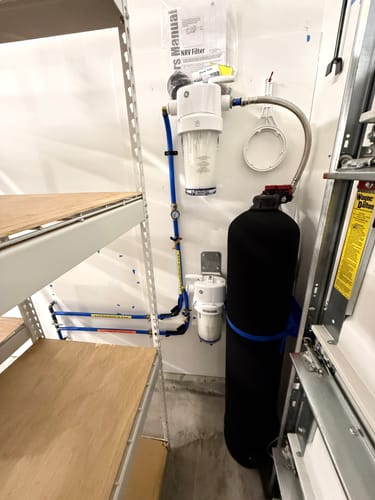
Treating hydrogen sulfide isn't as straightforward as filtering out a typical contaminant — and that's because it's a gas, not a solid particle. That distinction matters enormously when designing an effective treatment strategy.
Here's what we're actually dealing with: hydrogen sulfide reacts with iron and minerals in your water, forming deposits that clog filtration systems and disrupt flow.
It corrodes metal pipes, creating ongoing maintenance headaches and secondary water quality problems. Even at just 0.5 parts per million, the rotten egg odor becomes unbearable.
Standard filters simply aren't built for this. Effective treatment requires oxidation, activated carbon, or a combination of targeted methods — plus consistent monitoring.
Understanding these challenges is exactly why choosing the right iron filter system makes all the difference.
How an Iron Filter Eliminates the Sulfur Smell
Iron filters tackle the sulfur smell in one elegantly simple way: they force hydrogen sulfide through an oxidation process that converts the gas into solid sulfur particles, which the filter then traps and removes.
No more rotten egg odor—just clean, neutral-smelling water.
But there's a secondary benefit we shouldn't overlook. Hydrogen sulfide is corrosive, quietly degrading your pipes and appliances over time. By eliminating it at the source, an iron filter also extends the lifespan of your plumbing system.
Advanced systems take this further with multi-stage filtration, targeting both iron and sulfur simultaneously.
To keep everything performing at this level, regular backwashing and periodic media replacement aren't optional—they're what sustain long-term results and protect your investment.
Which Iron Filter Is Right for Your Well Water?
Knowing how an iron filter works is one thing—picking the right one for your specific well water is another. Your water's unique chemistry drives every decision here. If hydrogen sulfide shares space with iron and manganese—which it often does—you'll need a filter built to handle all three simultaneously.
Here's what to prioritize:
- Oxidizing media matters: Pro-OX, Birm, and Greensand effectively eliminate dissolved iron and hydrogen sulfide odors.
- High-purity manganese dioxide outperforms standard media when iron and manganese coexist with sulfur.
- Multi-stage systems deliver superior clarity, taste, and thorough contaminant removal.
We also recommend evaluating maintenance requirements upfront. Some systems demand frequent media replacement, while others run longer between servicing.
Matching your water's profile to the right filter means fewer headaches and consistently clean water.
How Often Should You Backwash and Test Your Iron Filter?
Once you've installed the right iron filter, keeping it running at peak performance comes down to two habits: regular backwashing and consistent water testing.
We recommend backwashing every four to six weeks, though your water quality and household usage may push that frequency higher.
Watch your pressure gauges — a noticeable drop signals it's time to backwash before clogging becomes a real problem.
For testing, check iron, manganese, and hydrogen sulfide levels at least every six months.
Seasonal shifts or increased water demand can change your water chemistry faster than you'd expect, so adjust accordingly.
Always follow your manufacturer's maintenance guidelines — they're calibrated specifically for your system's longevity.
Stay consistent with both habits, and your filter will keep delivering clean, odor-free water reliably.
Frequently Asked Questions
How Do You Get the Rotten Egg Smell Out of Well Water?
We'll tackle that rotten egg smell by installing an iron filter system that oxidizes hydrogen sulfide gas, converting it into filterable sulfur. It's the most reliable, long-term solution we've found for well water odor problems.
Will an Iron Filter Remove Sulfur Smell?
Yes, an iron filter will remove that sulfur smell! It oxidizes hydrogen sulfide gas, converting it into solid sulfur that's captured by the filter media, effectively eliminating the rotten egg odor from your well water.
Is It Okay to Drink Water if It Smells Like Sulfur Coming From My Well?
We've found that at low levels, it's generally safe, but it's a warning sign we shouldn't ignore. Higher concentrations can irritate your gut, corrode pipes, and release harmful metals into your water supply.
Can You Smell Iron in Well Water?
We can't really smell iron in well water on its own—it's typically odorless. But when it combines with sulfur-producing bacteria, that's when we get that nasty rotten egg smell we're all trying to eliminate.






